


By Celestine Okafor (Editor-in-Chief) @CelestineOkaf11
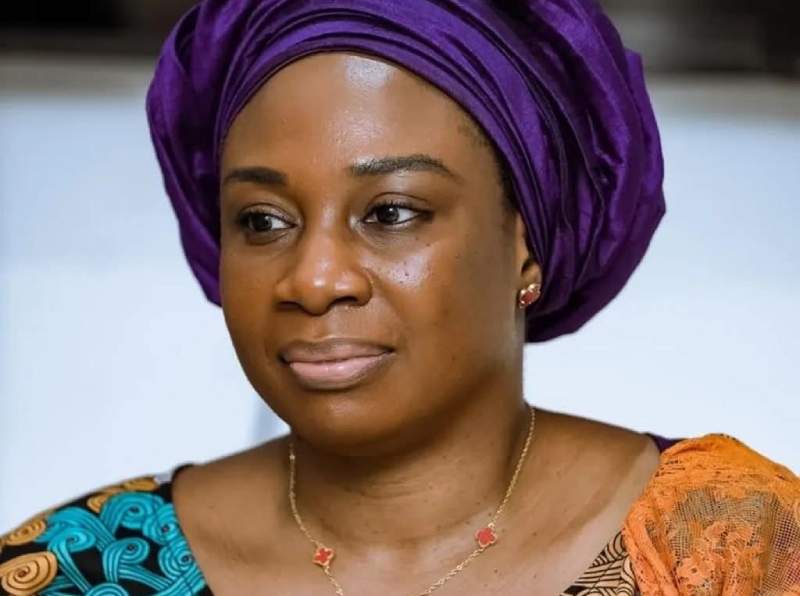
Presidential Adviser on Energy, Mrs Olu Verheijen, has assured that the federal government of Nigeria under President Bola Ahmed Tinubu administration is aggressively tackling the current negative trend of low investment in the oil and gas sector, so as to shore up the country's poor revenue which is affecting the national economy.
She also assured Nigerians that measures have been put in place in the past seven months of the Tinubu administration to ameliorate the prevailing internal energy crisis which has triggered price anarchy in goods and services, and consequently occassioned economic hardship in the country.
Verheijen gave the assurances at the 4th edition of the on-going Ministerial Briefing Series held on Friday, March 8, 2024, at the National Press Centre, Abuja.
She hinted that despite the withdrawal of the fuel subsidy regime, government is however striving to ensure price stability. She equally allayed citizens fears about another hike in electricity tariff and pump price of PMS (Premium Motor Spirit).
Despite the critical role and ability of the oil and gas sector to generate cash revenue in foreign exchange to help revamp the ailing economy, Mrs Verheijen observed that the investment prospects in that area has remained quite bleak for the country. She disclosed that Nigeria, since 2016 and despite possessing 38 per cent of the continent’s hydrocarbon reserves, had accounted for only 4% of Africa’s total oil and gas investments.
Verheijen said: “We need to address the fundamental issues in the sectors so that we can attract capital to the infrastructure and there is no one who’s going to invest in Infrastructure if they don’t have assurance, the line of sight to the attractiveness of gas supply. “So, if gas suppliers are not making any investment because the fiscal terms of the business environment is a very difficult one in which to invest in, then it will be difficult to continue to mature mainstream projects and downstream projects because you have to deal with the ab initio problem which is gas supply.
“And that is exactly what President Bola Ahmed Tinubu has done by fast tracking these policy directives to ensure that we have sufficient gas supply whether we’re trying to export, whether we’re trying to compress natural gas or liquefied for domestic use, whether we’re trying to have floating energy as an alternative way of getting gas into the market, all of those things are enabled by these policies.
“A society is not rich because of its resources, but because of what it does with those resources. President Bola Ahmed Tinubu is determined to reverse this trend and take decisive steps to ensure a conducive business climate and reposition Nigeria as a preferred investment destination for oil and gas sector.
“To achieve these objectives, Mr. President has issued a Presidential directive to streamline and clarify the scope of the two regulators in the petroleum sector to provide certainty and create a conducive business environment. He has directed the NSA and Special Adviser on Energy to coordinate enhanced security measures in the Niger Delta".
Based on this presidential orders which were implemented, Verheijen said the TNP pipeline which had been under constant vandalization over the years was now being improved and has doubled availability of oil products.
"This has translated to increased liquids of over 200,000 barrels/day being transported over the last six months. It has increased the availability of NLNG Trains 1-6 from 57 per cent in 2023 to 70 per cent in Q1 2024. The President has also introduced fiscal incentives to deepen Compressed Natural Gas (CNG) and Liquified Petroleum Gas (LPG) penetration.
“These incentives were designed to ease the impact of fuel subsidies on transportation cost and enable the displacement of PMS/Diesel and; to contribute to stabilising the price of cooking gas in the market and support the transition to clean cooking.
"Following extensive engagements, analysis and benchmarking, with industry operators and regulators, the President has taken further action to address foundational issues identified in the course of these engagements. Mr President has initiated amendment of primary legislation to introduce fiscal incentives, reduce project execution timelines and promote cost efficiency”.
The Presidential Adviser on Energy also added that the Fiscal Incentives for Non-Associated Gas (NAG), Midstream and Deepwater Oil & Gas Developments, one of the policy directives initiated to facilitate the monetisation of Nigeria’s extensive oil and gas resources which stood at 76 per cent of Nigeria’s gas reserves has remain undeveloped.
Verheijen stated that this explains why, despite possessing one of the largest gas reserves globally, Nigeria has inadequate gas to meet her domestic requirements for both industry, for power and for cooking.
She said advanced nations like the United States, have maintained price stability in order to prevent fluctuations in the economy. She noted that government intervention to moderate prices does not obliterate the fact that subsidy has been yanked off.
“The question of subsidy, the subsidy was removed on May 29, 2023. However, the government has the prerogative whether the US, in the West and other Eastern countries, all governments have the prerogative to maintain price stability and prevent social unrest.
"All governments deserve that right. And so if for whatever reason the administration has reviewed that it is not the right time to have prices continue to fluctuate given the level of hardship in the country, given inflation, the government has the right to intervene intermittently.
“All governments do so but it does not take away the fact that the subsidy was removed,” Verheijen asserted.
Speaking on the cooking gas pricing, the Presidential Aide emphasized that a substantial portion of the country’s gas was being imported. The President, she said, was very concerned about the cost of living which was why he approved the fast tracking of fiscal incentives to enable more investments into the LPG sector.
This approval was done with the hope that if scale is achieved, then costs can be brought down and the domestication of some of LNG production can be incentivised.
Mrs Verheijen said the government started it, but unfortunately foreign exchange and the market prices began to increase. She said as a priority of the Tinubu administration, it will continue to work and look at more opportunities to improve supply and scale up and enable all LPG into the market at affordable prices. NNL.