
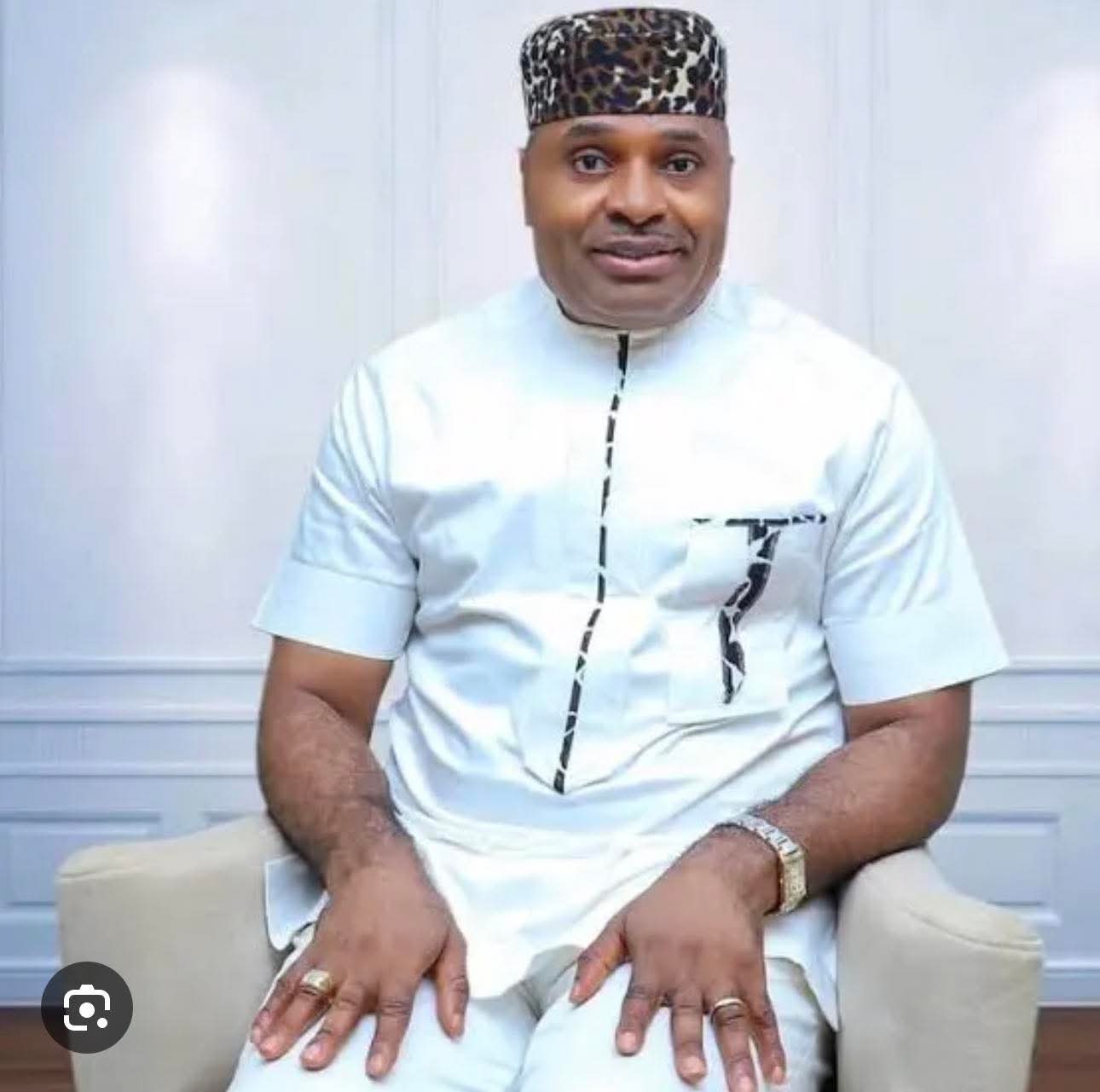

By Fred Chukwuelobe
Kenneth Okonkwo, popularly known as Andy, shot into the limelight in the blockbuster 1992 movie Living in Bondage. It was an iconic film and a must-watch in those days, helping to lay the foundation for what later became Nollywood. After a few other movies that did not enjoy the same level of success, he gradually disappeared from public view, only to re-emerge years later on the political scene.
Since then, he has tried his hand at various political roles, serving as a vocal spokesman and advocate at different times for former Vice President Atiku Abubakar and later for Peter Obi. He undoubtedly possesses the gift of the gab and, like many people blessed with that talent, he frequently appears on television, twisting his mouth and regaling audiences with whatever comes out of it. He often seems more concerned with winning an argument than with presenting a coherent one.
As movie acting became less lucrative with the advent of social media and the rise of content creators, Andy appeared to discover a new trade: saying whatever he believes will make him recognisable, relevant, and useful to politicians. He joined the Labour Party and rode on the popularity of Peter Obi, whom he later abandoned to return to Atiku Abubakar, a man he had previously lampooned when it suited his political interests.
The problem is not that Kenneth Okonkwo changed political camps. In a democracy, every citizen has the right to support whomever they choose. The problem is that he still appears unable to distinguish between acting a role in a movie and engaging in serious political discourse. When he speaks on television, as he often does, one is left with the impression that he is more interested in conjuring words than in making sense.
In recent months, he has directed a barrage of attacks at Peter Obi, almost as though the politician personally took away his feeding bottle. His recent appearance on Channels Television, where he called Peter Obi names, accused him of criminality, and made a number of outlandish allegations, may have placed the actor-turned-politician in a bondage of a different kind, one from which he may struggle to free himself.
Peter Obi has now sued the loquacious former ally for ₦5 billion in a defamation suit. Whether the case succeeds or not is for the courts to determine. What is already clear, however, is that public commentary carries consequences. Television appearances are not movie sets, and political arguments are not scripts written by screenwriters.
Do not get me wrong. Kenneth Okonkwo is perfectly entitled to pitch his political tent wherever he wishes. What he cannot do is pretend that there is no difference between acting in a movie and speaking in real life. He has been prancing up and down television studios, opening his mouth and eyes wide like someone who had just been cured of madness.
As the Igbos say, you may cure a man of madness, but it will not stop him from murmuring.
Ironically, Kenneth Okonkwo became famous for portraying a man who lost his sanity in Living in Bondage after using his wife, Merit, for rituals. Sometimes I wonder whether that performance has followed him into real life, judging by the manner in which he spews nonsense on television.
By the time Peter Obi is done with him in court, he may turn to his lawyers and ask why they failed to explain the implications of his loquacity. Just as Andy asked Paulo in Living in Bondage, he may well ask his lawyers and political paymasters: “E kowasili m ife a ofuma?”
Perhaps then he will finally discover that he is still living in the bondage of irresponsible talkativeness.
...Fred Chukwuelobe is a distinguished senior journalist, a former newspaper editor, public relations consultant, and ex-media adviser to a former governor of Anambra State. NNL.