By Celestine Okafor (Editor-in-chief) @CelestineOkaf11
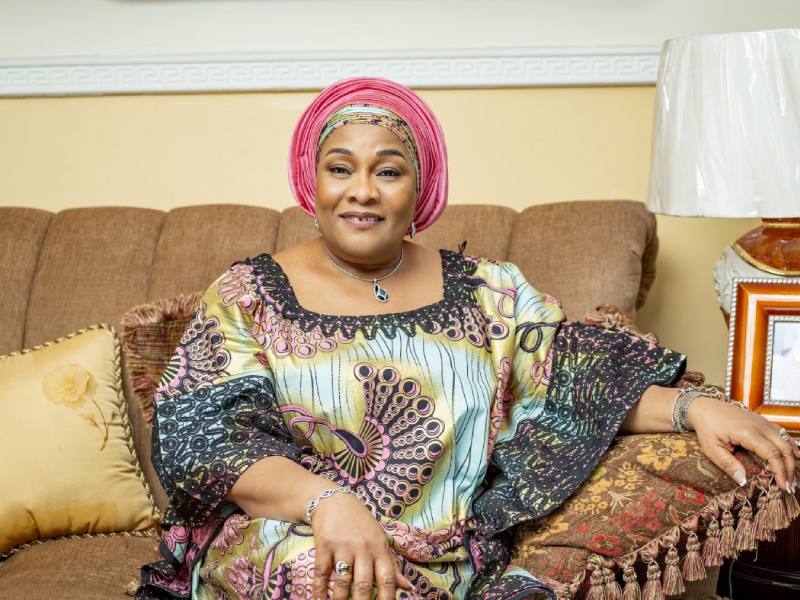
Immediate-past Chairman of the Board of Directors of the Nigeria National Petroleum Corporation (NNPL) Limited and former Anambra North Senator, Senator Margery Okadigbo, speaks on the twentieth anniversary of the death of her husband and Nigeria's former Senate President, Dr Chuba Okadigbo.
In this illuminating interview with the Publisher/Editor-in-Chief of NIGERIAN NEWSLEADER Newspaper,. CELESTINE OKAFOR, Senator Margery Okadigbo popularly known as 'Odibeze', narrates the challenges she and heir children and the entire Okadigbo family have gone through in the past 20 years since the death of their patriach, Chuba, including some bright moments in the life of the family.
She also recalls interesting intimate moments with her husband, Chuba Okadigbo, the great 'Oyi of Oyi'; her turn-around experiences as Chairman of NNPC Limited Board. Margery offers advice to both widows and women in corporate and public life. Excerpts:
December 5th, 2023 makes exactly 20 years that your late husband and former Senate President, Dr Chuba Okadigbo, was buried in your hometown, Ogbunike in Oyi Local Government Area of Anambra State. He died on Thursday, September 22nd, 2003. Recently, the 20 year milestone of his passage was well celebrated with a church service attended by the high and mighty in the land. How would you describe these past 20 year period without him. What were the successes the family has achieved, and what are the challenges so encountered. And if l may add, the regrets that you have?
Wow! Like you said, 20 years has been like 20 days, you can even say 20 minutes. But I think the only thing that brings to mind the fact that 20 years has gone, is my youngest son, (Chinedu), who we call 'Chu'. He was just ten (10) years old when his father, Chuba, died. And today, I see a young man of 30 years old. At times when I see the young man, that's when I ask myself, when did all this happen (Chuba Okadigbo's death)? I also ask myself, what happened to my 10 year-old, who used to wrap himself around me? Now, he's a big boy. So it's been 20 years of so many things that one cannot lay hands on. Even when I go to the village (Ogbunike, in Oyi Local Government Area of Anambra State) and I go to Chuba's grave, it's as if he was just buried last week. (Okadigbo was buried on December 5, 2003). I still don't see the 20 years, and I would say everything is all to the glory of God, because we've had our down moments in these past 20 years. In 20 years, I lost a son (Mr Obiajulu Okadigbo). In 20 years, we lost another son (Mr Pharoh Okadigbo). We've lost two sons in 20 years, and to the two sons we've lost, we've also gained grandchildren. But that is what life is all about. You lose some, you gain some, and that's the cycle of life. We are not always going to be here from beginning to the end. Even the friends we meet along the road, we also lose them. But at the end of the day, what we have are the memories, and those memories are what we hold on to, and nobody can take those memories away. Not even death can take the memories away, because those memories are just etched in the heart, and that's what you replay.
What have these memories reminded you in 20 years?
Well, it reminds me of what Chuba stood for all his life. You and I, before now, have had quite a long banter on Chuba Okadigbo, the man, his memory, and what he stood for. So, those are memories. You meet people and they have different versions of Chuba. Even with me, I learn every day about this man who I married. I don't know him completely. And through other people, I know him, because people have different stories about the man, Chuba Okadigbo. People on the outside have had different relationships with him.
 Former Senate President, Dr. Chuba Okadigbo and Wife Senator Margery Okadigbo During A Press Conference On Chuba Okadigbo Foundation.
Yes, what actually was on your mind that day (September 25, 2003) when his death occurred, in terms of how you were going to cope with life without him, with the children, and how the future will fare for you and the family? What were the initial fears concerning him?
Well, first of all, with his passing, it was a shock! Chuba actually died on my laps. He put his head on my laps, and that's where he took his last breath, and that's in the car, going to the National Hospital in this Abuja. It was a period when the health workers were even on strike action. And coming back from the National Hospital, when we put him in the morgue (mortuary), there was some drama, even on that day. When we got to the hospital, and the ambulance opened and the mortuary attendant on duty was told that the man he was going to be receiving that night was Dr. Chuba Okadigbo, the man quickly took off. He simply ran away! They (hospital officials) had to chase him because he said he couldn't believe it. So that is how Chuba was seen by people, even by the common man. He was larger than life. I mean, the mortuary attendant telling you that it's not possible that Senator Okadigbo is the one in the ambulance. But that's what happened, that's where we were. I, for one, I was in shock! And even at the time, you'll be talking to me, I'll be listening, and it gets to a point where half of what you're saying just goes. Later on, the doctor said I had what they call 'selective amnesia'. So I went through all those shocking moments. My hair suddenly went grey. Every follicle of my body went grey, because it was such a shocking experience, and for many years, I couldn't look down into my lap, because if I looked down, all I saw was his (Chuba's) head. So I went through all of that, and it was quite traumatic. But I took a look at the young children, and I said to myself: you know, Margery, going forward, your life is now all about your children. You know, these are children who were very attached to their late father, and I just knew I had to step into the shoes of mother and father. That's what most widows will tell you, and even a widower will tell you. You find yourself playing the role of both parent. And if you have a relationship with your spouse, l mean your partner, where you talk or discuss a lot, especially a lot of those dreams, those programs that you have for yourselves as a family, you find yourself the last man standing. So you are so driven, because you want to achieve. it's like a baton, a relay race. This baton has been handed over to me. It's now my duty to finish the race, and that's how I felt, and that has been my driving force for all 20 years. I feel that there's a baton that's been handed over to me by my husband, and I must finish that race, and it just doesn't end with the children. It really extends to grandkids. Even when my daughter had her babies, I did the cutting of the umbilical cord. So it's a drive, and you can't imagine achieving those goals, doing those roles with somebody else, because it's a program, it's like a roadmap that you both set, and you see yourself as that executioner of that roadmap. You must finish it. And until that day when you breathe your last, it's like you're in the race alone, so you must finish that race. That's what 20 years has been.
Did you ever feel intimidated by the enormity of the challenges of raising the kids all by yourself?
In the beginning, like any young widow, you take a look and say to yourself, Oh my God, what happens? Where do I go from here? What do I do? But then there's a typical American saying that says, don't get mad, get even. So that drives me, and that's what I believe has been my success story. What would Chuba want you to do? Those were the things I think about if he was here. What would it be? And the funny thing is that much as everybody saw him as that big, tough guy and all that, he was quite a baby at home. So a lot of times, if things happen, you'll hear my husband say to me, hey!, how do we handle this? And I'll be the one to say, wait, hold on. Let's get to understand what this is all about before we know what to do. How do we handle this? You know, and then he will look at me. I know for a long time his nickname for me was 'Oxygen'. Then, he would ask, so are you bringing the oxygen to us? And l will say to him, Yes, I'll give you the Oxygen mask. Just put it on. Let's go on. So that's the relationship we had. And he's a man who allowed me to grow. He encouraged me when I took my baby steps. He was always there. Take the next one. You can do it, he often tells me. You know, so it was just like having another parent or teacher at home. And I had to learn fast. That has always been. I just learned fast. That's it.
Now, when he came back from the political party rally in Kano, and told you that the police smoked them with a tear gas cannister, did you imagine, at that point, especially when he was having that complication, that he would pass away?
No, I didn't. And the funny thing is that even those who were with him in Kano, he told them not to let me know. So I didn't even know he had had that gas spray on him while in Kano, l mean he and former President Muhammadu Buhari, until they came back that day. I was of the impression that he was going to be in Kano for two days, when he came back earlier than planned. All I did get was a phone call to send the cars to the airport to pick him up. So he was coming back earlier than I thought. And when I came back, I asked after him. I came into the house, he was already in his bedroom, he was laying down. I came in, saw him, and he was looking tired. I assume it was just his usual tiredness. And I noticed he had his inhaler next to him.
 Chuba Okadigbo And Wife Barrister (Mrs) Margery Okadigbo Dancing At Sheraton Hotel Abuja, During A Valentine Party Organized For Senators And House Of Reps Members In The Year 2000
Was the Oyi' (Chuba Okadigbo) asthmatic?
Yes, he was. So, l asked him, are you having an asthmatic attack? He said, yeah, something like that. He never told me he had had that encounter in Kano. So it wasn't until later in the evening that some other people came in. And I think the person who actually gave me an idea of what happened was Senator Sylvanus Ngele. So he was the one who came that evening to know how he was doing and if he was fair. So I was like, what really happened? And without knowing, I got to know that that was really what happened in Kano, that the police sprayed him with teargas cannister. So by the next day, his doctor came in to see him and administered medications on him. But later in the evening of that same Thursday, that's about eight o'clock in the evening, I noticed that he was very restless. You know, taking a turn for the worst. And I quickly put him in the car. Before we got to the National Hospital Abuja, just at the Mabushi roundabout, he gave up.
So, who carries the can? Who's to be blamed?
Well, these are all the ills of our society, because if we had good emergency facilities, paramedics and things like that, all we needed to do was call an emergency number and they will come to the house to attend to him. At least that's the first aid treatment before we get to the hospital. Well, that's not the case here in Nigeria. And all Chuba needed at that point was just oxygen, to at least support him until we get to the airport. Even though, when God says it's time, it's time. But heaven helps those who help themselves, too. So that was basically it. For me, being in the car with him, he walked himself into the car and then took a last breath, put his head on my lap and that was it. It was a shock. I'd never seen that. Even at that point, I didn't even understand that he was gone. It wasn't until we got to the National Hospital and they took him in, the two doctors who attended to him, Dr. Wada and Dr. Ante, came in and started all their, you know, life is this and that. That was when it dawned on me that indeed something had happened. But even at that, I thought maybe he just had an asthmatic attack, which in the past, he would overcome. Until I came in and saw the whole six foot three of him stretched out. That's when I knew that clearly life was on a different premise. And it's been like that. Thereafter, the news of his death was made clear to everybody.
Now, how did you navigate the challenges of assuming both mother and father roles to the children? What were those things that you set your mind that you will achieve as a way of making Chuba to at least realize that he had somebody on ground?
Well, with the children, I think the first thing was their academic. Chuba (Okadigbo) had this strong belief that the greatest legacy you can give a child is a good academic grounding. So I made sure that the children got the very best in terms of education. I can beat my chest today and say, yes, I did that. I sent them to Ivy League schools. I did that. So that legacy was paramount. My husband was not a multi-millionaire but he had his grounding in terms of education. So that much I was determined that the children would have because that was his own idea of giving a child a legacy. So I made sure I achieved that. And if it meant tying one wrapper, I was ready to do it and make sure that the children get that education. And I did that. But of course, there have been other intervening graces of God which made it possible for me to achieve those things. The children have backgrounds of being Americans. So I was able to send them to school, get AIDS grants, whatever that was required. And then they are where they are today because of that determination of pursuing their father's dream. Chuba always said, if as a University lecturer, he could impart knowledge on other people's children, then I think he owes it to himself to make sure that his own children get that much and more than he even got from his own parents. So I made sure I did that. The children were paramount in anything I do. And they're still. Some people say I'm a mother hen. It's not so much a mother hen, but I believe if you're there for your children, you give them the grounding they need, your problems will be far less, because when you don't give the children the time, a time comes when you pay for it. You can never be too busy for your children because that's the only time you have. You give it to them and then in your own old age, they will have time for you because you gave them your own time.
 Okadigbo Addressing His Community At Ogbunike in Oyi Local Government Of Anambra State When He Was President Of Senate
Your step-children and family in-laws, did they give you trouble, after Chuba?
Well, like any big family, you go through the challenges. You have some members of the family who are older than you who feel they need to tell you what to do. Some tell you, oh, you don't do it this way, you don't do it that way. But you must always stay focused on what you and your spouse understand family to be. You don't leave on someone's roadmap. You have your own roadmap. And if you follow your own roadmap, you will always end up well. I always tell people that if you become a widow and you had seven cars, seven drivers, seven security personnel and all that when your husband was alive, if you can only afford one car, keep your one car. You're not impressing anybody. There's no matter of keeping up with the Joneses. Admire them, but don't strive to be like them. Don't kill yourself to be like them. So, if by the time they talk, had he (late husband) left with all his pomp and pageantry? I look at myself and say, look, Margery, be yourself. That's where exactly I'm going to be because I have a focus. I have a roadmap. So I had to prune myself to be able to say this is where I find myself today. I'm not in competition with anybody. The only competition I have is with myself. I set my own goals and I strive to meet up with those goals. I'm not following anybody's roadmap. Family will be there. There are people who will support you. There are people who feel that, oh, you're swimming and wallowing in it (husband's wealth). I say, sorry, it's not for you. It's for the children. And I always use this opportunity to say to men, there is no way any wife you leave as a widow is going to leave your children and do other things. Because you hear men say, oh, if I leave it (wealth) to her, her siblings are not going to do anything for my children. They will use it for their own children. It is only an irresponsible mother that will see her children, leave them and be doing other things. So men should encourage their wives. Make them part of your success story because at the end of the day, they will be the ones to continue where you stopped. They will take that pattern and continue that race. It's important. This is my appeal for the men. Get your wives involved in what you're doing. Nobody can leave your legacy other than your wife and your children. They will live your legacy for you.
l ask again, Chuba's older children, did you have challenges with them?
Oh, well, yeah! There were challenges, obviously. It's something I don't even like to talk about because for me, I lived with the man (Chuba Okadigbo). I know his likes and his dislikes. There's a difference between wife and children, even my own children. You can't play the role of a wife. You can't play the role of a husband. You'll be the child that you are. So I just refused to join issues with children. I don't do that because it has nothing to do with whether you're their mother or their stepmother. Even mothers who have children have issues with their own children when the husbands die. So I don't want to say, oh, because I'm their stepmother, that is why. If you look for a why, you will find it because, you will find plenty becauses. I don't wait to look for those becauses because they'll always be there. So I do what I feel is right within my own understanding of right. I also try to mirror myself in the right as to what does the Bible say. And I always believe in this thing that to you who is given, a lot is expected. I live by that rule. If you do not do that that is expected of you, the little or the much that is given to you will be taken away from you. We have an Igbo adage which says, when you rejoice in other people's successes, your own success will come and in ten folds. So I believe in that. It's not a matter of a winner takes all because, I don't do that. There's not a because in my dictionary because if you look for it, you will find it.
Like you said earlier, two incidents happened to the family within this period of 20 years after Oyi (Chuba Okadigbo). Of course, these occurrences were very devastating. How did you handle them? Were they things that you envisaged would happen within the period? What lessons would you say you've learnt? And to what extent would you say that it further eroded your faith in life?
I take it that you refer to the loss of the two sons.
 Okadigbo's Late Sons: Pharoah (Left) and Obiajulu (Right)
Yes, the death of Pharoah and Obiajulu Okadigbo, your sons, so to say!
Well, those losses were very, very painful. Pharaoh is someone that I married his father when he was just twelve years old. So Pharaoh was my son. Obiajulu was my biological son. And Obiajulu and Pharaoh grew up together, so they're very close too. But losing both of them and their father was so on truamatizing. Let's just say that after Chuba, Obiajulu's death came first. And I remember years before then when the Loyola Jesuit children had the plane crash in 2006, l mean the Sosoliso Plane crash, I went with another friend of mine who had children in Loyola to see one of the parents who lost her children. And this woman lost three children in that crash in one day. Three children, you can imagine that? And those were the only children she had, just three of them. I went there. I didn't know her. The friend I went with, one of the children, the deceased child, was in the same class with her daughter. And we came in, a lot of people were there, and I was just looking at this woman. I just said, I have three children, my own children, myself. I'm looking at this woman and saying, how does anybody bear this, to lose three children in one day? The only way you can get three children back is that you have triplets. And even at that, you have them as babies, not as the college students that they were. And the investments you have done in them all those years, not investment in terms of financial but emotional. Those moments of 'mommy, I hurt myself. Oh mommy, I don't want to eat this', all those memories. How do you lock them up and throw it away in just one plane crash? I couldn't understand it. So I was just looking at this woman and saying, how can the heart take this much pain? It didn't make sense to me. And that lived with me over the years until I found myself with the loss of one child. And I played it back and said to myself, one child and the feeling is like this, how did this woman, years ago, feel with the loss of her three children in just one day? No sickness! She probably took them to the airport, kissed them all goodbye, have a lovely term in school and all that. And then the next thing you get is a phone call that these children are dead, not just dead, but crashed into bits. I said to myself, how could any mother deal with this? There's so much to be thankful to God in my case. And at that point, all that I could think of was to say thank you, God, for, first of all, making me a mother, because there are women who don't have that opportunity. But I have the opportunity to be a mother. There are women who are going from pillar to post, having miscarriages, going through IVFs to have one child. But God, you gave me this child for 30 years because Obi (late Obiajulu Chuba Okadigbo) was 30 years-old when he left. And all I kept saying with my rosary in my hand was, God, I thank you for the opportunity of looking after your child, because every child belongs to God, including you and I. And when that time comes, you realize that you're nothing but a surrogate. I must give up what God has given me. And that, for me, was the ultimate lesson in understanding what sacrifice is all about. Then when Pharaoh's death happened, same month of May, I said, God, there's really so much that the heart can take. So I've taken it in the strong Christian faith that there's a time to be born and a time to die. For every season, there are different times. That's basically what this life is all about. It's a mystery.
 Chief Senator Chuba Okadigbo with the Late Traditional Ruler Of His Town, Ogbunike, Igwe John Umenyiora.
I want to refer to an interview you granted sometime ago in 2012, where you said, that the day a woman gets married, that she should prepare for widowhood, something like that. And vice versa. So what philosophy were you trying to pass?
Answer: Well, I know that there is no playbook for marriage. In fact, I remember some old women will say that on the day you marry, different gifts are coming in different packages, in different sizes. There's always that one gift box. At the end of the day, the couple go home to go and open them, and that box is their marriage box. That is where you see your good, the bad, the ugly, everything concerning your marriage is in that gift box. So you now decide when you open that box, to take out the ones you don't want and throw them away. The ones you want, you keep, and then together you sort out that gift box for it to work for you in that marriage. So when I said that, I think it's an interview I had maybe five years or so into widowhood. And it was philosophical in the sense that unless the couple die on the same day, one will always outlive the other, because it would be a disaster, a tragedy to have a couple die on the same day, leaving their young children, or even old children, because children are children. So I said, that the day you get married, obviously, even in church, as you take your vows, it's said that for better, for worse, until death do us part. So, it's something, a vow you have taken, even before God, that when you do get married, one of you must go first. And then the question will then be: what does the surviving spouse do to make sure that those dreams that you both had don't die? It's always a difficult task, like any race, it's always difficult to start, but when you start and you pick up momentum, you find yourself running to be the finish line. So, I guess that's basically what inspired that comment, that thought. The day you marry is the day you sign up to be a widow or a widower.
But in between this 20 years, the family also experienced happy moments. And that was when your daughter, Ego, got married. It was well celebrated and so many dignitaries and friends of the Okadigbos graced the occasion...
Yeah, it was one of those sweet moments in our family from 2003 when Chuba passed. Again, like I said, we've had sad periods in 2003, 2018, 2021. We've had all manner of tragedies, sad moments. So, when my daughter got married, it was a different experience. And it wasn't just my own husband. I've had my two brothers-in-law who also passed on in that period. I mean the one before Chuba and the one after him: Edmund and George Okadigbo. So it's been one tragedy after the other. So we had three of them. Every time we go to the village, Ogbunike, Edmund (Chuba's elder brother) is always the one there. So, Ego's.traditional marriage in the village was like a beckon of light for us in the family. And it was something to be celebrated. It was a good time. It is also amazing that a lot of Chuba's friends were so supportive for that traditional marriage. A lot of people, the outpouring was just immense. People were coming in from different angles, some people sponsored the catering, some sponsored the drinks for the marriage ceremony. It was just awesome. To be honest, people's outpouring was just too much. And all this came from friends, his own generation. They were everywhere. I mean, you had people like Ochendo Simon Okeke (former Chairman, Police Service Commission, PSC). Ochendo said he was not missing the event for anything. People like Senator, Roland Owie was there. I mean, people just came in. It was so amazing. You know, all Chuba's friends wanted to be a witness to the event because Ego is really his first daughter, so to speak, getting married. Even though she's the third, but she was the first of the girls to be married. So, that was something of a happy moment for our family. And then subsequently, the grandchildren have since come from all the girls and the boys. Pharoah left three children. Sometimes, it's like one would want to say, oh, Chuba, you're missing out because there's so much fun going on with the grandchildren now coming. But I'm sure that somewhere in all of this, he's very much part of it.
Okay. Let's look at the Chuba Okadigbo Foundation. What is happening with that project?
The Foundation is not actually where I want it to be. And the reason for that has been the distractions that come with living in the country as we know it. We had a kick off, if you remember. That was in 2008 or was it 2009. We had an event at the Shehu Yar'Adua Centre here in Abuja, and that time, the former president (Umaru Musa Yar'Adua) was at the event. A lot of people were at the event then. But there was a lull in 2010 when l started my political career. One year after that, it became one roller coaster. I went to the elections. We were in court for one year before I finally got my seat back in 2012. Then, my son, Obiajulu's health issue started. I found myself always traveling, junketing up and down. Wanting to always be there for doctor's appointments. And we struggled with this thing for quite a number of years until 2016 when we thought we are taking the turn and then we came back this time around but his case worsened until he passed in 2018. So, that kept me always out of the country. And in 2019, my daughter, Ego, got married. 2020, COVID came, did its own shutdown. So, all these things were breakers in the process. And of course, a lot of people who were.on the foundation also passed. We lost Senator Gbenga Aluko. We lost Senator J.K. Waku. So many things, you know, came and upset quite a lot of things about that Foundation. So, I now felt we needed to look at things there again, we need to revisit the foundation membership. Chief Dubem Onyia himself is most of the time out of the country. And we just needed to revamp the Foundation and then replace some of our deceased foundation members.
Are you considering putting all these lessons and experiences of yours into a book, you know, at least to serve as a ready made handbook for widows and several other people who may find themselves in your shoes?
Yes, l am. It's important for women to know and for them to realize that they're not in it alone. As women, we feel vulnerable. We keep saying, Oh, it's happening to me. It's not happening to another woman. That's not true. It happens to all of us. I always tell people. And let me go back to a story. When my husband passed, and I remember the day after the burial, the Umuadas in the village now said they needed to cut my hair. It was some big deal, you know. My cousin, Uzo, came to me and said, hey, no. Why should they cut your hair? She insisted nobody would cut my hair. I said, Uzo, let me ask you a question. When I go to wash my hair, I go to the salon. I wash my hair, I do whatever the style is. I come back home. As I come back, even if my husband, Chuba doesn't notice, I will walk here and there and I'm like trying to say to him, is it that you haven't seen that (my new hair style)?. I've done something new to my hair. You know, until Chuba now says, oh, and I'll say, hey, so you've now noticed. And we will laugh over it. So I said to my cousin (Uzo), this same hair, what am I keeping it for? The person who will admire the hair or praise it if l keep it is no more there. Therefore, what am I keeping this hair for? If they want to cut the hair, I'll be the first person to say no. For me, in my mind, I don't see the action of Umuada cutting my hair as is traditional as punitive. I have seen it from a different angle, and that's where we women, we widows begin to see things. Things that you think or other people see as punitive or they want to use to punish you, you turn it against them. So l came and sat down calmly for them to cut my hair. Everybody was like, eh, is this for real? It was at that point I said to them, do I take the first snip (of the hair cut)? They said, no, that I can't do it, that somebody has to do it, but I can have somebody on my side of the family do it. So l sent for my cousin, Uzo. She's late now, funny enough. The same Uzo who was opposed to my hair being cut. I said, Uzo, come, you are the one who is going to take the first snip. She took the scissors and took the first snip. I disarmed them. So that thinking, that they are cutting my hair, to them, was a kind of punishment. Because, of course, people go into the fetish things. They say, oh, they will use your hair to go out and do something fetish. Well, with me, sorry, it's nothing like that. As soon as they finish, I just put down the wrapper and gather my hair and fold everything together, tie it and burn it. So where is the punishment then? Women must turn every punitive or disadvantage situation or whatever into advantage. When I went to the Senate, the same seat my husband sat on was the seat l sat. It occurred to me. And I was having this discussion with a Senator from Anambra State, I said to him, you know, come to think of it. I am born an Omambala North from Onitsha. I am married to an Omambala North man from Ogbunike in Oyi Local Government Area. In fact, I am more an Omambala person than even my husband, Chuba, who once sat on the Senatorial seat of Anambra North. So why shouldn't I go for it? I went to vie for the Senate. I whipped up my father's side of the story, whipped up my husband's side of the story, and I made the two sides work for me. And the third factor is that I was a fresh face. Nobody knew me. All they saw was, oh, okay, Chuba's wife. But they don't know me. So for them, it was a fresh face. And I took advantage of all three of it and got myself to where I was. But when you get there, it's not about getting there and sit pretty. You get there and prove that they (Anambra North electorates) had reason, good reason, to have sent you there in the first place. Forget the dynamics of politics and everything, because all those things are factors you cannot regulate, but politics regulates it for you. Again, the issue is: do you have a good PR (public relations)? Do you have a good rapport with the people, with your constituents? Yes. That is what matters. And that is why you will be long term and not just a short term politician. So that works for me.That I relate to my people in a way that they know they have someone. To be Continued...