

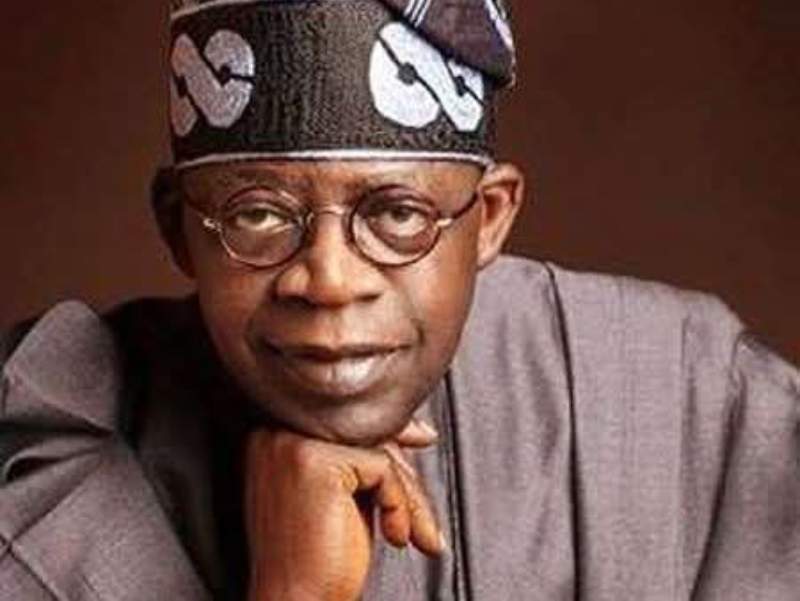


By Celestine Okafor (Editor-in-Chief) @CeleOkaf11
Foremost Civil Society leader and Executive Director of Civil Society Legislative Advocacy Centre (CISLAC), Comrade Auwal Ibrahim Musa Rasfanjani, has identified key factors that have encouraged insecurity in Nigeria and how efforts can be channelled towards arresting the ugly trend.
In a position paper he presented on Thursday, April 15, 2021, at a Press Week/Lecture organised by the Nigerian Union of Journalists (NUJ) titled: "Insecurity In Nigeria: Restoring Peace, Unity And Progress", Rasfanjani contends that unprecedented systemic corruption with the resultant increasing youth unemployment rate and rising poverty level has exacerbated varying degree of insecurity which continues to frustrate efforts at achieving peaceful, secured and progressive Nigeria.
He also argues that the magnitude of national insecurity we currently experience in the country today is a direct cost of corruption, bad governance and social injustice, adding that the nation cannot successively restore peace, unity and progress without giving in-depth attention to the fundamental challenges that necessitate insecurity, disunity and uneven development.
Rasfanjani however pointed out that the recent development in the Defence sector where procurement process and expenditures are not only corruption-prone but also buried in secrecy has fuelled insecurity in great proportion.
He stated that "This in effect, results in lack of accountability of whopping sums hitherto approved for the procurement of weapons and recurring denial by successive Security Chiefs, of the existence of the weapons. Defence corruption has done unforgivable damage to successive administration’s efforts at securing the lives and property of the citizens. Efforts of security agencies at curbing violence, insurgency, banditry and kidnapping are hampered by deep systemic corruption", Rasfanjani revealed.
He blamed the successive governments for the rising cases of corruption which he maintains, has worsened insecurity in the land, saying that the growing budgetary allocation to the nation’s Defence and Security sector with contending political struggles for security votes, has exacerbated corruption, which according to him, is not far-fetched in Nigeria’s security sector.
"Nigeria accounts for about 70% of the illegal small arms in the West Africa sub-region. The lack of adequate resources for institutions, especially those in the criminal justice system, is a sad reality with agencies relying on foreign aid for substantial amounts to carry out their activities.
"I must express unreserved worry over the unhealthy and divisive agitation for separation by different groups from the respective geo-political zones in the country, with growing threats, precarious verbal attacks and hate speeches, which, if not holistically addressed, may pose grievous challenges to the peaceful-coexistence, unity and diversity of our beloved nation", the CISLAC Executive Director warned.
Rasfanjani who is also the representative Head of both the Amnesty International (AI) and Transparency International (TI) in Nigeria, also warned that "Although Section 39 (1) of the 1999 Constitution of Federal Republic of Nigeria which provides Nigerians with the right to freedom of expression, including the freedom to hold opinions and to receive and impart ideas and information without interference, however, related experiences both within Nigeria and across the continent, have revealed that freedom of expression, if not carefully exercised, occasionally gives room to dangerous speech, which incites violence or genocide".
The Civil Society leader said that while the complexity, dynamism and sensitivity associating with ethnocultural and religious issues in the country is understood, he urged the various groups to thread carefully and shun unguarded statements that could result in an unwary response or verbal attacks that may further amplify the present tension-soaked situation in the country.
Rasfanjani stressed that sensationalised contents on social and traditional media with observed cases of unacceptable innocent and deliberate misrepresentations have continued to trigger inflammatory statements and hate speeches with resultant ethnoreligious, political crises and disunity across the country.
He said that in recent times, it has become very worrisome, that fast eroding professionalism has continued to dominate coverage and reportage by some journalists and media outfits in Nigeria. He pointed out that it has become a huge concern that many journalists operate without adequate knowledge and understanding of relevant laws regulating the conduct of the media like publication of offensive materials law, Penal Code Act, Rule of prior restraint, Official Secrets Act, Newspapers (Amendment) Act, Obscene Publications Act, Freedom of Information Act, etc.
In addition to these, Rasfanjani stated that the law of ethics of communication in the context of journalism cautions on censorship, defamation, libel, slander, copyrights, national security, sedition, judicial precedents, obscenity, civil suits and spying, among others.
"While innocent of the laws is never an excuse, adequate knowledge of relevant legal provisions remains very paramount to avoid slanderous publications that exacerbate tensions and crises among diverse groups in Nigeria. A well-informed journalist or media outfit should be more concerned about investigative and evidence-based journalism through authenticated fact-finding publication within the provisions of the laws, not pushed by the temptation to publish divisively, misrepresented or derogatory information with the propensity to endanger peace and unity of the country", he maintains.
Rasfanjani however insists that good governance, unity and social justice cannot be guaranteed without strict adherence to the rule of law, adding that effective delivery of democratic dividend to the citizens, rests largely on enabling a legal environment through absolute respect for the rule of law by relevant institutions.
"The rule of law provides that no person is above the law. No one can be punished by the state except for a breach of the law, and that no one can be convicted of breaching the law except in the manner set forth by the law itself. Poor compliance to the rule of law impedes mutual respect, peace, stability, unity, justice and fair play among political institutions and the citizens.
"Effective implementation of the rule of law requires adequate and sustainable measures to ensure adherence to the principles of supremacy of the law, equality before the law, accountability to the law, fairness in the application of the law, separation of powers, participation in decision making, legal certainty, avoidance of arbitrariness and procedural and legal transparency.
Rasfanjani however noted that another level of threat to peace, unity and progress, emanates from the perception of the general public towards the Nigeria Police, which has undoubtedly earned the reputation of being a brutal, corrupt, and inefficient law enforcement institution. The security of any nation, he argues, cannot be guaranteed without a strong law enforcement institution with a high level of professionalism.
He stated that lack of adequate justice for the prevalent extra-judicial activities has discriminatorily enhanced unchecked dehumanisation, human rights violation, and disproportionate response by the Police to, especially civil cases.
"While the Police has a fundamental mandate to secure and protect the citizens, the persistently unjust physical and mental torture experienced and extensively reported by innocent citizens across the country, demonstrates otherwise, and call for immediate operational review and re-alignment to accommodate well-defined rule of engagement in its dealing with civil cases.
"We are worried about the ruthless and ill-thought-out response by the Police in addressing civil cases, just as we bemoan needless brutality leading to the untimely death and dehumanization of innocent citizens and arrogant display of lawlessness by the institution. Poor intelligent gathering, inefficiency, and inadequate response capacity by the security forces have largely paved the way for pervasive criminal activities and other social vices that remain unaddressed despite ceaseless public outcry.
"Also, government’s failure to address pervasive inequality and social injustice provide a breeding ground for security threats, ranging from the terrific insurgency in the Northeast; militancy in the Niger Delta; armed banditry, robbery, ritual murders, kidnapping, rape; cross-border criminal activities of the arms deal, drugs and human trafficking, electoral violence and ethno-religious conflicts. These are mostly the products of corruption and bad governance, which became even more pronounced since 1999 when the current democratic transition began", he stated.
Rasfanjani added that more importantly, the insecurity threats have further reduced the level of liberty to education, especially in the North, where, he said, students across the region no longer feel safe to attend school as a result of persistent attacks and kidnappings by bandits. Growing security threats to the educational sector in any part of the country, according to Rasfanjani, constitutes a major setback to literacy level, peace and progress.
He stated that violent conflicts between nomadic herders and sedentary agrarian communities have escalated in recent years and are spreading across the country, threatening security and stability. This development, he contends, is enabled by a lack of exhaustive investigation and prosecution by relevant authorities.
"Some political saboteurs and other enemies of social integration in most occasions, take advantage of the existing instability to fuel precarious attacks on innocent citizens, primarily for their selfish and pocket-serving interest".
The CISLAC Executive Director also identified what he described as money politics as another lingering challenge threatening democratic culture, peace and unity in Nigeria. He observed that political financing has become a profitable investment in the country.
"Despite the limits to campaign donations as stipulated by the Electoral Act, in 2015 and 2019 general elections, there was no control of electoral spending, as whopping sums were expended on elections. Financial enticement that hitherto dominates Nigeria’s politics pave way for poor leadership, bad governance and disrespect for citizens’ democratic rights.
"Political campaign has become a case of the ‘highest bidder’ emerging the winner. This breeds distrust and dissatisfaction among voters, who feel thoroughly disenfranchised by a corrupted system that fails to adhere to the democratic ideal", Rasfanjani noted.
Despite all the enumerated factors that have contributed to intense insecurity in Nigeria, Rasfanjani however assured that there is still a way out for the country from the pervading climate of fear which has enveloped the nation in recent years and now.
Among his solution recommendations, is that there should be appreciable and sustainable effort by the relevant authorities to prevent breaches of fundamental human rights to protect public order and maintain sanity in the nation's democracy, and also ensure adequate protection of citizen's feeling and physical safety, anywhere in the country.
He also suggests an enabling policy environment with holistic infrastructural services for youth employment opportunities to discourage youth recruitment for violence in all forms and encourage inclusive participation in the nation’s development.
Rasfanjani stated in his recommendations, that adopting strategies for consensus building in Nigeria through such holistic techniques as bringing diverse groups of stakeholders together to engage in shared learning and decision making on legislative and policy issues to enhance collaboration, peaceful co-existence and encourage public participation in governance, is just ideal.
He explained that it is important that governments provide for credible and independent institutions and adequate political space for effective opposition and diverse groups. At the same time, he advised that opposition parties must respect the rule of law and engage in a meaningful and constructive manner in the political process.
The activist canvassed for a strengthening of the judicial institutions to effectively interpret legal provisions that criminalized violence in all forms, including electoral system and processes, adding that sanctioning perpetrators to promote checks and balances in the governance process, support separation of powers and protect minorities or marginalised groups, would help remedy the situation.
Rasfanjani suggested that criminalizing human right violation by the Police with full implementation of existing legal provisions to ensure stringent safeguards to protect human rights, proper and lawful arrests generally, without unnecessary restraints and conduct of lawful searches of criminal suspects as well as the detention of suspects inhumane holding facilities, with their rights to bail secured, is a veritable remedy.
He also pointed out that well-remunerated security operatives will discourage systemic corruption and prevent reported cases of bribery by criminals to escape justice, just as he said that encouraging responsible citizens through active participation in plans, programmes and policies of the governments, will be a sure way out of the insecurity quagmire.
The CISLAC boss noted that the quality of governance diminishes if citizens are ignorant about the benefits of government's plans, programmes and policyholders. He stated that strengthening one-to-one and one-to-many constructive communications between individual legislators and their constituents, in this case, are important elements of participatory governance.
He also suggested that upholding total respect for citizen's civic and political rights, including freedom of expression and access to information, which are at the basis of political participation as guaranteed and highlighted under relevant legal provisions, will help the country's security situation a great deal.
Rasfanjani said that a peaceful and productive society is achieved through effective and efficient service delivery by the state institutions at all levels to demonstrate good governance and democratic dividends. He also added that good governance in this case, according to GIZ means “effective and efficient structures which provide optimal support to citizens in leading a safe and productive life in line with their desires and opportunities”.
The CISLAC Executive Director however recommended for a constructive working relationship among executive, legislative and civil society organizations, to publish guidelines that allow for proper scrutiny of how such security votes are budgeted, spent and monitored, to ensure accountability and prevent deliberate diversion of public funds.
He stated that the strict adherence to the rule of law in governance and policy processes without fear or favour to promote the rights and liberties of the people, preserve the jurisdiction of the court, promote checks and balances of governmental powers, and protect constitutional economics with resultant socio-economic and political development, as another fantastic antidote.
He said that with a genuinely confidential procurement, creating a separate legal procedure could be designed to allow for monitoring by a confidential Senate Committee along with a Unit with suitable security clearance within the Bureau of Public Procurement (BPP).
Rasfanjani suggested for adequate training and retraining programmes for journalists on various legal provisions to ensure that the issues are professionally covered and reported to mitigate tensions and various crises triggered by sensationalized reportage. He added that continuous legislative oversight activities to interrogate Defence procurement activities without fear or favour are paramount for the sustenance of the fight against Defence procurement corruption.
He is equally of the view, that mainstreaming Value Judgement in governance processes and public policy to identify right from wrong policy, or of the usefulness of the policy to the country, is a veritable approach towards addressing the nation's insecurity challenges.
Rasfanjani however added that massive awareness and orientation programmes for citizens on the primary intent of public policy measures throughout its formulation and implementation process would help promote all-inclusiveness, greater trust between the citizens and the government. NNL.