Inside the alarming return of counterfeit, substandard and expired products and what must change under Prof. Mojisola Adeyeye.
By Celestine Okafor (Editor-in-chief)
Nigeria's battle against fake drugs and unwholesome food is entering another critical phase.
For a country whose citizens increasingly depend on medicines to survive, and where food safety is directly connected to the health of more than 200 million people, the continued appearance of counterfeit, falsified, substandard, unregistered and expired products in the marketplace is more than a regulatory problem. It is a national public-health emergency.
The paradox, however, is striking. The National Agency for Food and Drug Administration and Control (NAFDAC), under its Director-General, Prof. Mojisola Christianah Adeyeye, is conducting raids, surveillance, laboratory testing, seizures, market closures and prosecutions on a scale that deserves recognition. Yet the bad foods and bad medicine keep returning, and the bad guys behind the menace are emboldened in their criminality, even more.
In September 2026 alone, NAFDAC disclosed that it had removed 7,210 non-compliant regulated products during a nationwide surveillance between May and July 2026, after inspecting 6,233 facilities across the 36 states and the Federal Capital Territory. Food and water products accounted for 3,633 of those products, while drugs and herbal products accounted for 2,459.
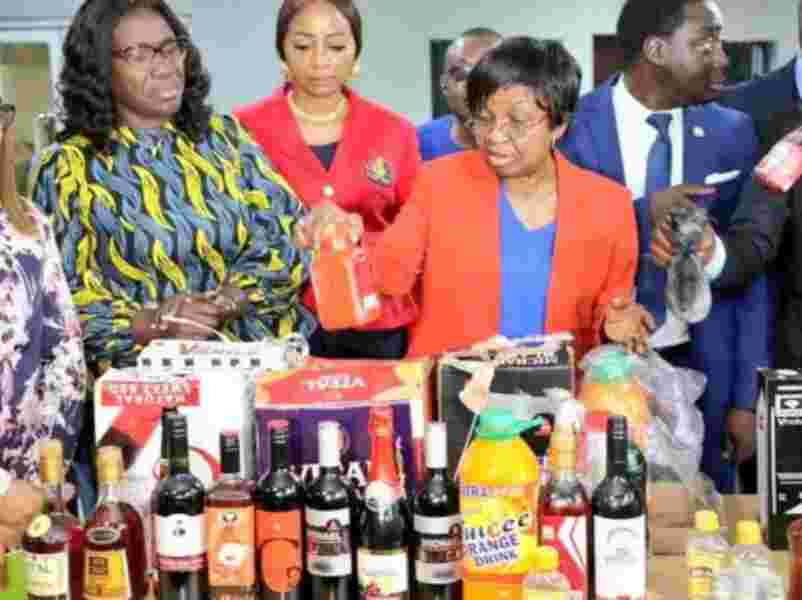
In May, the agency destroyed more than N1.85 billion worth of substandard, falsified, expired and unwholesome regulated products in Abuja.
Earlier, NAFDAC reported the destruction of more than N15 billion worth of fake, expired, counterfeit and banned medicines in Ibadan, while its nationwide campaign has produced 64 convictions for counterfeiting, with sentences reportedly ranging from one to seven years without the option of a fine.
These are substantial enforcement figures.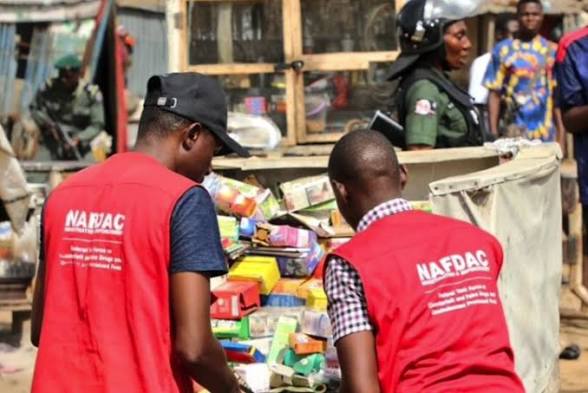
But they also raise the uncomfortable question: If NAFDAC is destroying counterfeit products worth billions of naira year after year, why are Nigerians still encountering suspected fake, expired and substandard products in pharmacies, markets, shops and increasingly through online channels? That is the question Nigeria must confront.
However, the first distinction is that not every bad product is "fake". But there is an important issue that must not be lost in the current public anger. A counterfeit or falsified medicine is not necessarily the same thing as a substandard medicine.
The World Health Organisation (WHO) distinguishes between substandard medicines, which fail to meet required quality specifications, and falsified medicines, which deliberately misrepresent their identity, composition or source. Both can cause treatment failure, poisoning, antimicrobial resistance and death.
An expired medicine is another category altogether. So is an unregistered product, and so is an improperly stored medicine whose active ingredient has deteriorated.
And an apparently genuine product can become unsafe because of poor storage, excessive heat, humidity or inappropriate transportation. This distinction matters because Nigeria cannot defeat the problem through sensational allegations alone.
Indeed, when recent social-media claims accused particular food products of being fake or adulterated, Prof. Adeyeye correctly insisted that allegations must be subjected to sampling and laboratory analysis before regulatory conclusions are reached. That scientific discipline is essential. But scientific caution must not become regulatory complacency. The public deserves both proof and protection.
Already, the scale of the current problem is, indeed, troubling. The strongest evidence that Nigeria still has a serious counterfeit and substandard-products problem comes not merely from social-media complaints but from NAFDAC's own enforcement operations.
In 2025, the agency conducted major operations at three notorious open drug markets — Idumota in Lagos state, Ariaria/Eziukwu in Aba, Abia state and Bridgehead in Onitsha, Anambra state. The operation uncovered banned, unregistered, expired and counterfeit medicines. In Lagos, counterfeit GSK medicines and vaccines were reportedly discovered hidden in toilets, while thousands of shops were screened and placed on hold.
By September 2026, Prof. Adeyeye disclosed that more than 13,740 truckloads of counterfeit and substandard products, valued at over N1.5 trillion, had been evacuated and destroyed during operations at Idumota, Onitsha and Ariaria between February and March 2025.
The figures are downright staggering, but they reveal two realities simultaneously.
First, is that NAFDAC is not sitting idle. The
second, is that the illicit market is extraordinarily large. A regulatory agency that repeatedly removes truckloads of illegal products but continues to find the same products later must ask whether it is fighting the supply chain or merely cleaning up its consequences. That distinction may determine the future of Nigeria's drug-control system.
But the most damning question, however, is what happens after the raid? This is where the present NAFDAC strategy deserves the most searching examination. Raids often attract media headlines. Seizures demonstrate activity. Destruction demonstrates that dangerous products have been removed. But the ultimate measure of success is not how many counterfeit drugs NAFDAC destroys, but how many counterfeiters, financiers, importers, manufacturers, distributors and complicit professionals, are permanently removed from the business.
A September 2026 investigation by BusinessDay newspaper based on NAFDAC enforcement records and regulatory disclosures, reported that the agency conducted 5,210 investigations and 45,657 surveillance operations between 2023 and 2025 but pursued only 40 cases for prosecution.
If those figures accurately reflect the agency's records, they demand serious scrutiny. They suggest a potentially enormous gap between detection to seizure to investigation to prosecution to conviction and to deterrence. The gap is crucial.
A trader loses N20 million worth of counterfeit medicines today but returns to the market tomorrow if the criminal network financing the trade remains untouched.
A situation where the warehouse is sealed, the warehouse operator disappears, the importer remains free, the manufacturer remains unidentified, the financier remains invisible, the distribution network survives, and the counterfeit products return, is certainly counterproductive. That is not eradication. It is displacement.
A fair investigation by CERTIFIED PRODUCTS—Nigeria's first consumer and brand Newspaper, and sister publication of Nigerian News Leader Newspaper Since 2006—acknowledges that the present administration of NAFDAC under Prof Adeyeye is getting somethings right. It has undertaken important measures such as
intelligence and enforcement becoming more aggressive. The agency has targeted major open drug markets rather than restricting enforcement to individual retail shops. This is significant because open markets can function as distribution hubs.
Secondly, destruction of seized products has been intensified. The destruction of billions of naira worth of products prevents seized materials from being recycled into the market. The Abuja destruction exercise in May 2026 is one example.
Thirdly, state-level task forces are being created..NAFDAC established task forces involving itself, state ministries of health, the Pharmaceutical Council of Nigeria and the police in states including Rivers and Ebonyi. The stated objective is a coordinated surveillance and removal of counterfeit drugs and unwholesome foods.
The fourth is that NAFDAC has strengthened post-market surveillance. The food and drug agency's own risk-based surveillance programme examines selected antimalarials, antibiotics, maternal-health products, antihypertensives, antidiabetics and other medicines. Its purpose is to generate evidence for regulatory action.
The agency has a clear strategic target
NAFDAC's 2024–2027 strategic plan targets 100 per cent closure of open drug markets by 2027, with interim targets of 25 per cent in 2024, 50 per cent in 2025 and 75 per cent in 2026. It also targets 80 per cent of investigations resulting in enforcement actions by 2027. These are ambitious objectives. The real test is whether Nigerians can see measurable progress against those targets before the end of 2027.
However, the public's experience tells another story. The continuing discovery of illegal products means that enforcement has not yet solved the underlying problem.
Academic research identifies several structural weaknesses, among which is porous pharmaceutical supply chains, open drug markets, inadequate detection technology, weak cross-border monitoring, dependence on imported medicines and insufficient local pharmaceutical manufacturing capacity.
A study of pharmacists in Nigeria found that 93.7 per cent of respondents considered open drug markets a substantial contributor to counterfeit-medicine prevalence, while 64.7 per cent identified poor implementation of regulations as a major obstacle. These findings are important. They indicate that the problem cannot be solved simply by sending more NAFDAC officers into markets..The entire pharmaceutical ecosystem must be repaired.
THE PROF DORA AKUNYILI STANDARD
Any serious examination of NAFDAC inevitably returns to one name: Prof. Dora Nkem Akunyili, a former Director-General of
NAFDAC appointed to the position in 2001 and who transformed the agency's public profile. The historical evidence is compelling.
The World Health Organisation (WHO) records that before 2001, estimates placed the proportion of substandard, fake or counterfeit medicines in Nigeria at around 40 per cent, while a 2005 NAFDAC/WHO/DFID assessment reported a decline to 16.7 per cent.
Former NAFDAC Director-General who succeeded Prof Akunyili, Prof. Paul Orhii later cited the same 2005 figure in discussing the historical trajectory of fake medicine. Akunyili's achievement was not simply about seizures. It involved institutional transformation.
Contemporary WHO reporting described her approach as involving stronger surveillance at ports and airports, inspections of medicine outlets and markets, public education, publication of counterfeit-product lists, staff reforms and prosecutions. Her public-awareness strategy was particularly important. NAFDAC used television, radio, newspapers and local-language messages to teach Nigerians about fake medicines and encourage reporting. The agency also published information about counterfeit products. The message was simple. The public was made part of the enforcement system. That may be one of the most important lessons from the Akunyili era.
Though Akunyili did not defeat fake drugs completely, but she acknowledged that even a very low prevalence of counterfeit medicines was unacceptable because every life mattered. WHO reporting from the period also noted that measuring the precise prevalence was difficult.
Indeed, Orhii later reported that a 2008 survey of antimalarial medicines found that almost 50 per cent did not meet specified standards, demonstrating how difficult it was to convert regulatory success into permanent eradication. Therefore, nostalgia should not replace evidence. The Akunyili era offers lessons, not a mythical period when fake drugs disappeared.
THE PAUL ORHII ERA
The era of Prof Paul Orhii was when technology fully entered the fake drug war. Though it began from the Akunyili regime. But Prof Paul Orhii made more use of technology-assisted authentication of food and drug products. NAFDAC adopted mechanisms including the Mobile Authentication Service (MAS), which allowed consumers to authenticate certain medicines with mobile phones. Research examining the system found that MAS was an important anti-counterfeiting technology, although only about half of surveyed community pharmacists expressed strong enthusiasm for using it, reflecting practical implementation challenges.
Other anti-counterfeit technologies included field-testing devices and product authentication systems. The lesson from the Orhii period is therefore clear: The counterfeit trade cannot be defeated by physical raids alone. It requires technology.
NOW, THE PROF ADEYEYE ERA
The present era of Prof Mojisola Adeyeye as NAFDAC boss is moving from raiding the illicit products market to attacking the system. Adeyeye inherited a problem that was already deeply institutionalised.
She has now been NAFDAC DG since 2017. WHO reported at the beginning of her tenure that her priorities included upgrading laboratories, training and retraining staff, improving regulatory services and strengthening collaboration with WHO. Her current strategy has become increasingly enforcement-heavy. And that is understandable.
But the question for the Adeyeye NAFDAC is whether the agency can now move from enforcement visibility to sustainable market transformation. Because there is a fundamental difference between destroying counterfeit products and destroying the business model that produces counterfeit products. The first can be done repeatedly. The second requires intelligence, prosecution, financial investigation, border control, supply-chain traceability, judicial cooperation and institutional integrity.
THE BORDER PROBLEM
One of the most revealing developments is NAFDAC's own position on imported counterfeits. In 2025, Prof. Adeyeye said that many of the substandard and falsified medicines found in southeastern markets were imported through porous borders and ports rather than being locally manufactured. Africa Check, while debunking a false social-media attribution to Adeyeye, confirmed the substance of her actual remarks on the importation issue. That means the battle cannot belong to NAFDAC alone. It involves
Nigeria Customs Service; the Nigerian Ports Authority; the Immigration authorities; the Police; the security and intelligence agencies; the Pharmaceutical Council of Nigeria, PCN; the Standards Organisation of Nigeria, SON; the state governments; the local governments; the legitimate pharmaceutical manufacturers and the wholesalers and distributors. A counterfeit medicine that crosses the border undetected is already a regulatory failure before it reaches a Nigerian pharmacy.
OPEN DRUG MARKETS: THE ELEPHANT IN THE ROOM
Nigeria has lived with open drug markets for decades. They are economically important and provide medicines to large populations.
But they create a regulatory dilemma.
NAFDAC's own strategic plan now targets the closure of open drug markets and their replacement with more controlled pharmaceutical distribution arrangements.
The policy is logical from a regulatory perspective. But closure alone will not work unless legitimate traders are given viable alternatives. Otherwise, the trade will simply migrate to hidden warehouses; roadside stalls; informal distribution networks; social media; messaging applications; online marketplaces and private homes. The future of counterfeit drugs may therefore be less visible than the old open market. That makes intelligence more important than ever.
THE NEW THREAT: ONLINE FAKE DRUGS
The World Health Organisation (WHO) warns that falsified medical products are increasingly sold through online and informal markets. Nigeria must therefore assume that the counterfeit drug industry is adapting.
The old counterfeit dealer had a physical shop, while the new one may have an Instagram account; a WhatsApp number; an online marketplace; a delivery rider; a bank account and a warehouse hidden outside the traditional drug markets. NAFDAC, therefore, must consequently develop a digital enforcement unit specifically dedicated to illegal online pharmacies and sellers of regulated products.
WHAT ABOUT EXPIRED AND "ABOUT-TO-EXPIRE" PRODUCTS?
This is another area requiring much greater attention. An expired medicine should never be on sale. But medicines approaching expiry can create another problem where traders deliberately acquire short-dated products at heavily discounted prices and push them into the market without adequate inventory controls. Nigeria needs mandatory FEFO (First Expiry, First Out) inventory management throughout the pharmaceutical supply chain. Wholesalers, distributors, hospitals and pharmacies should electronically record batch numbers, manufacturer, NAFDAC registration, manufacturing date, expiry date, supplier and buyer. Once a product passes its legal sale/distribution threshold, the system should automatically flag it.
THE TRACEABILITY REVOLUTION NIGERIA NEEDS
Pharmacology experts are of the view that this may be the single most important technological reform. Every registered medicine should have a unique, digitally verifiable identity. Not merely a NAFDAC number printed on a box. A counterfeit manufacturer can copy a printed number.
NAFDAC has already operated systems involving authentication technology, but the next generation should be a national end-to-end traceability platform. A consumer should scan a product and see manufacturer, batch, production date, expiry, authorised importer authorized distributor, registration status and recall status. The system should also detect suspicious duplication. If the same serialised product appears simultaneously in Lagos and Kano, the system should flag it. That would move Nigeria from reactive regulation to predictive regulation.
LABORATORIES MUST BE THE HEART OF THE SYSTEM
No anti-counterfeit campaign can succeed without fast laboratory confirmation. Nigeria should establish a national network of fully equipped regional food and drug laboratories capable of rapid testing. WHO lists NAFDAC's Yaba laboratory among quality-control laboratories recognised in its prequalification framework, following a 2023 inspection. But Nigeria's size demands more than central capacity. A suspicious medicine should not have to travel unnecessarily long distances before being tested. NAFDAC should establish or strengthen zonal laboratories in places like Lagos — South-West, Aba/Port Harcourt — South-East/South-South, Abuja — North-Central,
Kano — North-West, Maiduguri — North-East and with mobile laboratories capable of preliminary field testing.
NAFDAC NEEDS A PUBLIC "RED LIST"
Perhaps, Nigeria should have a continuously updated, easily searchable national database showing counterfeit medicines; unregistered medicines; recalled products; expired products; banned products; adulterated foods; unsafe cosmetics; fraudulent NAFDAC registration numbers; suspended manufacturers and convicted counterfeiters.
The existing NAFDAC reporting mechanism already permits complaints concerning poor-quality, falsified and unregistered medical products, including evidence uploads. But the system should become far more visible to ordinary Nigerians. Every pharmacy should display a large notice: "VERIFY BEFORE YOU BUY." Every Nigerian should know where to report.
THE JUDICIAL BOTTLENECK MUST END
Perhaps the most serious structural weakness is what happens after arrest. A counterfeit-drug investigation that never reaches court is incomplete. A prosecution that takes years is weak deterrence. And a conviction without recovery of criminal proceeds leaves the financial incentive intact. NAFDAC therefore needs a specialised Food and Drug Crimes Prosecution Directorate, working closely with prosecutors and the judiciary. Nigeria should consider designated courts or specialised judicial divisions for counterfeit drugs, adulterated food, illegal pharmaceutical manufacturing and major regulatory fraud.
And the punishment should extend beyond imprisonment.
Where legally established, offenders should face confiscation of criminal proceeds;
forfeiture of illegal manufacturing equipment; closure of offending premises;
disqualification from regulated businesses;
prosecution of corporate directors and beneficial owners; asset tracing; cross-border cooperation. The objective must be to make counterfeiting financially irrational.
NEED TO FOLLOW THE MONEY
This is where the nation's anti-corruption agencies like the Economic and Financial Crimes Commission (EFCC) and other financial intelligence become important. A fake-drug syndicate is ultimately a commercial criminal enterprise. Where evidence exists, investigators should follow
manufacturer, importer, warehouse, wholesaler, retailer, bank account and the beneficial owner. If NAFDAC confiscates N500 million in counterfeit medicines but cannot identify who financed the operation, the network may simply rebuild. The counterfeit drug problem should therefore be treated partly as organised economic crime, not merely a health violation.
NAFDAC MUST ALSO POLICE ITSELF
There is another uncomfortable issue.
No regulatory system can be stronger than its internal integrity. The historical Akunyili experience demonstrates why institutional integrity matters. WHO's contemporary account described efforts to remove corrupt officials, improve staff morale and strengthen surveillance. Today, NAFDAC should institutionalise random staff rotation in high-risk posts; mandatory declaration of conflicts of interest; anonymous whistle-blower channels; independent complaints investigation; digitalised inspection records;
body cameras for major enforcement operations; electronic seizure inventories;
independent auditing of destroyed goods;
publication of enforcement statistics.
Where officers are compromised, the counterfeit industry can infiltrate the regulator itself. That is why NAFDAC must regulate NAFDAC.
FOOD SAFETY: THE OTHER HALF OF THE CRISIS
The public debate often concentrates on drugs. Food deserves equal attention.
NAFDAC's May-July 2026 surveillance found that food and water products accounted for 3,633 of the 7,210 non-compliant products removed. That is significant because food adulteration can involve false labelling; contamination; expired products; unsafe additives; poor manufacturing hygiene; counterfeit brands; improper storage; fraudulent dates; unsafe processing and
illegal preservatives or chemicals. NAFDAC therefore needs a stronger food-surveillance architecture, especially for products consumed daily by children and vulnerable populations.
WHY THE PUBLIC MUST NOT BE TOLD SIMPLY TO "TRUST NAFDAC"
Trust must be earned through transparency.
The agency should publish quarterly their
Number of inspections, number of samples tested, number that failed, products recalled,
factories closed, importers sanctioned, cases prosecuted, cases convicted, cases dismissed, pending cases, products destroyed, estimated value and geographical distribution. That would allow Nigerians to measure progress. A regulator should not merely announce raids. It should publish outcomes.
A LESSON FROM AKUNYILI THAT MUST BE RECOVERED
Perhaps the most powerful lesson of the Akunyili period was not simply that enforcement could be aggressive. It was that NAFDAC became a household name. People recognised the danger and reported suspicious products. The agency communicated constantly, and newspapers carried warnings. Radio stations discussed medicine safety. The regulator was visible.
That public partnership must be rebuilt.
THE NIGERIAN NEWSLEADER POSITION BASED ON YEARS OF FIELD EXPERIENCE BY CERTIFIED PRODUCTS TV, NEWSPAPER, MAGAZINE, ITS SISTER PUBLICATIONS AND TV PROGRAMME
Nigeria does not need another declaration of war on fake drugs. She needs a permanent national system for defeating counterfeit products. Prof. Mojisola Adeyeye and her team have demonstrated that NAFDAC possesses the capacity to raid, seize, destroy, test, investigate and prosecute. The current evidence does not support the claim that NAFDAC is doing nothing. Quite the contrary. The problem is that the scale of the illicit market remains sufficiently large to demonstrate that enforcement has not yet translated into eradication. And that distinction is crucial.
The agency's own 2024–2027 strategic plan recognises the problem by setting targets for surveillance, enforcement, local pharmaceutical manufacturing and closure of open drug markets. What Nigeria now needs is measurable accountability against those targets.
NEWSLEADER/CERTIFIED PRODUCTS 12-POINT EMERGENCY PRESCRIPTION BASED ON EXTENSIVE ENGAGEMENT WITH INDUSTRY EXPERTS
- Complete the closure and conversion of open drug markets into regulated pharmaceutical distribution centres, while protecting legitimate traders.
- Establish a national digital traceability for every registered medicine and high-risk food product.
- Introduce compulsory serialisation of medicines, linked to a national NAFDAC verification platform.
- Create specialised food-and-drug crime prosecution mechanisms to eliminate the enforcement gap between seizure and conviction.
- Follow the money by bringing financial intelligence and asset tracing into major counterfeit investigations.
- Strengthen border surveillance, particularly at ports, land borders and informal crossing routes.
- Establish regional laboratories and mobile testing units to shorten the time between seizure and scientific confirmation.
- Publish quarterly NAFDAC performance dashboards, including prosecutions and convictions.
- Create a national public counterfeit-product database, searchable by product, batch, manufacturer and registration number.
- Intensify surveillance of online medicine and food sellers, including social-media and e-commerce channels.
- Enforce strict pharmaceutical inventory controls, including FEFO and electronic monitoring of short-dated products.
- Make the Nigerian consumer a regulatory partner through sustained education, simple reporting mechanisms and feedback to complainants.
FINAL VERDICT MUST COME FROM THE NUMBERS
The question is not whether Prof. Mojisola Adeyeye is fighting counterfeit products.
The evidence shows that her NAFDAC is.
The more difficult question is: Is the fight winning? That cannot responsibly be answered simply by counting seizures.
Nigeria must measure success by whether counterfeit products become progressively harder to manufacture, import, finance, distribute and sell and whether the people behind the networks are identified, prosecuted and deprived of their criminal proceeds.
The historical Akunyili experience demonstrates that strong leadership, public mobilisation, staff reform, surveillance and enforcement can produce dramatic reductions. WHO documented the fall from an estimated 40 per cent level before 2001 to 16.7 per cent in the 2005 NAFDAC/WHO/DFID assessment.
The Orhii period demonstrated the value of technology and consumer authentication.
The Adeyeye period has so far demonstrated the power of large-scale intelligence-led enforcement, market intervention and regulatory surveillance.
The next stage must combine all three lessons. Nigeria cannot raid its way permanently out of the counterfeit-drug crisis. It cannot educate its way out, and
cannot legislate its way out. The country
cannot also destroy its way out. It must build a closed-loop national system in which a medicine is traceable from manufacturer or importer to the final consumer; suspicious products are tested rapidly; illegal operators are prosecuted quickly; criminal proceeds are confiscated; regulators are independently monitored; and citizens can verify what they buy with the touch of a phone.
Until that happens, every truckload of counterfeit medicine destroyed is both an achievement and an indictment: an achievement because dangerous products have been removed. And an indictment because those products got into the Nigerian market in the first place. For NAFDAC, therefore, the challenge ahead is no longer merely to conduct more raids. It is to make the counterfeit business itself increasingly impossible to operate. That is the standard by which the next chapter of Nigeria's food and drug regulation should be judged.
Nigerians do not need a regulator that merely catches fake drugs after they enter the market. They need a regulatory system that makes it extremely difficult for fake drugs and unsafe food to enter the market at all. That is the real test awaiting Prof. Mojisola Adeyeye's NAFDAC. NNL.