

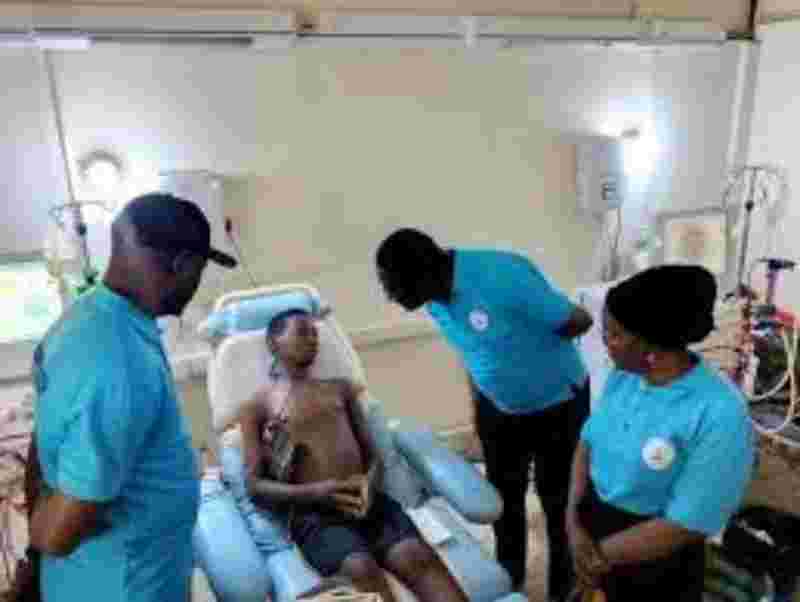
(A Nigerian NewsLeader Editorial, Friday, October 23, 2026)
The high rate of kidney disease in Nigeria now has resulted into a major crisis, a national emergency that can no longer be ignored. The situation about this silent killer require urgent collective action!
It's prevention, early diagnosis and affordable treatment have become national priorities. Kidney failure, as a matter of fact, is a growing public health challenge facing Nigeria which deserves far greater attention than it currently receives.
Across the country, kidney disease is claiming lives, impoverishing families, threatening the productive capacity of young Nigerians and placing an enormous burden on an already overstretched healthcare system. Yet, unlike infectious diseases that often generate immediate public alarm, chronic kidney disease frequently advances silently until its victims require expensive, lifelong dialysis or a kidney transplant. The scale of the problem is currently alarming!
On Tuesday, October 20, 2026, The Guardian newspapers reported that a consultant neurosurgeon, Dr Charles Ugwuanyi, had raised concerns about an estimated 9,000 new cases of end-stage kidney failure emerging monthly in Nigeria. At the same time, Professor Fatiu Arogundade, a leading kidney specialist and Vice-Chancellor of the University of Medicine and Medical Sciences, Abeokuta, Ogun state, estimated that approximately 25.4 million Nigerian adults could be living with chronic kidney disease.
These figures which must be interpreted carefully in public interest, however, demand urgent attention. This is because the monthly estimate is just an expert reported figure, not a verified national surveillance count. The 25.4 million figure is an extrapolation from published research rather than a census of diagnosed patients. But it is noteworthy that Nigeria lack a comprehensive national kidney disease registry which makes it difficult to establish the exact number of affected citizens.
Nevertheless, the available evidence leaves little room for complacency. The Nigerian Association of Nephrology (NAN) has also warned that approximately one in 10 Nigerian adults may be living with chronic kidney disease. In February this year (2026), the association described the situation as a matter of serious national concern. For Nigeria, the central question should no longer be whether kidney disease constitutes a significant national health challenge, but whether Nigeria will act decisively to prevent avoidable kidney damage, detect the disease early and ensure that poverty does not determine who lives and who dies.
A peep into the alarming statistics and the geography of the crisis, indicates that chronic kidney disease occurs when the kidneys progressively lose their ability to filter waste and excess fluid from the blood. It can develop over months or years, eventually progressing to kidney failure, when dialysis or transplantation may become necessary to sustain life.
A 2026 report on the burden of kidney disease in Nigeria, published by The Guardian, cited Professor Arogundade's account of a peer-reviewed analysis involving 14,250 participants. The review produced a pooled prevalence estimate of 20.4 per cent across the studies examined. Applying that estimate to Nigeria's adult population suggested that approximately 25.4 million adults could have overt or otherwise undetected chronic kidney disease.
This figure may not actually indicate the number of Nigerians who have reached an end-stage kidney failure. Many people with early-stage kidney disease can remain stable for years with appropriate treatment and lifestyle changes. The more immediate concern is that an unknown proportion of affected people are unaware of their condition and may only seek medical attention after significant, potentially irreversible damage has occurred.
Looking at the geographical distribution of kidney failing cases, a closer investigation reveals a 2025 study published in the Nigerian Medical Journal that examined haemodialysis centres in Yobe, Borno and Jigawa states and identified that 376 patients were receiving haemodialysis across four centres. The patients' mean age was approximately 47 years. Hypertension was the most frequently reported underlying condition, accounting for 51.9 per cent of the patients surveyed, while 18.6 per cent had an unknown primary cause of their kidney disease.
The study also identified particularly high concentrations of dialysis-dependent patients in specific communities. Bade Local Government Area in Yobe State recorded approximately 11 haemodialysis patients per 100,000 people, followed by Jakusko, also in Yobe, which recorded at eight per 100,000. Askira-Uba in Borno recorded six per 100,000, while Gwoza recorded five per 100,000.
These findings describe the distribution of patients receiving haemodialysis in the surveyed areas, not the total prevalence of kidney disease in those states. People who have not been diagnosed, cannot afford treatment or lack access to dialysis may not appear in such figures.
Furthermore, reports of increasing kidney-related illnesses in parts of southeastern Nigeria have raised concerns about the disease's impact on younger people. Hospital-based studies in Enugu state, South East, Nigeria and other parts of the country have documented substantial numbers of patients with advanced kidney disease.
However, no scientifically defensible national ranking currently establishes which of Nigeria's 36 states has the highest overall kidney disease prevalence.
Lagos, Ogun, Oyo, Osun, Edo, Enugu, Anambra, Imo, Abia, Kano, Kaduna, Plateau, Yobe, Borno and other states all require systematic investigation. Their inclusion here is not a claim that they have identical burdens or that any particular state ranks highest nationally. Rather, it underscores the need for comparable, state-by-state surveillance.
Nigerian NewsLeader newspaper believes that the Federal Ministry of Health and Social Welfare, state ministries of health, teaching hospitals and the Nigerian Association of Nephrology (NAN) should establish a national kidney disease registry. Without dependable data, governments cannot accurately determine where to concentrate screening programmes, specialist services, dialysis machines and preventive interventions.
In recent years, Nigerians are rapidly losing their kidneys. Why? Hypertension and diabetes remain among the leading causes of chronic kidney disease worldwide, and Nigeria is no exception. Persistently elevated blood pressure damages the delicate blood vessels within the kidneys, and gradually reducing their filtering capacity. Diabetes can similarly damage the kidney's filtering structures. Both conditions may remain undetected for years because they do not always produce obvious symptoms.
Unfortunately, many Nigerians do not routinely check their blood pressure or blood sugar. Some consider themselves healthy because they can work, eat and perform normal daily activities. Others avoid hospitals until pain, swelling, weakness, breathlessness or reduced urine output forces them to seek medical assistance.
By that stage, substantial kidney damage may already have occurred.
Other causes include glomerulonephritis, an inflammation of the kidney's filtering units. Other causes includes inherited conditions, sickle cell disease, recurrent urinary tract problems, urinary obstruction; and certain infections, including HIV-associated kidney disease. Environmental exposure also among the causes. Contaminated drinking water, heavy metals and other toxic substances may damage the kidneys.
The findings from northeastern Nigeria, where researchers identified geographical clustering of dialysis-dependent cases around communities associated with the River Yobe, warrant further environmental and epidemiological research. It would, however, be premature to conclude that the river itself causes kidney disease. Proper testing of water, soil and other possible exposures is necessary before reaching such unempirical conclusions.
Other causative factors that precipitate failure of the kidneys among many Nigerian, is bad and dangerous medicines, fake products and unregulated concoctions. Most Nigerians indiscriminately consume medicines and substances whose safety is uncertain. Some also routinely take painkillers without medical advice, particularly non-steroidal anti-inflammatory drugs such as ibuprofen and diclofenac. These medicines can damage the kidneys, especially when used excessively, during dehydration or by people who already have kidney disease.
Certain antibiotics and other medicines can also cause kidney injury when improperly used. The danger is compounded by self-medication, incomplete prescriptions and the purchase of medicines from unauthorised sellers. Traditional medicine has an important place in many Nigerian communities, but products of unknown composition, contaminated preparations and unregulated herbal mixtures can present serious risks.
In September 2026, the National Agency for Food and Drug Administration and Control (NAFDAC) warned Nigerians about herbal drinks and medicines sold through informal outlets, including motor parks. Its Director-General, Professor Mojisola Adeyeye, cautioned that some products could cause organ failure. The warning followed reports of illnesses and deaths associated with locally prepared alcoholic and herbal concoctions in Ondo State.
Although, not every traditional preparation damages the kidneys, and not every case of kidney failure results from fake drugs. Nevertheless, products containing undisclosed ingredients, toxic contaminants or inappropriate concentrations of active substances can cause severe harm to the kidneys. Alcohol misuse and the consumption of illicit or unregulated substances also deserve attention. Excessive alcohol intake can contribute indirectly to kidney damage through hypertension, liver disease, dehydration and other complications. Some illicit drugs can cause acute kidney injury, while certain adulterated substances pose additional toxic risks.
The government must strengthen NAFDAC's surveillance, product testing and enforcement capacity. Manufacturers and distributors of dangerous products should face appropriate legal consequences, while public education should discourage consumers from equating attractive packaging, traditional claims or social media endorsements with proven safety.
Kidney disease is often associated with old age, but Nigeria's experience demonstrates why that assumption is dangerous.
Professor Arogundade has warned that kidney disease affects substantial numbers of Nigerians between 20 and 50 years of age. In the northeastern study, the average age of patients receiving haemodialysis was approximately 47 years. This is particularly disturbing because the affected population includes workers, parents, entrepreneurs, students and young professionals whose productive years should lie ahead.
A young person who develops end-stage kidney failure may face decades of treatment unless transplantation becomes possible. Families may exhaust their savings, sell property, borrow money or appeal publicly for assistance. The economic implications extend beyond medical bills. Patients may be unable to work regularly. Children may abandon school to care for sick parents, and households may lose their principal source of income. The tragedy is that some of these outcomes can be prevented or delayed through early diagnosis and proper management of hypertension, diabetes and other underlying conditions.
For Nigerians whose kidneys have failed, dialysis can mean the difference between life and death. Yet the treatment remains financially inaccessible to many households.
A report published by The Guardian on March 12, 2026, reveals that the cost of survival is unbearable. The report placed the cost of dialysis at approximately ₦50,000 to ₦80,000 per session in many facilities, while kidney transplantation could cost between ₦25 million and ₦30 million.
Actual charges vary by hospital, location, clinical requirements and the services included. Additional expenses may cover medicines, laboratory investigations, transportation, food and accommodation.
Patients requiring two dialysis sessions weekly could face treatment charges of approximately ₦100,000 to ₦160,000 every week at those reported rates. Over four weeks, that amounts to roughly ₦400,000 to ₦640,000, before associated expenses.
For a low-income household, this is an extraordinary burden.
The Federal Government deserves recognition for introducing a dialysis subsidy that reduced the announced price from ₦50,000 to ₦12,000 per session at participating federal tertiary hospitals in 2025. The Federal Ministry of Health and Social Welfare identified institutions across the country's geopolitical zones for the programme. The intervention represents a significant reduction in the immediate cost of treatment. At ₦12,000 per session, a patient attending twice weekly would pay approximately ₦96,000 over four weeks, excluding other medical expenses.
However, the subsidy cannot solve the problem if it is restricted to selected facilities, if funding is unreliable or if patients must travel long distances to access it.
The government need to publish an updated list of participating hospitals, disclose the programme's funding and performance, and ensure that eligible patients can obtain treatment without arbitrary charges or avoidable delays. For the state governments, they should also establish complementary subsidy programmes, while kidney disease treatment should receive stronger protection under health insurance schemes.
Nigeria's specialist capacity is inadequate for a disease burden potentially affecting millions of people in Nigeria. Presently, the healthcare system is overstretched. A 2024 report in Kidney News, drawing on African renal workforce data, listed approximately 200 nephrologists in Nigeria. Although specialist numbers may have changed since then, the figure illustrates the challenge of providing expert care across a large population.
A December 2025 United Kingdom government report on healthcare in Nigeria cited an estimate of approximately 149 dialysis centres and 600 dialysis machines nationwide, with varying levels of functionality. Other reports have counted fewer operational machines, illustrating differences in the dates, definitions and coverage of available data. The important point is that equipment numbers alone do not guarantee access. Machines require reliable electricity, water-treatment systems, consumables, trained personnel, maintenance and adequate infection-control procedures.
Where facilities are concentrated in major cities, rural patients must travel farther and spend more. Where machines are insufficient, waiting times increase and treatment schedules may be disrupted. Also,
missed dialysis can result in dangerous fluid accumulation, electrolyte disturbances and other life-threatening complications. The financial consequences are equally serious. Kidney disease treatment consumes household resources that might otherwise support education, housing and small businesses. At the national level, preventable illness reduces productivity and increases pressure on public hospitals, charitable organisations and government assistance programmes.
To reduce cases of kidney failures in the country, the Nigerian government needs a comprehensive national kidney disease prevention and control programme which will be coordinated by the Federal Ministry of Health and Social Welfare in partnership with state governments, the Nigerian Association of Nephrology, NAFDAC, the National Health Insurance Authority, universities and civil society organisations.
There should also be routine screening which must become a priority. Primary healthcare centres should offer affordable blood pressure checks, blood sugar testing and appropriate kidney assessments for people at elevated risk. Urine albumin testing and blood creatinine measurements, with estimated glomerular filtration rate calculations where indicated, can help identify kidney damage before advanced symptoms emerge. Added to this, is that screening should particularly target people with hypertension, diabetes, a family history of kidney disease, sickle cell disease or other recognised risk factors.
The government also should expand access to affordable dialysis and transplantation. The existing subsidy should be sustained, independently evaluated and extended to more public hospitals. Kidney care should be incorporated more comprehensively into health insurance with financial protection for low-income and vulnerable patients. There is urgent need for governments to invest in nephrologist training, specialist nursing, laboratory services, dialysis equipment and maintenance. Teaching hospitals should collaborate with state facilities to develop regional referral networks and reduce delays in diagnosis.
On their path, NAFDAC and other relevant agencies of government should intensify action against counterfeit medicines, toxic concoctions and unregistered products. Also, public campaigns should explain the dangers of indiscriminate painkiller use, unsafe herbal mixtures, excessive alcohol consumption and illicit drugs. The government should investigate suspected environmental clusters through independent scientific research, including water-quality testing and exposure assessments. Findings must be published transparently, and communities facing demonstrated risks should receive prompt protection.
Public education must emphasise healthier lifestyles. Nigerians should reduce excessive salt consumption, maintain healthy body weight, exercise regularly, avoid tobacco, limit alcohol intake and seek medical advice before taking medicines or herbal preparations. People already diagnosed with kidney disease should receive individualised medical guidance rather than relying on unverified online remedies.
NIGERIAN NEWSLEADER'S POSITION
This news medium believes that the growing burden of kidney disease requires a national response built on prevention, reliable statistics, affordable treatment and public accountability. Government should make kidney care a national priority.
We commend the Federal Government's dialysis subsidy as a positive intervention, but insist that its benefits must reach more Nigerians. A policy that reduces treatment costs at selected hospitals is valuable. A sustainable national system that prevents avoidable kidney failure and protects patients from catastrophic expenditure would be transformative.
We also call on the Federal Ministry of Health and Social Welfare to establish a national kidney disease registry. They should publish regular epidemiological reports and coordinate state-by-state surveillance of the kidney case. State governments need to identify local risk factors, strengthen primary healthcare and make screening accessible to ordinary citizens.
In addition to this, we urge the National Health Insurance Authority to work towards a comprehensive financial protection for kidney patients, including affordable dialysis, essential medicines and appropriate transplant-related services. Most importantly, Nigerians must reject the dangerous belief that kidney disease is always incurable, that it affects only older people or that herbal and over-the-counter products are automatically safe. Early diagnosis can make a substantial difference, while responsible medication use and control of blood pressure and blood sugar can help prevent or delay many cases.
The kidney disease crisis is not merely a medical problem, it is an economic, social and governance challenge that threatens families, productivity and national development. Nigeria cannot afford to wait until millions of people require expensive treatment before taking preventive healthcare seriously.
The time to act is now. Every preventable case avoided, and every patient diagnosed early and every family spared the devastating cost of kidney failure, represents a victory for public health. The measure of a responsible government is not only how it treats the sick, but also how effectively it prevents avoidable illness and ensures that poverty never becomes a death sentence. NNL.