

(A Nigerian NewsLeader Editorial, Monday, October 26, 2026)
Nigeria must strengthen the fight against corruption, financial crimes and asset declaration default
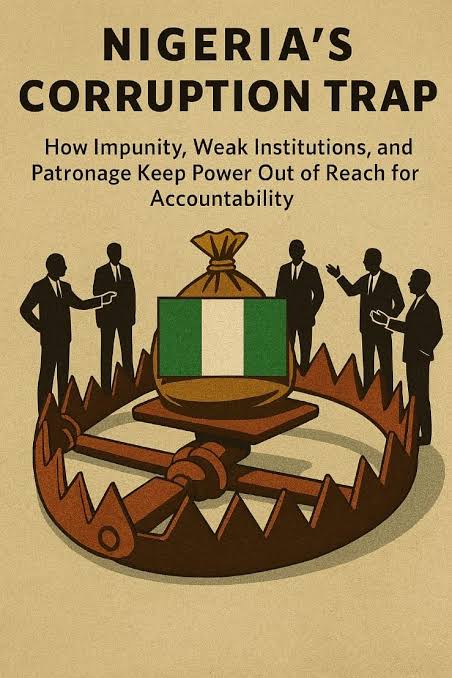
Corruption in Nigeria is one of the major anti-social behaviours that have caused enormous concerns to the nation's citizens and the global community. It also remains one of Nigeria’s greatest obstacles to national development, economic prosperity, public accountability and international credibility.
From the mismanagement of public funds and procurement fraud to money laundering, unexplained wealth and the failure of public officers to comply with asset declaration requirements, the problem extends beyond individual misconduct. It exposes weaknesses in institutional enforcement, transparency and the rule of law in the country.
Nigeria cannot build a prosperous, secure and orderly society while public resources intended for schools, hospitals, roads, electricity, security and employment are diverted into private pockets. The country also cannot restore public confidence in government through mere anti-corruption slogans, periodic arrests or highly publicised investigations alone. What Nigeria needs is a stronger institutional framework that makes corruption difficult to commit, easier to expose, certain to attract lawful consequences and impossible to conceal indefinitely.
Therefore, firming up institutional mechanisms for an open society should become a national priority. Nigeria must strengthen the fight against corruption, financial crimes and asset declaration default. The country is not without laws and institutions to combat corruption. The challenge is ensuring that they operate effectively, independently, transparently and without political interference.
The Economic and Financial Crimes Commission (EFCC) investigates and prosecutes economic and financial crimes, including money laundering, fraud and other offences within its statutory jurisdiction.
The Independent Corrupt Practices and Other Related Offences Commission (ICPC), established under the Corrupt Practices and Other Related Offences Act, 2000, investigates and prosecutes corruption-related offences and undertakes preventive measures, including the examination of public-sector systems vulnerable to abuse.
The Code of Conduct Bureau (CCB) administers the asset declaration regime for public officers and investigates alleged breaches of the constitutional Code of Conduct. Cases requiring adjudication may be referred to the Code of Conduct Tribunal (CCT).
The Nigerian Financial Intelligence Unit (NFIU), established under its 2018 Act, receives and analyses financial disclosures and disseminates financial intelligence to competent authorities. Its work is particularly important in identifying suspicious transactions, tracing illicit financial flows and supporting investigations into money laundering.
Other related institutions like the Bureau of Public Procurement (BPP) and the Nigeria Extractive Industries Transparency Initiative (NEITI) the Office of the Auditor-General for the Federation (OfAG-of the Federation), the Fiscal Responsibility Commission (FRC) and the Public Complaints Commission (PCC)
contribute to the same objective.
The BPP promotes transparency in public procurement, while the Nigeria Extractive Industries Transparency Initiative (NEITI) examines transparency and accountability in the oil, gas and mining sectors. The Office of the Auditor-General for the Federation, the Fiscal Responsibility Commission and the Public Complaints Commission also have important oversight or accountability functions. These institutions possess different but complementary responsibilities.
The ICPC and EFCC have established mechanisms for cooperation with other anti-corruption and law-enforcement agencies, including joint investigations and information-sharing arrangements. Nigeria could therefore build on these foundations rather than allow institutional rivalry, overlapping responsibilities, inadequate resources or bureaucratic delays to weaken the collective effort.
One of the most important safeguards against public-sector corruption is the declaration and verification of the assets and liabilities of public officers. Asset declaration is a constitutional obligation and not a formality.
Paragraph 11 of Part I of the Fifth Schedule to the 1999 Constitution (as amended), requires public officers covered by the provision to declare their assets and liabilities when assuming office. And at the end of every four years and at the end of their tenure, do same. The constitutional framework also addresses false declarations and assets acquired beyond what can reasonably be attributed to legitimate income and other permissible sources.
These requirements are intended to help detect unexplained wealth, discourage conflicts of interest and establish a basis for investigating suspected illicit enrichment.
However, collecting completed forms is totally different from enforcing compliance.
The Code of Conduct Bureau (CCB) needs adequate personnel, modern information systems and stronger capacity to verify asset declarations against legally accessible records of property ownership, company interests, relevant financial information and other appropriate sources. Where the law permits, verification should include comparisons between declarations made before and after public service, with particular attention to substantial increases in wealth that cannot be explained by legitimate earnings.
Public officers who fail to declare their assets or submit false information or otherwise breach applicable provisions should face appropriate legal consequences following proper investigation and due process. The government has a responsibility to strengthen mechanisms for verifying declarations made by high-risk public officers, including senior political office holders and officials responsible for public procurement, revenue collection and the management of substantial public funds.
At the same time, asset verification ought to respect lawful confidentiality requirements and the rights of individuals. Public disclosure of sensitive financial information should follow a clear legal framework rather than arbitrary publication. The objective should be accountability and not public humiliation of person's.
Nigeria’s anti-corruption architecture includes the EFCC Act, the ICPC Act, the NFIU Act, the Money Laundering (Prevention and Prohibition) Act, 2022, and the Proceeds of Crime (Recovery and Management) Act, 2022. The Freedom of Information Act, 2011, also provides an important framework for public access to information held by public institutions, subject to its provisions and exemptions. The Administration of Criminal Justice Act, 2015, provides additional mechanisms intended to improve criminal justice administration and reduce delays in criminal proceedings.
Yet, it is a reality in Nigeria that the existence of these legislation does not and have not automatically guaranteed justice. A credible anti-corruption system requires investigators who can follow evidence wherever it leads or prosecutors who can present sound cases, and judges who can adjudicate independently, and coupled with public institutions that comply with lawful orders. As a matter of fact, stronger laws require independent institutions.
Anti-graft agencies need to be protected from improper political pressure while remaining accountable for their conduct. Investigations by these anti-graft agencies should be guided by credible evidence, not political affiliation, personal vendettas or the desire to embarrass opponents. The same standards should also apply to members of the ruling political party, opposition politicians, public servants, business people and other persons suspected of criminal conduct. Arresting individuals is not conviction, an allegation is not proof, and the recovery of money does not automatically establish that every suspected offence has been proved. Every accused person is entitled to the protections of the law.
Conversely, political connections, public office, wealth and social status is not something that should become shields against prosecution of accused person's.
Where guilt is established, courts should however impose the penalties prescribed by the law. Illegally acquired assets should actually be recovered through lawful procedures. And recovered public funds should also be transparently accounted for.
Time has indeed come for Nigeria to replace selective accountability with consistent enforcement.
In a serious and accountability hungry country, an open society must give citizens a role. It is a society in which government operates transparently, and where citizens can question public officials, and the media too can investigate matters of public interest, and even wrongdoing can be reported without fear of retaliation.
The fight against corruption cannot be left to anti-graft agencies like the EFCC, the ICPC, the CCB and the NFIU alone. Citizens frequently encounter corruption at the points where government services are delivered. They may witness demands for unofficial payments, inflated contracts, diversion of public materials, employment racketeering or the manipulation of recruitment and procurement processes. Nigeria therefore needs accessible, secure and trustworthy reporting channels through which citizens can submit complaints and supporting evidence to the appropriate authorities for immediate intervention in the public interest.
In Nigeria, time has come for the Anti-graft agencies to strengthen their confidential reporting systems, secure digital portals, telephone channels and physical complaint offices. Reports should receive reference numbers so that complainants can follow their progress without compromising investigations. Whistleblowers who report suspected wrongdoing in good faith need meaningful protection against dismissal, intimidation, threats, harassment and other forms of retaliation. Nigeria has had whistleblowing initiatives, but a durable and comprehensive legal framework is necessary to provide clear protections, procedures and remedies. Such a framework should distinguish good-faith reporting from knowingly fabricated allegations.
In attempting a firm up of the institutional mechanisms for an open society in the country, the government should also improve access to information about budgets, procurement awards, contract implementation, public expenditure and the performance of public institutions. Citizens should also be able to establish not merely how much a government claims to have spent, but what was purchased, who received the contract, whether the work was completed and whether the public received value for money.
Civil society organisations, professional associations, community groups and investigative journalists should be recognised as important partners in this process. Their role is not to replace investigators or courts, but to expose credible concerns, demand explanations and help sustain public scrutiny.
The role of SERVICOM in ministries, departments and agencies deserves particular attention. SERVICOM should become an effective accountability tool.
The Service Compact with All Nigerians was introduced by the former President Olusegun Obasanjo administration to promote service quality, responsiveness, transparency and accountability in public institutions. Its underlying principle is to ensure that citizens are entitled to timely, courteous and professional services, while public institutions should establish service standards and provide channels for complaints and redress.
But SERVICOM, however, should be more than a signboard displayed at the entrance of a government office. Every Ministry, Department and Agency of government should be made to publish tangible service standards, including processing times, fees, required documentation and procedures for escalating complaints. Also, citizens should not be forced to pay unofficial charges to obtain services to which they are legally entitled. And where complaints reveal credible evidence of bribery, extortion, deliberate delay or abuse of office, the relevant institution should investigate it, and where appropriate, should refer the matter to a competent anti-corruption agency.
SERVICOM units need to be mandated to publish periodic performance reports showing complaints received, cases resolved, recurring service failures and corrective action taken, while also protecting personal information. The Presidency and the relevant public service authorities need to urgently strengthen oversight to ensure that SERVICOM commitments translate into evident improvements in citizen's experiences. An efficient public service reduces opportunities for petty corruption and restores confidence in government.
In this efforts however, there are international lesson for the country. Nigeria can learn from other countries that have invested in transparency, digital government, public accountability and effective institutional checks.
For example, Estonia is a country that has developed extensive digital public services and systems for making important government information accessible. The Organisation for Economic Co-operation and Development’s 2026 assessment identifies Estonia’s strong framework for public information, including the publication of procurement information, business and land registry data, and salaries of senior civil servants. Such measures make it easier for citizens and oversight institutions to examine government decisions and identify potential irregularities.
Also, New Zealand is widely associated with strong public-sector integrity standards, transparent administration and independent accountability institutions. Its experience reinforces the importance of ethical leadership, professional public service and credible oversight. International best practice is not simply about creating more agencies or passing additional laws, it is about ensuring that rules are implemented and institutions trusted, public information made accessible and misconduct attracts proportionate consequences. It is about time Nigeria adapts these lessons to its own constitutional arrangements, institutional capacity and social realities rather than attempt to copy another country wholesale.
The international framework is equally important in this regard. The United Nations Convention against Corruption (UNCAC) provides a comprehensive basis for preventing corruption, criminalising relevant conduct, strengthening international cooperation and recovering illicit assets. Its provisions also address public-sector integrity, financial transparency and measures for encouraging the reporting of corruption. Nigeria, therefore, should strive to implement its obligations consistently, cooperate with foreign jurisdictions in tracing and recovering stolen assets, and ensure that recovered funds are properly documented and directed towards lawful public purposes.
There is no gainsaying that corruption is an economic and national security threat.
Corruption is not merely a moral problem. It has direct consequences for the economy and the welfare of citizens. When public contracts are inflated, the government pays more for less. And when public revenue is diverted, resources become unavailable for infrastructure, education, healthcare and social protection. In the same vain, when public appointments are determined by bribery or patronage rather than competence, productivity and institutional performance suffer.
Financial crimes also distort competition, discourage legitimate investment and undermine confidence in the financial system. A credible anti-corruption framework can improve the investment climate by demonstrating that contracts, property rights and commercial transactions operate under predictable rules. It can also help Nigeria strengthen its international reputation and cooperation with financial institutions and foreign law enforcement authorities.
However, asset recovery and prosecutions should be accompanied by preventive reforms. Transparent budgeting, competitive procurement, effective audits, responsible public borrowing and stronger internal controls are indispensable in this circumstance. Nigeria, therefore, need to make it harder to steal public money in the first place, and not merely become more efficient at investigating theft after it occurs.
THE NIGERIAN NEWSLEADER POSITION
The Nigerian NewsLeader newspaper therefore calls on the Federal Government, the National Assembly, the judiciary, the state governments and all relevant public institutions to strengthen Nigeria’s anti-corruption framework through practical and realistic reforms. The government should provide anti-graft agencies with adequate resources, professional personnel, modern investigative technology and the institutional independence necessary to discharge their mandates without improper interference.
The Code of Conduct Bureau (CCB) should strengthen the verification of asset declarations and establish effective mechanisms for identifying non-compliance, unexplained wealth and conflicts of interest.
Also, the National Assembly should review gaps in whistleblower protection and ensure that citizens who report corruption in good faith are protected by clear, enforceable legal provisions. The EFCC, ICPC, NFIU, CCB and other relevant bodies should equally strive to improve lawful information-sharing and coordination while respecting their separate statutory responsibilities.
Public institutions should be compelled to publish more procurement, budgetary and performance information in accessible formats, allowing citizens, journalists and civil society groups to monitor public expenditure. SERVICOM need to be vigorously strengthened, with published service standards, transparent complaint-handling procedures and consequences for persistent failures. The government equally should publish regular, verifiable reports on investigations concluded, prosecutions undertaken, convictions secured, assets recovered and the lawful utilisation of recovered public funds. Such reporting must respect the presumption of innocence, court restrictions and legitimate confidentiality requirements.
The government urgently need to demonstrate that nobody is above the law. Anti-corruption enforcement should be impartial, evidence-based and consistent, regardless of political party, ethnicity, religion, wealth or official position. Nigeria’s future depends not only on the resources it possesses, but also on the integrity with which those resources are managed. An open society cannot flourish where citizens are afraid to report wrongdoing, or where public officials conceal their interests, institutions protect powerful offenders and justice is perceived as selective.
The time has come to move from anti-corruption declarations to real institutional performance. The Nigerian people deserve public institutions that serve them well rather than exploit them, and leaders who account for their stewardship and a justice system that punishes proven wrongdoing in accordance with the law.
The Nigerian NewsLeader newspaper however maintains that a stronger, more open and accountable Nigeria is achievable but only when transparency becomes routine, public participation is protected and the law applies equally to everyone. NNL.