By Princess Simon (Bureau Chief North Central, in Minna)
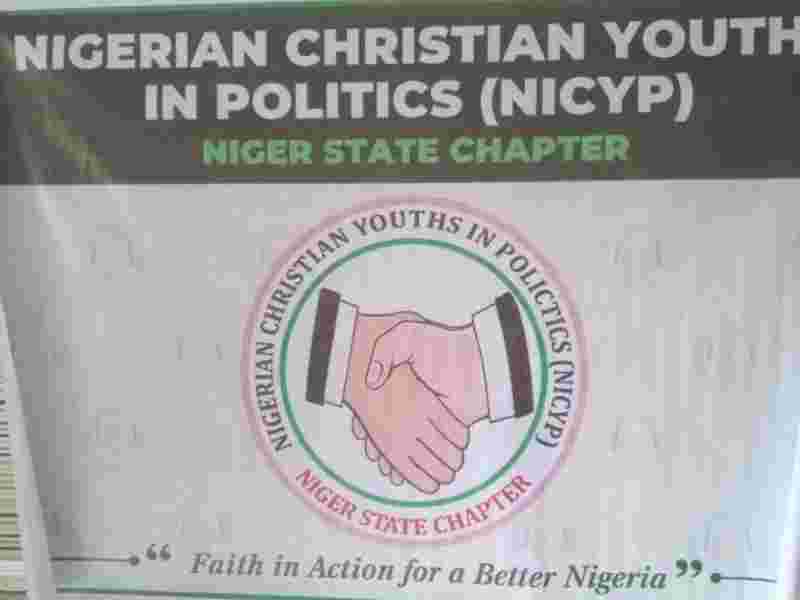
The Chairman Nigeria Christian Youths in Politics (NCYP), Niger state chapter, Evang. Marcus Dobiya Salka has called on political parties to ensure they have Christians as deputy governorship candidates in the spirit of equity, justice and fairness ahead of next year's general elections.
It is unfortunate that despite 45.7 Christian or population in Niger state adherents have suffered denials, discriminations and deprivations during last administrations, and this according to him have continued with the present government which has often claimed that Christians are in the minority.
Speaking on the alleged unequal representations during job placements, political appointments, admissions into public primary, secondary and tertiary institutions and other benefits as citizens, Salka accused the Govrrnor Umaru Bago of placing emphasis on a particular religion over others.
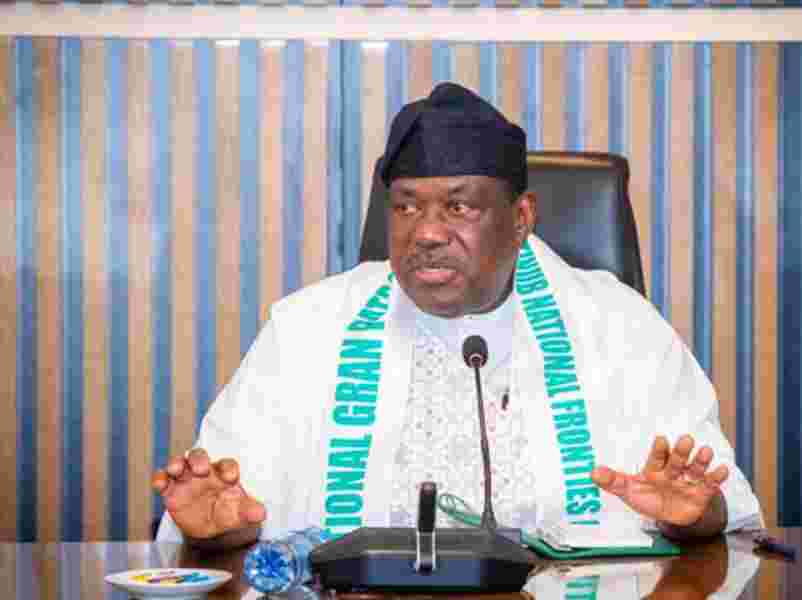
Addressing journalists at the state headquarters of Christian Association of Nigeria (CAN), Salka who spoke in his capacity as leader of Christian youths in politics in the state and Chairman of the Christian Statistics verifications Committee set up by the Christian Association of Nigeria (CAN) Niger State chapter to get accurate number of Christian population in Niger state, said indigenous Christians have consistently been treated as second class citizens in their own state and country due to wrong population projections.
Evang. Marcus Salka told journalists at the CAN secretariat on Sunday that the essence of obtaining officials data was to put records straight and to correct inaccurate projections of Christian population, particularly the data being circulating on social media.
Salka, flanked at the briefing by the Secretary of the Committee, Mr. Barde Christopher Jesse and other members said it is unfortunate that Christians are being under-represented due to inaccurate projections on Facebook and in some quarters. "Unfortunately Christians are 45.7% of the entire Niger state population".
"Out of the seven million, four hundred and seventy- eight thousand, four hundred and seventeen (7,478, 417) population projected, Christians are three million, four hundred and seventeen thousand, six hundred and thirty six (3,417,636) representing 45.7 per cent".
Displacement caused by insecurity in parts of Niger state is one of the basic factors that altered the distribution of Christian communities, Salka said, adding that the essence of the data was to correct mistakes of inaccurate projections of Christian population, particularly those circulating on the social media/Facebook.
Salka stated in clear terms that Christians are 45.7 per cent compared with approximately 46.1 per cent and 8.2 per cent for the other two religious categories in Niger state.
He recalled that the year, 2006 census population of 3,950,249 for Niger state, comprised of 2, 032, 725 males and 1, 917, 524 females, adding that Nigeria's last official population census however did not consider religious affiliations, hence making 45.7 per cent figure an estimate based on available demographic projections, surveys and research carried out in 2025.
The Christian youths in politics leader said, “This estimation was derived from the 2025 projected population of 7, 478, 417 for Niger state by the Niger state Bureau of Statistics, thereby putting the Christian population at approximately 3,417,636".
Christians not actively participating in politics as being held in some quarters is a matter of trust that those in politics should be able to represent every Nigerlite irrespective of tribal, religions and political considerations, adding however that, “The size of Christian population should not be judged by the level of participation in active politics.
It is possible that Christians over the years trusted people, non-Christians to represent them at all tiers of government, adding however that those they trusted failed to live up to expectations as they become more and more religious biased thereby widening the gap between Christians and Muslims the more.
According to Salka, “That some Christians do not participate in active politics does not mean we do not have the number. Christians make up a significant population in Niger state.
“We cannot, and we will never keep quiet and then allow those who do not know our population to project or assume figures for us for their selfish interests”.
Also linking changes in the distribution of Christian communities to prolonged insecurity in parts of the state.
He specifically made mention of; Shiroro, Munya, Paikoro, Rafi, Wushishi and Magama, alleging that attacks in the areas had not only led to unprecedented deaths and displacement of residents who are mostly Christians from their ancestral homes and communities.
Salka also alleged that some Christians had been forced to relocate while others were killed, describing the development as a factor that had affected their demographic distribution.
“Following incessant attacks by armed bandits in Christian-dominated local government areas, especially Shiroro, Munya, Paikoro, Rafi, Wushishi, Magama and others, majority of our brethren were killed, others were forced to relocate to other parts of the state and across Nigeria”.
The displacement of some Christians, he further explained was part of alleged deliberate attempts to reduce Christian population in the affected communities.
Despite the displacement, the group maintained that Christians remained present across both rural and urban communities in the state.
Niger state population had increased substantially, Salka pointed out as he cited the 2025 state projections of 7, 478, 417, comprising 3,790,197 males and 3,688,220 females.
Christians spread across the state's 25 local government areas and represented the Roman Catholics, Anglican, Methodist, Baptist, Pentecostal, Evangelical and African Instituted churches, among others.
The Christian blocs identified by the group included the Catholic Secretariat of Nigeria, Christian Council of Nigeria, Pentecostal Fellowship of Nigeria, Organisation of Organization of African Instituted Churches (OAIC), TEKAN and ECWA-related fellowships.
While drawing the attention of relevant authorities to the reality thay must assept, Salka vowed that the Committee would continue to challenge what it considers inaccurate representations of Christian population in Niger state. NNL.