• DSS NABS MASTERMIND OF EXPLOSION NEAR PALACE OF OHINOYI OF EBIRALAND

    By Celestine Okafor (Editor-in-Chief) @CelestineOkaf11

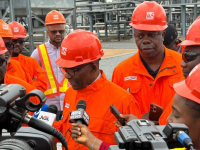
    The Department of State Services (DSS) said it has arrested the mastermind of the Vehicle-Borne Improvised Explosive Device (VBIED) attack which occurred on December 29, 2022, near the Palace of the Ohinoyi of Ebiraland, in Okene, Kogi State.

  • EBONYI GOVT MOVES TO RE-ENGINEER THE STATE'S ECONOMY THROUGH SUPPORT FOR SMES

    By Julius Ituma (Ebonyi Correspondent)

    Ebonyi state governor, Engr. David Nweze Umahi, has approved the disbursement of funds to assist the establishment of new businesses for startups and expansion of existing ones for intending entrepreneurs and the entire business community in the State.

  • ECHOES OF AFCFTA AND ACBF'S 7TH AFRICA THINK-TANK SUMMIT


    By Michael Jegede (Editor-At-Large)

    Last month, the African Capacity Building Foundation (ACBF), African Union (AU) Specialized Agency for Capacity Development whose headquarters is in Harare, Zimbabwe, hosted the7th African Think Tank Summit with the theme, “Implementing the African Continental Free Trade Area (AfCFTA) Agreement: Assessing country readiness and the implications for capacity-building.”

    NIGERIAN NEWSLEADER BUSINESS REPORT reveals that different presentations were made in connection to the theme of the two-day Summit. Among the topics discussed were: Understanding the implications of the COVID-19 pandemic for making AfCFTA a reality, exploring the critical determinants of country readiness in implementing the AfCFTA, identifying key capacity issues facing the implementation of the AfCFTA at the continental and country levels, building the capacity of frontline state actors and institutions to effectively drive the implementation of the AfCFTA. Others are: Building the capacity of SMEs as a driving force for success in the implementation of the AfCFTA, the role of Think Tanks in supporting the implementation of the AfCFTA, and establishing partnerships and coordination mechanisms to enhance country readiness.

    The Summit held virtually provided a veritable platform for African Think Tanks and other key stakeholders to identify and examine key capacity challenges facing countries and other major institutions involved in driving the African continental free trade agenda.

    The virtual gathering which reportedly attracted experts and representatives from about 45 African countries, was convened by ACBF in partnership with the African Development Bank (AfDB), the African Export-Import Bank (Afreximbank), the African Union Commission (AUC), the Arab Bank for Economic Development in Africa (BADEA), the Development Centre for the Organisation for Economic Co-operation (OECD-Dev), the International Cooperation Centre of China’s National Development and Reform Commission (ICC-NDRC), the International Institute for Democracy and Electoral Assistance (International IDEA), the Islamic Development Bank (IsDB), the Southern Voice, the United Nations Economic Commission for Africa (UNECA), and the United Nations Development Programme (UNDP).

    While officially opening the Summit, ACBF Executive Secretary, Professor Emmanuel Nnadozie said the AfCFTA represented a major opportunity to help African countries diversify their exports, accelerate growth, increase intra-African trade, attract foreign direct investment and create jobs through value addition.

    Nnadozie maintained “There is, therefore, a need to find solutions to put the AfCFTA back on track, to accelerate its implementation and to deliver on the promises. Hence the aim of the Summit is to provide a platform for African Think Tanks and other key stakeholders to engage in a high-level deliberation on the most effective ways of addressing the capacity challenges facing the implementation of the AfCFTA to accelerate its implementation and enhance country readiness in implementing and benefiting from the Agreement, especially in light of the COVID-19 pandemic.”

    In his remarks, President and Chairman of the Board of Directors at the Afreximbank, Professor Benedict Okey Oramah represented by Chief Economist and Director, Research & International Cooperation Department at Afreximbank, Dr. Hippolyte Fofack, said the AfCFTA had the potential to transform African economies and boost intra-African trade.

    Senior Director at the African Development Institute of the African Development Bank Group, Professor Kevin Chika Urama, said the Think Tank Summit had come at an opportune time when the African continent is in the process of coming up with policies to achieve growth and “build back better post-COVID-19.”

    Urama further stated that “This is a clarion call for Africa to accelerate the implementation of this agreement to be able to achieve the great implications of trade for development.”

    A Communiqué issued at the end of the Summit reads in part: “We note that the Summit provided us with the opportunity for stakeholders and development partners to have a good understanding of the capacity challenges posed by COVID-19, factors affecting the readiness of countries and the capacity gaps not only of governments but other key stakeholders – private sector, SMEs, civil society, regional economic communities, and the African Union. The Summit also enabled us to identify the actions including priority capacity building programs required to put the AfCFTA back on track and to build the capacity of key stakeholders (government, private sector, SMEs, civil society, regional economic communities, and the African Union) to improve country readiness.

    “We acknowledge that the challenges of COVID-19 can be overcome and the AfCFTA if duly domesticated by countries and implemented as designed, could help Africa achieve the future we want: ‘an integrated, prosperous and peaceful Africa’. This is a common dream that underpins Agenda 2063 and the Sustainable Development Goals.

    “We note that African think tanks are able and ready to play a critical role in supporting African countries in tackling AfCFTA implementation issues through evidence-based policy design and implementation, provision of platforms for stakeholder engagement, dialogue, advocacy, and capacity development activities for state and non-state actors as well as their monitoring and evaluation to assess the progress of the AfCFTA.”

    It further states: “We recognize that think tanks should be the source of the policies for the domestication of the ACFTA, its implementation and monitoring and evaluation at the national, regional and continental levels.

    “We commit to providing advice on the policy options and innovative solutions available to successfully tackle the bottlenecks facing the implementation of the AfCFTA using knowledge, research and networking while expanding our outreach to policy actors and making our research accessible to support the AfCFTA.

    “We encourage African governments and key stakeholders, especially the private sector, to work with African think tanks and capacity building institutions to support the expansion, retention, and use of capacities required to develop home-grown interventions for the effective implementation of the AfCFTA.

    “We recommend that think tanks be supported in conducting strategic studies on human, institutional and transformative leadership capacity gaps facing the continent and to share good practices on how to address them to facilitate the effective implementation of the AfCFTA.

    “We enjoin ACBF to coordinate the development of capacity development interventions to address gaps in key areas identified such as mapping of AfCFTA interventions, awareness, commitment and operational readiness, human capital and skills development, digital capacity, institutional and policy support, knowledge sharing and advocacy based on the ACBF’s strategy to accelerate the implementation of AfCFTA in Africa.”

    Due to the global outbreak of the deadly Coronavirus code-named COVID-19 in January 2020, trading under the AfCFTA which was originally scheduled for July 1, 2020, was postponed to January 1, 2021.

    The AfCFTA agreement has been signed by 54 out of 55 AU Member States. So far, about 35 African countries have ratified and deposited the instrument of ratification at the AU Commission. The Agreement was adopted on March 21, 2018, and came into force on May 30, 2019, thirty days after the 22ndinstrument of ratification was deposited as stipulated in the Protocol establishing AfCFTA.

    As part of the preparation for the commencement of trading under AfCFTA in January 2021, Ghana’s President Nana Addo Dankwa Akufo-Addo had in August this year at a ceremony in Accra, handed over the AfCFTA Secretariat to the Chairperson of the AU Commission, Moussa Faki Mahamat. President Akufo-Addo had as well announced at the event the provision of a residential accommodation to serve as the official residence of the Secretary-General of AfCFTA, Wamkele Mene.

    Among the about 35 nations on the African continent that can be said to have fully keyed into the AfCFTA with the deposition of their instruments of ratification to the legal depository of the AU include Algeria, Angola, Burkina Faso, Cameroon, Chad, Republic of Congo, Côte d'Ivoire, Djibouti, Egypt, Equatorial Guinea, Ethiopia, Gabon, Ghana, Guinea and Kenya. Other are Mali, Mauritania, Mauritius, Namibia, Niger, Rwanda, Saharawi Republic, and Nigeria which only deposited its instrument of ratification on December 5, 2020, having earlier ratified the agreement on November 11, 2020.

    According to Article 3, Part III of the Protocol on Trade in Goods, the specific objectives of establishing AfCFTA are to: (a) enhance competitiveness of services through economies of scale, reduced business costs, enhanced continental market access, and an improved allocation of resources including the development of trade-related infrastructure; (b) promote sustainable development in accordance with the Sustainable Development Goals (SDGs); (c) foster domestic and foreign investment; (d) accelerate efforts on industrial development to promote the development of regional value chains; (e) progressively liberalise trade in services across the African continent on the basis of equity, balance and mutual benefit, by eliminating barriers to trade in services; (f) ensure consistency and complementarity between liberalisation of trade in services and the various Annexes in specific services sectors; (g) pursue services trade liberalisation in line with Article V of the GATS (General Agreement on Trade in Services) by expanding the depth and scope of liberalisation and increasing, improving and developing the export of services, while fully preserving the right to regulate and to introduce new regulations; (h) promote and enhance common understanding and cooperation in trade in services amongst State Parties in order to improve the capacity, efficiency and competitiveness of their services markets; and (i) promote research and technological advancement in the field of services to accelerate economic and social development.

    According to a World Bank publication, “The African Continental Free Trade Area (AfCFTA) agreement will create the largest free trade area in the world measured by the number of countries participating. The pact connects 1.3 billion people across 55 countries with a combined gross domestic product (GDP) valued at US$3.4 trillion. It has the potential to lift 30 million people out of extreme poverty, but achieving its full potential will depend on putting in place significant policy reforms and trade facilitation measures.”

    At the 13th Extraordinary Session of the AU’s Assembly of the Heads of State and Government on AfCFTA held December 5, 2020, the urgent need for member states to kick-start trading activities was accentuated. The South African President and AU Chairperson, Cyril Ramaphosa, was quoted as saying: “Today we stand on the cusp of a new era in the progress of our continent. The moment that we have all been working painstakingly towards has finally arrived…We are all filled with a great sense of pride at how far we have come to reach this moment. And now, we are about to witness the realization of one of the flagship projects of Agenda 2063.

    “Throughout this process, we have stood united, with 55 sovereign AU Member States rallying together, despite different levels of economic development and diverse strategic priorities. The commencement of trading under the AfCFTA on the 1st of January 2021 is one of the most significant milestones in the continental integration project”.

    Ramaphosa further emphasized that “this is going to be the clearest affirmation that Africa is determined to take charge of its own destiny, and that its success and development is fundamentally tied to harnessing the potential and energies of her citizens.” NNL.

  • EFCC TO ASSIST NACOTAN IN BLOCKING REVENUE LEAKAGES IN COTTON INDUSTRY

    By Celestine Okafor (Editor-in-Chief) @CeleOkaf11

    The Executive Chairman of the Economic and Financial Crimes Commission (EFCC), Abdulrasheed Bawa, on Thursday, March 10, 2022, stated that the Commission was willing to work with stakeholders in blocking revenue leakages and ensuring accountability in the Cotton, Textile and Garment industry.

  • ESTATE FIRM, THE ADDRESS HOMES, UNVEILS TWO NEW LUXURY BRANDS IN LAGOS

    * As Chairman/Founder, Bisi Onasanya, Promises 'Comfort And Luxury' To Prospective Home Owners

    By Celestine Okafor (Editor-in-Chief) @CeleOkaf11

    The management of a Lagos based new age Real Estate Development Company, The Address Homes Limited, on Monday last week, February 14, 2022, rolled out two new housing brand schemes into the Nigerian luxury home market.

  • FEDERAL EXECUTIVE COUNCIL OKAYS N13.08 TRILLION FOR 2021 FISCAL YEAR

    By Helen Moghalu (Group Business Editor)

    Nigeria's Federal Executive Council (FEC), at its Wednesday weekly meeting, approved N13.08 trillion budget for the 2021 fiscal year.

  • FG ACTIVATES N240BN ADB FACILITY FOR TECHNOLOGY AND CREATIVE SECTOR

     
    • *Continental Lending Institution Expected To Approve Decision In October
    • VP, Osinbajo's Coordinating Efforts To Involve Agencies And Operators From Both Public And Private Sectors

    By JVINN Nwabiani Okafor (Managing Editor/Head, Business and Economy Desk) @AuntyJVIN

    In an unprecedented move to spur the entertainment, creativity, and technology sectors in the country, the Buhari Administration has commenced the process that will pump over N200bn into the sectors in financing and investment set to take off by the end of the year.

  • Financial Inclusion: CBN ISSUES GUIDELINES FOR BANK NEUTRAL CASH HUBS OPERATIONS

    By Kadiri Abdulrahman

    In a bid to ease huge cash management and deepen financial inclusion, the Central Bank of Nigeria (CBN) has released guidelines for the operation of the Bank Neutral Cash Hubs (BNCH).

  • FIRST BANK OFFICIALLY UNVEILS NEW CORPORATE NAME

    The giant bank, First Bank of Nigeria Ltd., has announced a phased corporate name change of its subsidiaries in the United Kingdom and Sub-Saharan Africa.

  • Fraud: MAN BAGS SIX MONTHS IN MAIDUGURI

    By Abubakar Goni (Maiduguri Correspondent)

    Justice Aisha Kumaliya of the Borno State High Court, Maiduguri, on Wednesday, committed one Bashir Ali to six months in prison for fraud.

  • GOV MATAWALLE PRESENTS N145.43B 2021 BUDGET TO ZAMFARA STATE ASSEMBLY


    By Mohammed Munirat Nasir (Zamfara State Correspondent)

    Zamfara state governor, Dr. Bello Mohammed Matawalle has presented the 2021 Appropriation bill of N145,438,751,000.00 to the Zamfara State House of Assembly for deliberation and approval.

  • GROUP SEEKS PUBLIC SUPPORT, UNDERSTANDING WITH FG ON FUEL SUBSIDY REMOVAL

    * Assures On Economic Growth, Stability

    By Chinelo Ogbozor (Civil Society Reporter)

    A group known as Buhari Media Organisation (BMO ), has urged Nigerians to support the President Muhammadu Buhari administration on the petroleum subsidy removal which has increased the price of fuel from N148 to N162 per litre.

    In a statement issued in Abuja by the group’s chairman, Niyi Akinsiju and Secretary Cassidy Madueke, the group lauded the decision of the Buhari administration to remove the subsidy which, it said, had over the years remained a cesspool of corruption and a means of enriching few individuals to the detriment of most Nigerians.

    BMO noted that the failure of past administrations to take the bold step was due to lack of political will as it became a source of political patronage with the attendant drain on the country’s meagre resources.

    "Now with the removal of the subsidy, much of the resources will be saved for the infrastructural development of the country. This will be made possible as the Buhari administration is famous for being transparent and disciplined in the management of public funds.

    "We believe that this is what makes all the difference from the past administrations".

    The group, therefore, appealed to Nigerians to show understanding as their pain over the removal will be short-lived, as the Buhari administration is focussed on changing the Nigerian landscape with infrastructures such as railways, roads, bridges, housing and other indices of socio-economic development.

    BMO also appealed to the other tiers of government like States and Local Governments to contribute their quota in the efforts to bring development to all the nooks and crannies of the country, stressing that the federal government cannot carry the burden alone.

    "We wonder why some civil society groups and the Nigerian Labour Congress (NLC) are opposing the move considering the inherent benefits that will accrue from its diligent implementation. We urge them to sheathe their sword and lend their support to the government’s effort to reposition the country.

    Meanwhile, the BMO have also assured that Nigeria’s economy and growth will pick up again, and even get much better than its previous standing. It noted that whatever the country is facing now was only transient which it described as result of the shocks in the global economy.

    The group also noted that "these increase, mostly marginal, were transient and only reflective of the global economic downturn", but that Nigeria would soon find its feet and all these would be history.

    “There is nothing to worry about. We just have to endure the little setbacks that the Covid-19 pandemic has occasioned, and keep hope alive. But one thing we can assure Nigerians is that this President will do all that is within his powers to ensure that the Nigerian people do not suffer.

    “The global economy has been badly hit by the effects of the pandemic. With the disruption of supply chains, the prices of food has gone high across the world. The Food and Agricultural Organization (FAO) of the United Nations had in fact highlighted that across the world, the prices of food had risen for the third consecutive month in August. It noted that this had been caused by a weaker dollar and higher demands.

    “The challenge is not limited to Nigeria indeed,” BMO stated, “but what we are assured of is that we have a determined President who would not sit back and watch the effects of the pandemic devastate Nigerians.

    “President Buhari has already ordered the release of food items from our reserves to cater to the high demand of grains across the country. We expect that this would cushion the effects of the high demand, and make these items available.

    “Also, we are encouraged by the words of the Rice Farmers Association of Nigeria (RIFAN) that over five million metric tonnes of rice would be produced during the dry season farming".

    According to the BMO, the President Buhari administration had put in place several programmes, initiatives, and palliatives to cushion the harsh effects of the pandemic on businessmen, farmers, entrepreneurs and the everyday Nigerian.

    “The President Buhari administration has set aside billions of Naira in funds and accessible loans to Nigerians in various cadres and works of life, to provide needed funds for their businesses, livelihoods and survival during the pandemic. We are aware that hundreds of thousands of Nigerians have been accessing these funds and palliatives, and continue to do so.

    “But beyond these, the government will continue to drive its policies to ensure that every Nigerian is provided with the opportunity to improve his life and well-being. This pandemic would only be here a short while, we have seen evidently how Nigeria has weathered the storm despite the global meltdown. That has been a function of the Buhari administration’s strategic policies. Going forward, we strongly believe that things will only get better”, the statement added. NNL.

  • HOW FIVERR CAN HELP SOMEONE SCALE UP THEIR ONLINE E-COMMERCE BUSINESS

    By Juliet Okafor (Managing Editor) @Aunty_jvin

    Hey there, you extraordinary person reading this, I assume you are here because you are trying to start an online E-commerce business or you are stuck trying to increase and upgrade your existing E-commerce business, don’t worry, what we are going to be discussing will help you go a very long way.

  • IDEMILI PROFESSIONALS APPLAUD APPOINTMENT OF NNEKA ONYEALI-IKPE AS MD/CEO DESIGNATE OF FIDELITY BANK

    By Kingsley Dokubo (Finance Correspondent)

    A coalition of Igbo professionals from Idemili Federal Constituency of Anambra State known as Idemili Amaka, has hailed the appointment of Mrs. Nneka Onyeali-Ikpe as the Managing Director/CEO designate of Fidelity Bank PLC.

  • IMF COMMENDS NIGERIA'S RECOVERY FROM HISTORIC ECONOMIC DOWNTURN

    The International Monetary Fund, IMF, rose from its executive board consultation on 2021 Articke IV with Nigeria, declaring that the Nigerian economy is recovering from a historic downturn.

  • Incredible! WHAT NIGERIA BANK AND CORPORATE CEOS EARN AS ANNUAL PACKAGE

    Here are highlights of findings from a new report on the compensation of top chief executive officers in the country

    By Obinna Chima

    A report by Proshare has revealed the full pay package of the Chief Executive Officers (CEOs) of top 10 leading companies in Nigeria, with the Group Managing Director of Access Corporation, Mr. Herbert Wigwe as the highest earner.

  • KEY LESSONS AS NIGERIA FINALLY EXITS ECONOMIC RECESSION


    By Tony Obiechina

    Economic expert, Prof Uche Uwaleke has listed four major lessons to be learnt from National Bureau of Statistics(NBS) report which stated that Nigeria has exited the current economic recession.

  • MOHAMMED MIJINDADI APPOINTED PRESIDENT FOR GENERAL ELECTRIC IN NIGERIA


    By Olajide Benson (Lagos State Correspondent)

    General Electric Nigeria has announced the appointment of Mohammed Mijindadi as President of GE Nigeria. In this role, Mohammed will focus on strengthening GE’s impact in Nigeria, building strong stakeholder relationships across Power, Healthcare, Aviation, and Renewable Energy sectors, and supporting the businesses to develop and execute the market strategy.

  • NAIPCO 2022: THE IMPORTANCE OF SMEs IN MICRO INSURANCE, PENSION

    As the November 3, 2022 date for the Annual National Conference of the National Association of Insurance and Pension Correspondents (NAIPCO) draws nearer, invited guests, speakers and members of the association are gearing up for the event which promises to be engaging, educating and informative.

  • Naira Redesign: CBN INSISTS IT FOLLOWED THE LAW, DUE PROCESS

    By Obinna Ekwueme (Ag. Business Editor)

    In an apparent response to claims by the Minister of Finance, Budget and National Planning, Zainab Ahmad, that her ministry was not carried along by the Central Bank of Nigeria (CBN), in the ongoing process of redesigning three series of the Naira, the Bank insists it followed the law and due process to carry out the exercise, which is 12 years due.

Page 2 of 3

Google News Follow 1  follow us on instagram for web pagesmall

                                      Sponsored Advert: Amazing HAIRS From Hair La Explorah Click/TAP For More INFO!!!WhatsApp Image 2021 12 03 at 9.48.04 PM

Most Read