
By Desmond Ukandu (Editorial Director/Head, Politics Desk)
Nigeria's political journey has probably been the country's most disruptive story. The First Republic inherited a federal parliamentary system. Regional political parties were powerful, and political competition was closely associated with regional identities.
The crisis of the First Republic culminated in the January 1966 military coup. The counter-coup of July 1966, the civil war from 1967 to 1970 and the subsequent centralisation of political power, fundamentally altered the federation. Military rule brought some important administrative changes, including the creation of states and stronger central institutions. But it also weakened democratic culture and normalised government by decree.
Nigeria returned to civilian rule in 1979 under a presidential constitution headed by President Shehu Aliyu Shagari. The Second Republic lasted until the military takeover of December 31, 1983, headed by Major General Muhammadu Buhari. Another period of military rule followed on August 27, 1985, head by a Military President,
General Ibrahim Badamasi Babangida. His government experimented with an endless transition programme that lasted for eight years that culminated into the controversial June 12, 1993 presidential election. INEC's own historical account records that the election was widely regarded as free and fair but was annulled by General Babangida, contributing to another period of political crisis.
General Sani Abacha's government later pursued another transition programme which collapsed following his death in 1998.
General Abdulsalami Abubakar's administration eventually conducted the transition elections that produced the current Fourth Republic on May 29, 1999. Since 1999, Nigeria has maintained civilian government without another military coup.
That achievement matters. But democracy is more than the absence of coups.
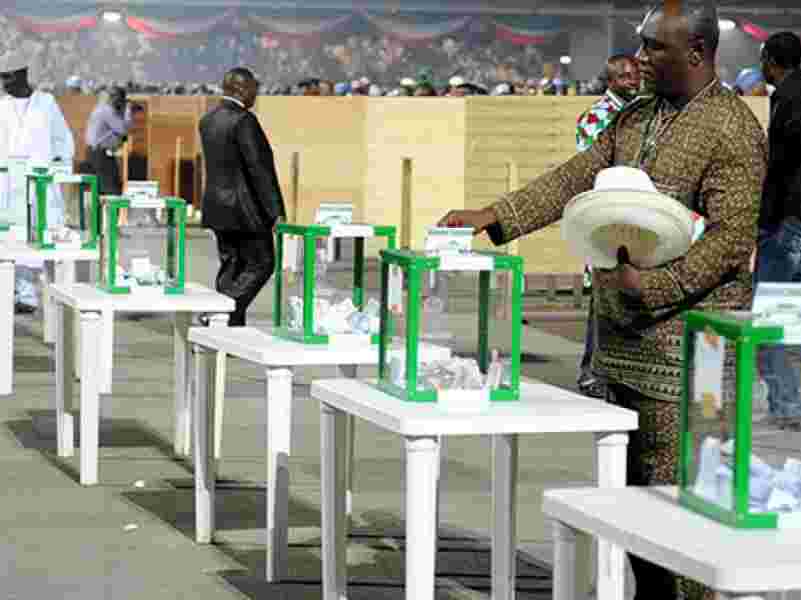
The continuing problems include electoral malpractice, weak political parties, monetisation of politics, low internal party democracy, legislative-executive tensions, institutional distrust, slow justice and inadequate accountability. The evolution of electoral technology — from earlier paper and open-ballot systems to card readers, BVAS and electronic result transmission — demonstrates the effort to improve elections. But technology cannot substitute for political culture.
THE TASK AHEAD
Nigeria's democratic rehabilitation requires:
stronger electoral institutions; transparent political-party financing; internal party democracy; credible voter registration; speedy adjudication of electoral disputes;
protection of judicial independence; stronger legislative oversight; greater transparency in public procurement; accountable local government; effective freedom-of-information mechanisms; and a political culture in which losing an election is not treated as the end of political existence.
The goal should be a democracy in which citizens have confidence that their votes matter before, during and after elections. NNL.