

By Handel Okoli
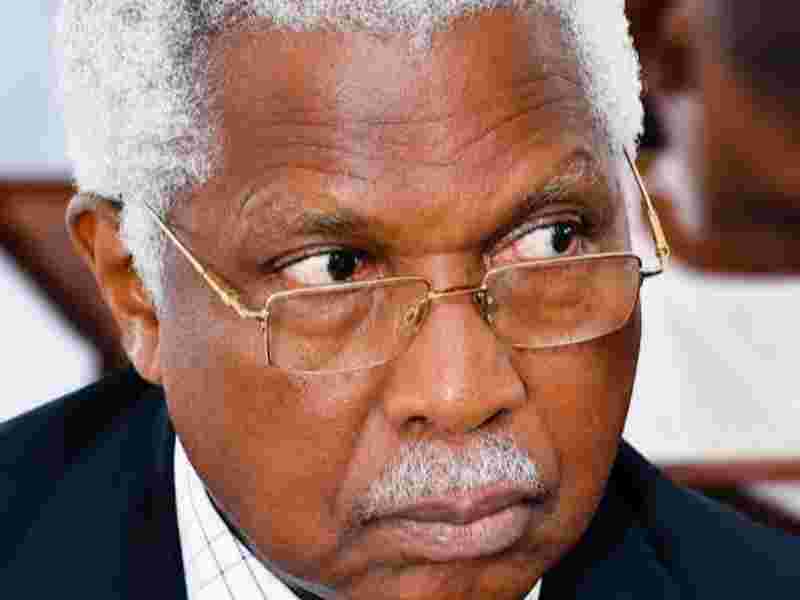
As Nigeria inches towards another general election, against a backdrop of political tension, growing anxiety, and genuine national security concerns, certain aspects of the life and times of one of our finest statesmen have assumed renewed significance. The ideas, convictions, and political philosophy of Dr. Alex Ifeanyichukwu Ekwueme, GCON, former Vice-President of Nigeria, deserves serious reflection as we consider the kind of country we wish to build.
Dr. Ekwueme was born on 21 October 1932. Had he not passed away on 19 November 2017, he would have celebrated his 94th birthday on Wednesday, 21 October 2026. His death elicited an avalanche of tributes and encomiums from across Nigeria, reflecting the profound respect he commanded among people of different ethnic, religious, and political backgrounds.
Even before his death, the late Professor Ben Nwabueze, SAN, had drawn national attention to Ekwueme’s enduring contributions in his 2013 book, The Legacies of Dr. Alex Ekwueme to Government and to Political and Social Development of Nigeria. Among the legacies highlighted were his formidable intellectual credentials as an asset in governance; his commitment to a strong multiparty system, constitutionalism, and the rule of law; his advocacy for the restructuring of the Nigerian federation; his proposal for the equitable distribution of political offices among the six geopolitical zones; and his remarkable public-spiritedness and philanthropy, which I once described as Ekwueme’s extravagant philanthropy.
Yet, perhaps the most compelling of his legacies, and certainly one of the most relevant to Nigeria’s present political circumstances, was his altruistic and pragmatic approach to national integration.
This is one of the fundamental challenges the Buhari administration failed woefully to address. Rather than build upon the emerging spirit of national reconciliation and integration, the administration, in my view, took the country in the opposite direction. President Jonathan had handed over the report of the National Conference to President Buhari, but the latter apparently had other priorities. An important opportunity to confront Nigeria’s unresolved national questions and build a more inclusive federation was consequently lost.
Ekwueme understood that the survival of Nigeria as a united nation depended, to a considerable extent, on addressing the fears of domination, exclusion, and marginalisation among its constituent ethnic and regional groups.
THE QUEST FOR NATIONAL INTEGRATION
Following the end of the Nigerian Civil War in 1970, the urgent questions of national reconstruction, reconciliation, and the restoration of confidence among the country’s diverse peoples occupied a central place in political discourse. These concerns became particularly prominent during the formation of political parties in 1978, as Nigeria prepared for a return to civilian rule.
The political parties recognised, to varying degrees, the need to accommodate the country’s complex ethnic and regional composition. The National Party of Nigeria (NPN), which eventually won the presidential election, adopted a political arrangement that reflected the importance of balancing interests across the North and the South in the distribution of key political offices.
It was within this political atmosphere that Dr. Alex Ekwueme emerged as the NPN’s vice-presidential candidate, alongside Alhaji Shehu Shagari as its presidential candidate.
The significance of the Igbo presence in the vice-presidential calculations of the major political parties of the period deserves particular attention. With the exception of the Nigerian People’s Party (NPP), whose presidential candidate, Dr. Nnamdi Azikiwe, chose Professor Ishaya Audu as his running mate, the other major parties also featured Igbo politicians as their vice-presidential candidates.
These choices were politically significant. At the very least, they reflected an awareness of the need to broaden the political coalitions upon which the Nigerian federation rested and to reassure the Igbo people that, despite the devastation of the Civil War, they remained an integral part of the Nigerian project.
It would, however, be a mistake to regard these political arrangements as merely symbolic. They raised a fundamental question about the future of Nigeria: could the country achieve genuine reconciliation and lasting unity without creating a political environment in which every major ethnic and regional group had a fair opportunity to participate in national leadership?
The prospect of an Igbo man ascending to the presidency subsequently became a subject of considerable political sensitivity. It has been suggested that apprehensions about Dr. Ekwueme’s possible emergence as President, particularly in the context of political succession under the Shagari administration, formed part of the considerations surrounding the military coup of December 1983.
While such claims require careful examination against the available historical record, they underscore a larger and more enduring problem: the difficulty Nigeria has faced in separating the legitimate pursuit of political power from fears about the ethnic or regional identity of those who might exercise it.
The lesson is unmistakable. National unity cannot be sustained by rhetoric alone. It requires deliberate political arrangements, mutual trust, and a willingness to accommodate the legitimate aspirations of all sections of the country.
FROM MILITARY RULE TO THE QUEST FOR A NEW NIGERIA
The military coup that terminated the Second Republic in December 1983 abruptly ended the democratic experiment in which Dr. Ekwueme had played such a prominent role. He was subsequently detained by the military authorities and subjected to imprisonment.
Yet, in a remarkable demonstration of intellectual resilience, that period of confinement provided him with an opportunity to reflect more deeply on the Nigerian condition and to nurture his ideas about the kind of country Nigeria ought to become.
Rather than seize the opportunity to address the structural problems that had contributed to political instability, mutual suspicion, and the struggle for power, successive military administrations introduced institutional changes that, in my view, further complicated Nigeria’s national question.
The creation of additional states and local government areas, the delineation of electoral constituencies, and the conduct and interpretation of population censuses became contentious issues in the struggle over political representation and the distribution of national resources.
The consequences were particularly troubling for what is today the South-East geopolitical zone, whose concerns about representation and its relative position within the federation have remained important elements of the national debate.
The point is not that every administrative or political change undertaken under military rule was necessarily designed to disadvantage a particular region. Rather, it is that institutional arrangements introduced without sufficient regard for fairness, transparency, and the confidence of all constituent groups can deepen existing grievances and undermine national cohesion.
The failure of the Babangida administration to complete a credible transition to democratic rule, culminating in the annulment of the 12 June 1993 presidential election, further aggravated the national crisis and deepened public distrust of the political process.
It was against this background of political uncertainty, institutional distrust, and unresolved questions of national identity that Dr. Ekwueme, having endured detention and imprisonment, began to engage more actively with like-minded Nigerians on the need to reconstruct the Nigerian federation on a more equitable foundation.
His concern was not simply who would occupy the presidency at any given time. It was how Nigeria could evolve a political system in which the struggle for power would no longer be perceived as an existential contest among ethnic and regional groups.
THE 1994/95 CONSTITUTIONAL CONFERENCE: A DEFINING MOMENT
Dr. Ekwueme played a leading role in articulating the structural and constitutional issues confronting Nigeria. In this endeavour, he worked alongside other prominent Igbo leaders, including the Ikemba Nnewi, Chief Emeka Odumegwu-Ojukwu.
The challenge before the South-East was not merely to secure immediate political concessions. It was to participate meaningfully in the reorganisation of the Nigerian state and advance constitutional arrangements capable of protecting the interests of all regions over the long term.
Dr. Ekwueme’s contribution to the 1994/95 Constitutional Conference reflected his characteristic preference for altruistic intellectual engagement over political theatrics. He served on the Committee on the Structure and Framework of the Constitution, where he made significant contributions to debates on the institutional foundations of the federation.
His performance earned him recognition as one of the outstanding delegates. Among the honours he received was an award from The Punch newspaper as its Most Distinguished Delegate.
His approach demonstrated an important lesson in public leadership: political influence is not determined solely by the prominence of the office one occupies. It can also derive from the quality of one’s ideas, the depth of one’s preparation, the clarity of one’s vision, and the ability to persuade others through reasoned argument.
Ekwueme understood that the national question could not be resolved by political slogans or temporary compromises. It required a serious examination of the structures through which power was distributed, resources allocated, and the constituent peoples of Nigeria represented.
RESTRUCTURING AND THE SIX GEOPOLITICAL ZONES
Among Dr. Ekwueme’s most consequential contributions to Nigeria’s constitutional discourse was his advocacy for restructuring the federation and organising the country around six geopolitical zones.
The proposal was rooted in a practical understanding of Nigeria’s political realities. A federation as diverse as Nigeria could not achieve lasting stability if access to its highest political offices and the benefits of national development were persistently perceived as the exclusive preserve of particular regions or groups.
It is important to appreciate the deeper logic of Ekwueme’s proposal. He was not simply advocating a convenient formula for distributing political offices. His vision was to reduce the desperation associated with political power by assuring every part of the country that it had a legitimate place in the national leadership structure.
Where groups believe that political exclusion will permanently deny them access to influence, resources, and opportunities, competition for power can become bitter and destabilising. Conversely, where credible constitutional arrangements provide assurances of inclusion, political competition is more likely to take place within an atmosphere of mutual confidence.
The six geopolitical zones were therefore more than geographical classifications. In Ekwueme’s conception, they offered a framework for promoting national integration, political accommodation, and unity.
The proposal was understandably controversial. Any arrangement that seeks to alter an established distribution of political power will encounter resistance from those who benefit from the existing order. Yet resistance to such proposals does not diminish the importance of the questions they raise.
Indeed, the continuing debate over restructuring demonstrates that the fundamental issues Ekwueme sought to address remain unresolved.
His vision challenged Nigerians to look beyond the immediate question of who should occupy the presidency and confront the more consequential issue of how the Nigerian state could be organised to inspire confidence among its constituent peoples.
ROTATION OF THE PRESIDENCY AND THE UNFINISHED PROJECT
The constitutional deliberations of the Abacha era gave considerable attention to questions of political inclusion, the distribution of power, and the restructuring of the federation. Dr. Ekwueme was among the prominent advocates of arrangements designed to make the Nigerian political system more equitable and inclusive.
The broader principle behind his six-zonal approach was straightforward: if the presidency rotated among the six geopolitical zones in an agreed sequence, every zone would have a reasonable expectation of producing a President within a defined period.
Such an arrangement could also have a practical political benefit. By giving every zone a credible expectation of access to the presidency, it could reduce the incentive for political actors to treat every election as a final opportunity to secure power for their own region.
However, an important distinction must be drawn between a constitutional proposal, a political understanding, and an enforceable constitutional provision. The six geopolitical zones have not been constitutionally entrenched as the exclusive units for rotating the presidency.
This omission is significant.
Nigerian politicians have often demonstrated a willingness to embrace the principle of zoning when it serves their immediate interests, only to abandon or reinterpret it when its consistent application would require sacrifice or accommodation in the broader national interest.
The result is a political culture in which the language of fairness is frequently invoked, but the discipline required to sustain equitable arrangements is often lacking.
Otherwise, why should a country that has repeatedly acknowledged the importance of geographical balance in political leadership continue to treat the six-zone principle as a matter of political convenience rather than a serious framework for national integration?
Nevertheless, the principle underlying Ekwueme’s argument remains compelling. Had Nigeria adopted and consistently implemented an effective constitutional arrangement for equitable regional participation in the presidency, it might have reduced some of the recurring grievances associated with political exclusion and the distribution of national power.
It would, of course, be an overstatement to suggest that rotational presidency alone would have eliminated every complaint about marginalisation, infrastructure, or the distribution of public resources. These challenges are influenced by many factors, including fiscal federalism, the distribution of federal institutions, the allocation of public investment, the quality of governance, and the independence of constitutional institutions.
Yet a credible power-sharing arrangement could have made an important contribution to national confidence by demonstrating that Nigeria’s political system was designed to accommodate all its constituent parts.
This, in my view, is the enduring significance of Dr. Ekwueme’s vision: to transform national integration from a political slogan into a practical constitutional commitment.
AN UNFINISHED LEGACY
As Nigeria approaches another general election, it is worth asking whether the country has sufficiently embraced the lessons of Dr. Alex Ekwueme’s political philosophy.
Have we built a federation in which every region feels a genuine sense of belonging?
Have we developed institutions that command the confidence of citizens, irrespective of ethnicity, religion, or political affiliation?
Have we created a political culture in which the distribution of power is governed by fairness and mutual accommodation rather than by the fear of domination?
These questions are particularly important for the South-East, whose concerns about political representation and equitable participation in national leadership remain central to the wider debate about restructuring and national integration.
Nevertheless, the significance of Ekwueme’s vision extends far beyond the South-East. It is a vision for Nigeria as a whole: a country in which no ethnic group needs to fear another, no region should feel permanently excluded, and no citizen should be made to feel that national leadership belongs exclusively to a privileged section of the federation.
True egalitarianism does not mean that every region must be identical in population, resources, or political influence. It means that differences should not become instruments of permanent exclusion or domination.
It requires a constitutional order that recognises diversity while guaranteeing fairness, dignity, and equal citizenship.
It also requires political leaders who understand that the long-term stability of the federation is more important than the immediate advantages that may accrue to one region, one political party, or one group of individuals.
Ekwueme’s legacy challenges contemporary Nigerian leaders to look beyond the immediate calculations of electoral advantage and ask a more fundamental question: what kind of political system will leave the country more united, more stable, and more confident in its collective future?
NORTH–SOUTH ZONING OF THE PRESIDENCY: A DISTORTION OF THE SIX-ZONAL VISION
Let me state clearly, for the avoidance of doubt, that the current practice of zoning or rotating the presidency between the North and the South does not adequately reflect the essence and significance of Dr. Ekwueme’s six-geopolitical-zone approach.
A North–South arrangement, in my view, falls short of the more inclusive vision underpinning the six-zonal framework. By reducing Nigeria’s complex geopolitical structure to two broad blocs, it risks overlooking the distinct identities, interests, and aspirations of the six geopolitical zones.
The North and the South are not homogeneous political entities. Each comprises distinct geopolitical zones with their own histories, interests, concerns, and expectations. A system that recognises only two broad blocs may provide a measure of regional balance, but it does not necessarily guarantee equitable participation by all six zones.
Most unfortunately, those who appear to have acquiesced in this arrangement include some of the very people for whose protection and political inclusion Dr. Ekwueme’s prescriptions were designed.
His vision was not intended to replace one form of exclusion with another. It was intended to create a fairer political order in which every geopolitical zone would have a credible opportunity to participate in national leadership.
The North–South formula, therefore, cannot be regarded as an adequate substitute for a genuine six-zonal framework. It may address the immediate question of balancing power between two broad regions, but it leaves unresolved the more fundamental question of equity among the six geopolitical zones.
If Nigeria is genuinely committed to national integration, political equity, and a more inclusive federation, it must give serious consideration to the broader and more purposeful framework represented by six-zone rotation.
This does not mean that zoning alone will solve Nigeria’s national question. Nor does it mean that the presidency should become a substitute for the wider constitutional reforms that the country requires. Rather, it means that equitable access to national leadership should form part of a comprehensive effort to build a federation in which every constituent part has a genuine sense of belonging.
The objective should not be to confer permanent political advantages on any region. It should be to establish a credible framework of fairness, mutual accommodation, and shared national responsibility.
That, in my understanding, is the enduring message of Ekwueme’s egalitarian philosophy.
CONCLUSION: BEYOND TRIBUTES TO IMPLEMENTATION
As we remember Dr. Alex Ifeanyichukwu Ekwueme, Ide Oko, on what would have been his 94th birthday, we should do more than celebrate his achievements. We should revisit his ideas, examine their continuing relevance, and summon the political courage to implement those that can help build a truly united and egalitarian country.
Ekwueme’s life reminds us that patriotism is not merely about occupying public office, winning elections, or enjoying the privileges of political power. It is also about the willingness to challenge an unjust status quo, advance ideas that may not yield immediate personal benefits, and work towards a political order that gives every citizen and every region a fair opportunity to thrive.
His legacy calls for a Nigeria in which national integration is not merely proclaimed but practised; in which constitutional arrangements inspire confidence rather than suspicion; and in which the pursuit of political power is moderated by a genuine commitment to fairness and the common good.
The greatest tribute we can pay this distinguished statesman is not the eloquence of our birthday tributes but the seriousness with which we engage his ideas and the determination with which we pursue the national transformation he envisioned.
May his enduring legacy continue to inspire the quest for a more united, equitable, and egalitarian Nigeria.
...Chief Handel Okoli was Special Assistant to Former Vice President Dr. Alex Ekwueme, GCON, and Special Assistant to Former President Olusegun Obasanjo on Special Duties. NNL.