- The Forces Ranging Against Him
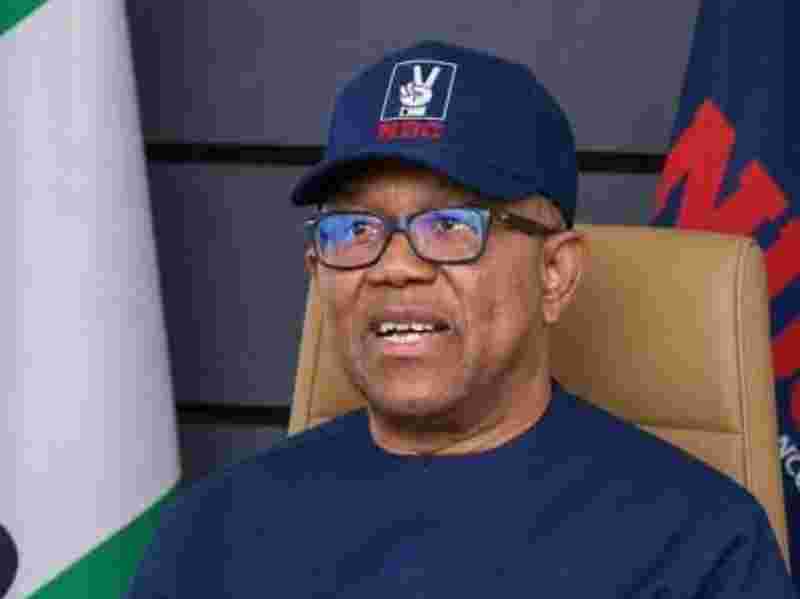
Internal party power struggles, legal uncertainties, the battle for political control and warnings by the ruling party's stalwarts raise fresh questions over the presidential ambition of Nigeria Democratic Congress (NDC) flagbearer, Peter Obi
By Celestine Okafor (Editor-in-chief)
Three months into the commencement of Nigeria's 2027 general elections, the fears and anxieties are becoming palpable, and the most intriguing question is furtively popping up: will Peter Obi, the presidential candidate of the opposition Nigeria Democratic Congress (NDC) feature on the presidential ballot paper for the election slated on Saturday, January 16, 2027?
On the surface, Obi's political journey appears to be progressing. After leaving the Labour Party, whose internal disputes complicated his political future, and subsequently departing the African Democratic Congress (ADC), he found a new platform in the NDC, where he was joined by the former Kano State governor, Alhaji Rabiu Musa Kwankwaso.
The combination of Obi/Kwankwaso political fuse popularly dubbed "OK" initially generated considerable excitement among opposition supporters who believe that a united political movement, combining Obi's appeal among young Nigerians with Kwankwaso's political influence in Kano and parts of northern Nigeria, could mount a serious challenge and effectively impede the re-election of President Bola Ahmed Tinubu in 2027.
But the excitement is increasingly being overshadowed by troubling developments within the NDC. Disagreements over party structures, competing political organisations, questions about the authority of existing state executives, legal uncertainties surrounding the party's registration and increasingly confrontational public statements have raised doubts about the durability of the arrangement.
Now, a more unsettling question has entered the political conversation. Now, the question is: could the party that offered Obi a new presidential platform eventually become the obstacle to his ambition? This question has acquired additional significance following comments by Mr Kassim Afegbua, an All Progressives Congress (APC) politician and Edo State Commissioner for Information, whose June 2026 video interview raised the possibility that the NDC crisis could prevent Obi from contesting the 2027 election. The speculation has intensified following fresh revelations about disagreements between Obi's political movement, the "Obidients" and the established NDC officials.
A recent interview with the NDC chairman in Anambra State has brought the dispute into sharper focus. Although rumours that the NDC leadership might abandon Obi or withdraw its support from him remain unproven, the political circumstances surrounding the former governor's candidacy deserve serious examination. And the
critical question is no longer simply whether Obi enjoys substantial popular support. It is whether that support can be translated into a legally valid candidacy, a functioning political party and an effective electoral organisation.
An examination of the available evidence suggests that Obi's ambition faces genuine risks. But it would be premature to conclude that he will be removed from the presidential race or that the ruling APC has already engineered such an outcome. The more defensible projection is that Obi's political future will depend on how the NDC resolves its internal disputes, whether its legal position remains secure and whether its leaders can reconcile their institutional interests with the expectations of the political movement that has rallied around him.
From the foregoing, a reasonable question would be whether Afegbua's warning was a political prediction or an insider signal? When Afegbua appeared on the SYMFONI political programme in June this year, the title of the published video was explicit: Peter Obi May Drop Out of 2027 Election, NDC Crisis May Consume Him. The interview attracted attention because it touched on a possibility that Obi's opponents and some opposition supporters had begun discussing: that his new political platform might not provide the stability he needs to contest the presidency in the coming election.
Afegbua's remarks were not an official announcement by the NDC that it intended to withdraw its support from Obi. Nor did the interview establish that the APC was orchestrating a plot to deny him a presidential ticket. Nevertheless, the comments deserve attention because they anticipated the kind of internal disagreements that have since become more visible.
In another interview reported by the Vanguard newspaper on September 15, the same Kassim Afegbua predicted that Tinubu would win the 2027 election, and that the former Vice President of Nigeria and presidential candidate of the African Democratic Congress (ADC), Alhaji Atiku Abubakar would finish second and Obi would come third. What a simplistic permutation, many political pundits reasoned. He described the contest as a three-horse race and argued that the APC possessed considerable electoral strength.
These statements reveal Afegbua's assessment of the political balance ahead of the election. They do not, by themselves, prove that the ruling party has a plan to remove Obi from the ballot. Yet the distinction between political commentary and political intelligence is precisely what makes the current situation interesting.
In Nigeria, politicians sometimes make predictions based on observable developments. They, sometimes, draw attention to weaknesses in opposing camps, and sometimes use public statements to influence the political atmosphere. Without independently verifiable evidence of coordination, it would be unreasonable, if not irresponsible, to present Afegbua's remarks as proof of an APC-sponsored political operation against Obi. But his warning becomes more consequential when considered alongside developments within the NDC itself.
The danger to Obi may not necessarily come from a secret political conspiracy. It may emerge from the combination of internal party conflict, legal vulnerability, competing ambitions and the inability of political actors to agree on who controls the machinery of the party. That possibility deserves greater attention than the rumours themselves. The NDC's internal crisis actually remains the first warning signs. The party initially presented itself as a promising alternative for politicians seeking a platform outside the established parties. Obi and Kwankwaso joined the political group in May 2026 after opposition realignments and legal disputes had complicated their political calculations
.
Their arrival offered the NDC an opportunity to transform itself from a relatively less prominent political organisation into a nationally recognised platform capable of attracting voters and experienced political actors. However, the arrival of high-profile politicians also introduced a difficult institutional question, which is who would control the party? Would authority remain with the established party leadership and its existing state structures, or would the political movements accompanying Obi and Kwankwaso acquire dominant influence over campaign organisation, appointments and electoral strategy?
This is not a trivial disagreement as political parties are organisations with constitutions, officers, membership structures and decision-making procedures. Presidential candidates, even when they enjoy exceptional public popularity, must operate within those institutional arrangements.
Conversely, a party that recruits a nationally prominent presidential contender cannot reasonably expect the candidate's existing supporters to disappear or surrender their organisational identity without negotiation.
The challenge is to reconcile the two interests.
Earlier reports published by the Punch newspaper on September 27, 2026, described the disagreements between NDC state chairmen and the Obi-Kwankwaso Movement over the operation of campaign structures. Some state chairmen reportedly objected to what they regarded as attempts by the movement to establish parallel structures without sufficient consultation with the party. The NDC leadership maintained that the party's established structures could not be bypassed by support groups. The movement's director-general, John Ughulu, rejected the suggestion that the organisation should surrender its independent identity.
The founding National leader of the NDC and former "countriman" governor of Bayelsa state, Senator Seriake Dickson, also reportedly criticised the operation of parallel structures and insisted on the authority of the party. These disagreements exposed the central contradiction within the NDC arrangement. Obi and Kwankwaso brought their own political networks, supporters and mobilisation capacity. The party, meanwhile, possesses its own leadership and claims institutional authority over the political platform. If the two sides cannot agree on how power should be shared, the arrangement could deteriorate into a struggle in which both parties believe they are defending legitimate interests. Such a conflict could weaken the organisation long before the election itself.
The Anambra confrontation, as a matter of reality, is a crisis that cannot be dismissed.
The most recent development is particularly significant because it concerns the relationship between Obi's political camp and the party structure in his home state.
In an interview published by the Punch newspapers on Sunday, October 11, 2026, David Chukwudifu, the NDC chairman in Anambra State, accused Obi and his associates of sidelining existing party officials. Chukwudifu alleged that Obi had not met with him or adequately engaged the established state executives since joining the party. He also claimed that individuals associated with Obi's political movement were exercising influence over party activities while existing officials were being marginalised.
According to the chairman, the dispute had affected the party's activities in the state.
He went further, to express doubts about whether the NDC could deliver even a single ward for Obi if the situation persisted. That is a striking statement from an official who is supposed to help organise the party's electoral activities.
However, it is important to understand what the statement does and does not establish.
It however establishes that a senior state official has publicly alleged a serious breakdown in communication and cooperation in the party within his sphere of hold. The statement does not establish that every allegation against Obi is correct, and that the national leadership intends to withdraw his candidacy or even that the party has formally decided to replace him.
The chairman's account also needs to be considered alongside Obi's reported position.
According to the interview, Obi had previously denied deliberately sidelining party executives and had indicated that he was unaware of some of the complaints.
That leaves one important question unanswered: is the dispute the product of deliberate exclusion, a breakdown in communication, conflicting claims about who legitimately represents the party, or some combination of these factors? What is probably most appropriate is for the NDC national leadership to investigate and resolve these competing claims rather than allow them to develop into a public contest over legitimacy.
For Mr Peter Obi, the danger is obvious. A presidential candidate who seemingly cannot establish what done political observers view as a productive working relationship with party executives in his home state may find it difficult to build the broad coalition required for a national election. Even if his personal popularity remains intact, elections require more than popularity. They require party agents, polling-unit organisation, membership mobilisation, candidate coordination, local knowledge and reliable communication between the national campaign and state structures.
A candidate who enjoys enormous public enthusiasm but lacks an effective organisational relationship with the party may discover that the enthusiasm is difficult to convert into votes. The Anambra dispute therefore deserves attention, not because it proves that Obi will be abandoned, but because it illustrates the practical consequences of unresolved institutional conflict.
But the most intriguing question still remains: could the NDC leadership actually ditch Obi? The possibility cannot be ruled out, but it must be examined through political incentives rather than speculation.
There are at least four circumstances under which a political party could become unwilling or unable to sustain its relationship with a presidential candidate. The first, is a situation of struggle over party control.
The evident possibility is that the NDC leadership may conclude that the relationship with Obi's movement has become too difficult to manage.
A party leadership that believes its authority is being undermined may resist efforts by a presidential candidate's supporters to dominate appointments, campaign structures and internal decision-making.
If the dispute becomes irreconcilable, the leadership could seek to reassert control. That would not automatically mean withdrawing Obi's nomination. A more likely initial response, therefore, would be to insist that the candidate and his supporters operate through the party's recognised structures. But if the confrontation escalates, questions could arise over whether the party and its candidate remain politically compatible.
The critical variable here in the case of Obi and the NDC is whether both sides value the relationship more than the struggle for control. Obi needs a party platform that can support a nationwide campaign. The NDC needs a candidate whose national recognition can attract votes, public attention and political relevance. Those mutual interests should encourage compromise.
However, political actors sometimes allow disputes over status and authority to overwhelm their broader interests. Party's electoral calculations of change. A second possibility concerns the NDC's assessment of its own political future. Political parties are not always driven by ideology alone. They also make calculations about electoral viability, coalition building, regional support and the distribution of political influence. If influential figures within the NDC conclude that another candidate would improve their political prospects, they could begin to advocate a different strategy.
Alternatively, a dispute over the presidential ticket could become entangled with negotiations involving other opposition parties or political interests. Such a scenario is possible in Nigeria's fluid political environment, where alliances are frequently formed and abandoned as elections approach. But possibility should often not be confused with evidence. There is no sufficient basis in the reports examined here to conclude that the NDC leadership has decided to replace Obi or is secretly negotiating to hand the ticket to another candidate or outrightly trade him off.
For now, the more immediate evidence points to disputes over party authority and campaign structures rather than a confirmed decision to abandon him. An existent legal uncertainty undermines a party platform This is perhaps the most consequential risk because it could affect Obi even if the political relationship within the NDC improves. The party's legal status has already been challenged.
In June 2026, a Federal High Court sitting in Lokoja set aside an earlier judgment that had ordered the Independent National Electoral Commission (INEC) to recognise and register the NDC. The dispute arose from an application by the Peace Movement Party, which argued that it should have been included in the earlier proceedings. The court's decision returned the matter to an uncertain legal position. The NDC said it would challenge the ruling at the Court of Appeal and maintained that it had not been deregistered. A judgment setting aside the earlier registration order does not, without examining the complete subsequent proceedings and applicable orders, justify an unqualified assertion that Obi's candidacy has become legally impossible.
Nevertheless, the litigation created a serious question about the security of the platform.
A presidential candidate needs a party that can validly nominate candidates and meet INEC's legal requirements. If the NDC's status remains unresolved at a critical stage of the electoral process, the consequences could extend beyond the party leadership's internal disagreements. Obi could find himself confronting a legal obstacle even if he retains the support of the party's principal officers. This is why the NDC's legal position must be monitored independently of the political rumours surrounding it. The issue is not simply whether the party's leaders support Obi but whether the party can lawfully and effectively nominate him and participate in the election.
In all these scenario, the governing party the All Progressives Congress (APC) benefits from any opposition disunity. The possibility concerns the strategic interests of the ruling party. The APC has an obvious electoral interest in preventing its opponents from combining their political strengths into a formidable coalition. Obi's support among many younger voters, urban constituencies and sections of the South-East, combined with Kwankwaso's political following in Kano and parts of the North, presents a potentially important electoral challenge. If these networks operate together effectively, the opposition could improve its capacity to challenge the ruling party. But if they fragment, their collective electoral influence could diminish.
From the APC's perspective, opposition disunity may be politically advantageous even without direct intervention. An opposition party distracted by internal disputes has less time and energy to develop its policy programme, organise voters, raise funds and scrutinise the government. Its leaders may spend more time arguing among themselves than explaining why Nigerians should vote for them.
However, there is a substantial difference between benefiting from an opponent's difficulties and deliberately creating those difficulties. The fact that the APC might gain electorally from an NDC crisis does not establish that it caused the crisis or is causing crisis even if it is possiblity. Even Kassim Afegbua's public commentary does not demonstrate that he was speaking on behalf of an operation designed to remove Obi from the presidential ballot. Any claim of APC involvement would require credible evidence, not merely political suspicion or the fact that a ruling party politician predicted an opposition candidate's difficulties.
The more useful question is whether the APC can exploit the NDC's weaknesses if they persist. And the answer is yes. But the responsibility for resolving those weaknesses ultimately rests with the NDC and the political actors involved.
Another angle to the question of whether Peter Obi will grace the ballot is the aspect many would readily dismiss as the church pastors or prophet's prediction that Obi will most likely be chucked out of the ballot? The circulation of religious predictions about Obi's political future adds another dimension to the debate. In Nigeria, political prophecies sometimes become subjects of public discussion, particularly when they concern prominent candidates or the outcome of major elections. Such statements may influence the perceptions of supporters, intensify anxieties or become part of political messaging. But a prediction by a pastor or prophet that Obi will be abandoned by his party is not evidence that the party has made such a decision.
The responsible approach is to separate the so-called prophetic prediction from the political developments that can be independently examined. If the prophecy is later circulated alongside developments in the NDC, it may appear persuasive to those who already suspect that the party could abandon Obi. But subsequent events appearing to resemble a prediction do not, by themselves, establish that the prediction was based on privileged knowledge or that the outcome is inevitable. The relevant evidence remains the party's official decisions, the statements of its authorised officers, its legal status and the actual conduct of the political actors involved.
Nigeria's democracy cannot afford a situation in which political prophecies become substitutes for evidence, just as political speculation must not be mistaken for established fact. Obi's political strength could also become a source of tension
There is another dimension to the NDC controversy that deserves consideration.
Obi's national recognition is one of his greatest political assets. It is also a factor that could complicate his relationship with a party whose established leaders may have spent years building their own structures.
Obi's supporters may argue that his national profile and ability to attract voters justify a prominent role in shaping the campaign.
Existing party officials may counter that popularity does not confer the right to disregard the party constitution or marginalise officials who have worked to establish the organisation. Neither position automatically settles the dispute.
A presidential candidate cannot be expected to conduct a modern national campaign without an effective support network. Equally, a candidate cannot simply assume that the entire party apparatus should be subordinated to a personal political movement. The solution requires a negotiated division of responsibilities, clear lines of authority and a mechanism for resolving disputes. If the NDC fails to establish these arrangements, the disagreement could become a recurring problem throughout the election campaign.
This is not merely a question of Obi's personal political style. It is a test of whether the NDC can function as a coherent political institution while accommodating the ambitions and organisational needs of its most prominent political figures.
However, opinions have been expressed in political circles whether Peter Obi can leave the NDC and still contest in 2027? This is one of the most important questions in the entire controversy. If Obi's relationship with the NDC deteriorates beyond repair, he might consider leaving the party and exploring another political platform. However, such a decision would involve considerable legal and political complications. A presidential candidate cannot simply move from one party to another at any time and assume that the new platform can automatically nominate him for the same election. The applicable electoral laws, INEC's timetable, the requirements for party membership, the conduct of primaries and the procedures for submitting or replacing candidates would all have to be examined.
The position of any alternative party would also matter. It would need to be legally recognised, internally prepared to nominate him and capable of satisfying the relevant electoral requirements. Obi would also have to consider whether another move would reinforce perceptions of political instability after his departures from the Labour Party and ADC, or whether it would be seen as a necessary response to circumstances beyond his control. The political consequences would depend on the timing, circumstances and quality of any alternative arrangement.
There is no basis for asserting that Obi has decided to leave the NDC again. Nor can it be assumed that another party would necessarily be available to him under conditions that preserve his presidential ambition. The sensible strategy would be to resolve the current problems before they reach a stage at which another political relocation becomes necessary.
However, the Tinubu factor has become a difficult election for the opposition. The NDC crisis cannot be understood in isolation from the broader political environment. Tinubu is entering the 2027 contest as the incumbent president and leader of the ruling APC. The advantages of incumbency include access to an established national political organisation, relationships with political officeholders, the visibility associated with governing and the capacity to mobilise a nationwide campaign. These advantages do not guarantee victory.
Economic hardship, insecurity, public dissatisfaction and the perceived effects of government policies could influence voters' decisions. The opposition's challenge is to turn those concerns into a coherent political alternative. That requires more than identifying public dissatisfaction with the government. And also requires credible candidates, a persuasive programme, a workable coalition, a functioning party organisation and the ability to communicate a realistic alternative to the electorate.
If Obi, Kwankwaso and other opposition figures remain divided by competing ambitions and organisational disputes, they risk weakening their own challenge.
Conversely, if the NDC resolves its problems, strengthens its legal position and builds an effective nationwide structure, Obi could remain a significant contender regardless of the predictions of his political opponents.
The election will ultimately be determined by a combination of political organisation, voter preferences, campaign performance, coalition dynamics and the credibility of the electoral process.
Therefore the forecast by Mr Kassim Afegbua of Edo State APC that Tinubu will win is therefore a political opinion, not a settled outcome. The APC may be well positioned, but the opposition's weaknesses should not be mistaken for proof that the election has already been decided.
In the current political reality, there appears some four possible scenarios. One is that Peter Obi remains the NDC candidate and the crisis is resolved This remains a realistic possibility. The NDC leadership could recognise that a prolonged dispute with Obi's movement would damage both the candidate and the party. The existing state structures and the Obi-Kwankwaso Movement could negotiate an arrangement that respects the party's constitutional authority while allowing the campaign organisation sufficient operational independence. Such an agreement would require genuine compromise, not merely public statements calling for unity.
The national leadership would also need to address complaints from state executives and establish clear procedures for campaign appointments, communication and mobilisation. If this happens, however, the present controversy could become a temporary setback rather than a decisive threat to Obi's ambition.
The second scenario is that Obi remains the candidate but enters the election with a weakened party. This is one of the more worrying possibilities. The national leadership might retain Obi as its presidential candidate while the internal disagreements continue. The party could appear united at the national level but remain divided in important states. Such a situation might allow Obi to reach the ballot but undermine his campaign's effectiveness.
The consequences could include poor coordination, rivalries over campaign appointments, difficulties mobilising voters and disagreements over the selection and deployment of party agents.
The third scenario is that Obi would not necessarily be removed from the race. Instead, he could suffer the more gradual damage caused by an organisation unable to translate his personal popularity into electoral strength. Another scenario is that legal uncertainty will jeopardise the NDC platform This scenario would be especially serious because it could develop independently of the party's internal politics.
If the legal challenge to the NDC's status produces an adverse outcome that prevents the party from participating in the election, the consequences for its candidates could be substantial.
Obi would then have to assess the available legal options and whether another political platform could lawfully nominate him within the applicable electoral framework. The precise consequences would depend on the final court decisions, the applicable law and the stage of the electoral process. It would be wrong to assume that this scenario is inevitable. The NDC has challenged the adverse ruling, and its legal position must be assessed in the light of subsequent proceedings.
Nevertheless, the litigation makes the party's legal security a central issue in the 2027 calculation. The last scenario is that the relationship collapses and Obi's candidacy is replaced or displaced This is the most dramatic scenario and the one attracting, the greatest speculation. It could arise if internal disagreements becomes irreconcilable, the party leadership chooses another political strategy, or legal complications make the existing arrangement untenable.
However, it is important to distinguish between a party leadership expressing dissatisfaction, an internal faction threatening confrontation and a valid decision that changes the party's presidential nomination.Those are different stages in a political process. As of the evidence examined here, there is no verified basis for reporting that the NDC has formally withdrawn its support from Obi or decided to replace him. The possibility should therefore be treated as a contingency rather than a conclusion.
The efficacious projection here is the greater danger that there may be a ballot without a viable campaign. First, Obi faces a genuine political and organisational challenge within the NDC. The disagreements over party structures, the public allegations by the Anambra chairman and the conflict between established party officials and the Obi-Kwankwaso Movement are too substantial to dismiss as ordinary political gossip. Second, the legal uncertainty surrounding the NDC increases the risk. Even a successful reconciliation among the party's political actors would not, by itself, settle questions about the party's legal position. Third, there is insufficient evidence to conclude that the APC has engineered a plot to remove Obi from the ballot or that the NDC leadership has already decided to abandon him.
Unless the NDC resolves its internal disputes and secures its legal position, Obi's ambition will remain vulnerable. But his exclusion from the 2027 ballot is not yet an established outcome. Indeed, the greatest immediate danger may not be that Obi will be formally ditched by the party. It may be that he remains its candidate while the organisation around him becomes too divided to campaign effectively. That outcome would be politically damaging to both Obi and the NDC. It would also benefit the ruling party without requiring the APC to undertake any operation against its opponent. This is why the NDC crisis deserves more attention than the most sensational rumours surrounding it.
The party's leaders must decide whether their priority is to preserve internal influence at all costs or build a viable political organisation capable of competing for national power. Obi and his associates must equally decide whether they are prepared to work within the party's recognised structures while negotiating the operational independence required by a national campaign. Both sides have something to lose if the dispute continues.
For Obi, another political setback could reinforce questions about his ability to find and sustain a stable party platform. A prolonged confrontation with its most prominent presidential candidate, for the NDC, could undermine the very opportunity that attracted national attention to the party.
More broadly, the crisis, for the opposition, could deepen the fragmentation that has repeatedly complicated efforts to challenge the APC. What the NDC leadership must do before it is too late is to, first and foremost, establish a credible mediation process involving the party's national officers, affected state chairmen, representatives of the Obi-Kwankwaso Movement and other relevant stakeholders.
The purpose should be to identify the precise points of disagreement and agree on a binding arrangement for party administration and campaign operations. The NDC should also publish clear guidelines defining the respective responsibilities of its recognised officers, presidential candidate, campaign council and support groups. In addition, it
should investigate complaints of exclusion and ensure that established party officials are not arbitrarily displaced, while preventing local officials from using their positions to obstruct legitimate campaign activities. The party must urgently clarify its legal position and communicate accurately on the status of its litigation, the effect of court orders and the steps being taken to comply with electoral requirements.
Political reassurance is not a substitute for legal certainty. Obi and Kwankwaso must demonstrate that their movements can work with the party rather than operate as competing institutions. Their political strength should be used to expand the NDC's reach, not intensify internal rivalries. And the
APC and other political parties should avoid exploiting unverified rumours to create the impression that democratic competition is being determined through hidden arrangements rather than the decisions of voters and lawful party institutions. While the
media must continue to investigate the crisis without presenting allegations as established facts.
On the hand, Afegbua's comments deserve thirough scrutiny, as do the statements of NDC officials and representatives of Obi's movement. But there must be a distinguishing line between verified developments, political predictions and unsubstantiated claims of conspiracy. Obi's fate is still in the hands of politics, and
Nigeria's 2027 presidential election could become another contest in which opposition fragmentation proves as consequential as the popularity of individual candidates.
Peter Obi's journey through successive political platforms illustrates the difficulty of converting personal appeal into a durable political organisation. His supporters may regard him as a vehicle for political change. And his opponents too may see him as a vulnerable contender whose ambition could be weakened by internal disagreements.
Both interpretations will ultimately be tested by events. For now, the NDC crisis is real enough to warrant serious concern, but the rumour that the party has decided to ditch Obi remains unfounded. Until the entire developments become clearer, the question of whether Obi will be on the 2027 ballot remains open. NNL.