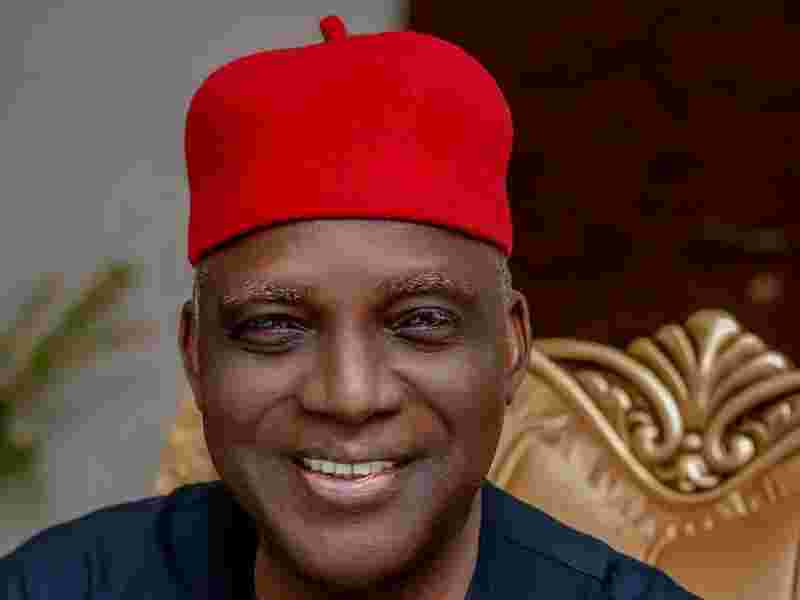

Can Professor Nentawe Yilwatda transform Nigeria’s ruling party into a disciplined electoral machine, or will internal rivalries, overbearing power brokers, wounded ambitions and the burden of incumbency undermine his quest for victory for APC?
By Celestine Okafor (Editor-in-chief)
Before now, the national chairman of the governing All Progressives Congress (APC),
Professor Nentawe Yilwatda, was relatively a political dark horse. But being thrown at the commanding height of affairs in the party as national chairman, has completely changed all that.
There is no doubt that managing a ruling party in Nigeria is like one finding himself in the midst of aquatic big fishes - the sharks, and leading the party into a general elections is like a centurion preparing for the warfront that will ultimately determine his value in the political organisation. That, of course, is the crossroads Yilwatda has found himself today.
With the 2027 general elections fast approaching, the APC is equally approaching the polls with considerable political advantages. The party controls the presidency, enjoys a strong presence in the National Assembly, commands the loyalty of numerous governors and has attracted politicians from opposition parties.
Yet, beneath this apparent strength lies a demanding leadership challenge for Professor Nentawe Goshwe Yilwatda, the party’s national chairman.
Elected on July 24, 2025, following the resignation of former chairman, Dr Abdullahi Umar Ganduje, Yilwatda inherited an organisation whose electoral influence is matched by its internal rivalries, competing political interests and the enormous expectations of its members. His responsibility extends beyond coordinating meetings, issuing statements and appearing alongside President Bola Ahmed Tinubu at political gatherings.
The erudite and urbane youthful-looking politician contends with managing powerful governors, reconciling aggrieved party members, maintaining relationships with the presidency, protecting the party's organisational structures and preparing the APC for an election in which the consequences of victory or defeat will be enormous for him and for his party.
Yilwatda is both the leader and the public face or poster boy of a party whose principal decisions are equally influenced by powerful political figures. Even with that, Yilwatda, as national chairman exercising considerable genuine authority across its political machinery. His performance this election season will ultimately be judged by whether he has propensity to hold the party together and protect its internal credibility, and deliver it to an electoral victory in 2027.
Born on August 8, 1968, in Dungung, Kanke Local Government Area of Plateau State, Yilwatda's background differs from that of many Nigerian politicians whose careers began principally in party organisation or elected office or political patronage. He developed an academic and professional career in engineering and information technology before becoming a more prominent figure in partisan politics.
The APC chairman attended Boys' Secondary School, Gindiri, before proceeding to the Federal University of Agriculture, Makurdi, where he obtained a bachelor's degree in Electrical and Electronic Engineering in 1992. He subsequently earned a master's degree in engineering from Abubakar Tafawa Balewa University, Bauchi, and a doctorate from the University of Nigeria, Nsukka, specialising in digital systems engineering.
Yilwatda spent more than two decades in academia, working at the Federal University of Agriculture, Makurdi, where he became the institution's pioneer Director of Information and Communication Technology.
His professional experience included participation in technology and digital-governance projects. His profile also identifies work associated with public-sector financial management systems and educational information networks.
These experiences are relevant to understanding the leadership style he might bring to a political organisation as complicated as the APC. As an engineer who is trained to examine systems, identify weaknesses and organise resources towards defined objectives, he has successfully blended this skill with his cognate experience as a university administrator to effectively coordinate people with different responsibilities, manage institutional processes and make decisions within established structures.
But political parties, however, are not engineering projects. They are coalitions of individuals and groups whose ambitions frequently conflict. Their loyalty can be conditional, and an agreement reached at the national level may encounter resistance when it reaches a state, local government or ward stage. Yilwatda's challenge is therefore to translate professional discipline into political effectiveness without losing the ability to negotiate, compromise and understand the calculations of experienced politicians.
His academic credentials establish him as a man with solid intellectual background. But whether his array of academic qualifications would translate into exceptional political leadership still remains a question that only his performance can answer when the elections are over.
However, one of the most distinctive chapters of Yilwatda's career was his appointment in 2017 as a Resident Electoral Commissioner with the Independent National Electoral Commission (INEC).
The appointment placed him inside the institution responsible for administering elections in Nigeria. His profile associates his tenure with electoral technology, inclusion and arrangements intended to improve participation by internally displaced persons and persons living with disabilities.
This experience is potentially valuable to a party preparing for a general election.
A former electoral commissioner like Yilwatda, of course, should understand that election administration involves much more than campaigning and political mobilisation. It requires attention to voter registration, electoral procedures, logistics, documentation and the integrity of the voting process. His experience inside the nation's electoral commission may not confer him with the mastery of party management, but it certainly would help him navigate the responsibilities and demands of his current position within the ruling party.
In 2021, Professor Yilwatda left his electoral commission position to pursue elective politics. He became the APC governorship candidate in Plateau State for the 2023 election. His campaign was unsuccessful though. But the Peoples Democratic Party (PDP's) Caleb Mutfwang won the governorship election, and Yilwatda's subsequent legal challenge could not overturn the outcome. His poll defeat was an important test of his political standing in his home state.
However, the contest also gave him experience in candidate selection, campaign organisation, coalition-building and the difficulties of translating party popularity into votes. He subsequently served as coordinator of the Tinubu-Shettima presidential campaign in Plateau State during the 2023 general elections. And in
2024, Tinubu appointed him Minister of Humanitarian Affairs and Poverty Reduction. His time in the federal executive was relatively brief before he emerged as APC national chairman in July 2025.
Yilwatda's journey from academic and electoral administration to a governorship contest, the federal cabinet and the leadership of the ruling party was remarkably rapid. It also positioned him within the political network surrounding the president. He did not emerge national chairman of APC from a prolonged, publicly contested pool of contestants. The APC's National Executive Committee (NEC) selected him by consensus on July 24, 2025, following Ganduje's resignation, which was attributed to health concerns.
President Tinubu, the APC governors and other influential party stakeholders played important roles in Yilwatda's transition.
The State House Presidential Villa announcement of the appointment described Yilwatda as the new chairman and reported Tinubu's call for governors to deepen grassroots engagement. The eminent scholar pledged to unite and strengthen the APC, while acknowledging the president, governors, members of the National Assembly and other party stakeholders for entrusting him with the responsibility of managing the ruling party
Professor Nentawe Yilwatda's method of emergence as national chairman of APC reveals something important about the political environment in which he operates.
The APC is a coalition whose leading figures include serving and former governors, federal legislators, ministers, political strategists and influential party financiers. Its national chairman is therefore expected to work successfully and skirmish free with these interests rather than assume that the position alone gives him unquestioned authority.
Consensus can provide a new chairman with immediate legitimacy and reduce the possibility of a divisive leadership contest. It can also create expectations that the chairman will accommodate the interests of those who helped secure his emergence.
This is where Yilwatda's political independence becomes an important issue.
But can he make difficult decisions when they conflict with the preferences of powerful governors or the presidency? Can he defend party rules when a politically influential stakeholder objects? And can he mediate between competing interests without becoming identified exclusively with one faction?
These are not questions that can be settled by his appointment announcement as APC national chairman. They require evidence from the way he handles disagreements and enforces party decisions. However, Professor Yilwatda's relationship with President Bola Ahmed Tinubu is central to understanding his leadership. Before becoming national chairman, he coordinated the Tinubu-Shettima presidential campaign in Plateau State, and later served in Tinubu's cabinet which giving him experience of the administration's political and policy priorities.
His subsequent emergence as chairman was formalised through an APC leadership process involving the president and senior party stakeholders.
The relationship is therefore more than a ceremonial association between the president and the leader of his party. It rests on an established political connection.
For Tinubu, the chairman has a major responsibility to organise the political platform through which the president hopes to secure another term in office. This, for
Yilwatda, is a relationship that offers access to the presidency and an opportunity to coordinate the ruling party's national strategy.
But the same relationship presents a delicate test. A ruling-party chairman is required to support the party's elected president while maintaining enough institutional independence to manage disputes, defend organisational rules and give members confidence that the party belongs to them collectively. If the chairman is perceived as simply implementing presidential preferences, his authority among independent-minded party stakeholders may be weakened.
On the other hand, an openly confrontational relationship with the president could undermine coordination between the government and the party. Yilwatda, as a brilliant and calm character, has succeeded in finding a workable balance between loyalty and independent party administration.
One significant indication of Tinubu's influence over the APC's broader political direction came in 2025, when the party endorsed him as its preferred candidate for the 2027 presidential election. That endorsement strengthened the president's position within the ruling party, but it also raised questions about internal competition and the extent to which ordinary members and potential aspirants could influence major decisions.
For Yilwatda, maintaining unity around Tinubu will be important, while ensuring that the process does not alienate members whose ambitions have been frustrated. A party may publicly declare unanimity while privately harbouring resentment. But the
real test is whether that resentment can be managed before it becomes electoral sabotage, defections or open rebellion.
Professor Yilwatda as APC national chairman occupies a prominent position, but the party's political authority is distributed among several centres of influence.
State governors command government resources, exercise considerable influence over state party structures and frequently play decisive roles in determining the political atmosphere within their territories.
Members of the National Assembly have their own constituencies and networks. Former governors retain loyalists, while ministers and presidential aides may influence political decisions, and state chairmen and local organisers maintain relationships that cannot simply be replaced by directives from Abuja. Yilwatda actually has no choice than to negotiate with these different interests.
His greatest organisational challenge may not be convincing party leaders to support the president publicly. It may be ensuring that those leaders cooperate when decisions affect their individual ambitions.
For instance, a party's national chairman may promise credible primaries, but aspirants will judge the process by whether the rules are applied consistently. A defeated aspirant who believes the process was manipulated may challenge the outcome in court or withdraw financial support or quietly work against the party's candidate. Such disputes can weaken the APC even when it retains an impressive national profile.
In May 2026, Yilwatda warned aspirants to exercise restraint and respect democratic principles during the party's screening and primary processes. He also warned against conduct capable of undermining party unity.
While the message was good, warnings alone cannot resolve disputes. The chairman's authority certainly will be demonstrated by whether complaints are investigated fairly, disciplinary procedures are followed and party officials are held accountable when they violate established rules.
A credible national chairman must be able to tell a powerful governor that a decision is inconsistent with party rules, just as he must be able to tell an aggrieved aspirant that losing a contest does not automatically prove that the process was unfair. Both require impartiality.
Perhaps one of the clearest indications of the pressures confronting Yilwatda came in August 2026, when he apologised to aggrieved APC members over perceived wrongs associated with the party's internal processes. At an event in Ibadan, Oyo State, he appealed to members who felt hurt or were excluded, or unfairly treated to forgive the party and remain united. He also indicated that the National Working Committee (NUC) had accepted responsibility for the concerns being raised.
That apology was politically significant in the sense that it suggested an awareness within the national leadership that party unity could not be secured merely by issuing declarations of confidence in the president or celebrating the APC's numerical strength.
There were members who believed they had been disadvantaged, and the leadership considered reconciliation necessary.
However, an apology is only the beginning of conflict resolution. Aggrieved members may welcome conciliatory language but still demand an explanation, a review of disputed decisions or guarantees that future contests will be fairer. But the APC under Yilwatda must therefore move beyond appeals for forgiveness to establish credible mechanisms for addressing grievances.
Where wrongdoing occurred, the party urgently need to correct it, and where allegations are unsubstantiated, it should explain the facts and provide a fair hearing.
Otherwise, reconciliation risks becoming a public-relations exercise that postpones rather than resolves the underlying problem.
For the ruling party's national chairman Yilwatda, this is an opportunity to demonstrate that his leadership is capable of listening as well as issuing instructions.
Perhaps, the most important question about Yilwatda's leadership is whether he is actually in control of party? At the national level, his authority is clear in formal terms. He presides over the party's national leadership and represents it publicly. The chairman has participated in national strategy meetings and overseen preparations for the 2027 elections.
But formal authority and practical control are not always the same thing. A national chairman may announce a decision that a state chapter resists, or a governor may support the president while maintaining a separate network of loyalists. Also, a ward executive may have its own disputes, alliances and grievances. The issues must therefore be examined at several levels.
At the national level, Yilwatda has been able to demonstrate that he can convene senior party leaders, communicate the party's position and lead preparations for the next general election. That is on the exterior. His real authority, however, will be gauged by how consistently party rules are applied across the country, particularly when they affect powerful political figures. At the
zonal level of the nation's six geopolitical zones, there are different political calculations, competing leaders and varying electoral strengths. The APC's national leadership under Yilwatda needs to maintain coordination across these regions while recognising that local political realities differ.
Yilwatda's success at the end will also depend on whether zonal leaders view the national secretariat as an impartial institution or as a platform through which certain interests receive preferential treatment. However, at the state level like in his home state, Plateau, this is where
Yilwatda's most prominent personal electoral contest is located. It is also where he
contested the 2023 governorship election for the APC but lost to Mutfwang of the PDP.
That result complicates any argument that Yilwatda's national position automatically guarantees political dominance in Plateau.
His relationship with influential APC figures, including former governor Simon Lalong, has been reported as an important part of his political network. Here, it is important that the party reconciles competing interests, build relationships with local political actors and persuade voters that its candidate and programme deserve support. Yilwatda's ability to improve the APC's standing in Plateau will be an important measure of whether he can translate national authority into local political strength in 2027 and beyond.
The ward level is where political parties encounter voters most directly. Ward executives organise meetings, mobilise supporters, identify local grievances and help communicate the party's message down the flanks of the party. They also understand which candidates enjoy genuine local support and which are dependent on endorsements from political leaders.
A national chairman cannot personally manage every ward in Nigeria. His responsibility is to ensure that the structures operate effectively, report problems and receive support.
In September 2026, Professor Yilwatda said the National Working Committee had reviewed party structures from the national level down to wards and polling units. That was an important organisational claim.
Yilwatda inherited an organisation with substantial political advantages but longstanding questions about internal democracy, candidate selection and the relationship between the party and its elected officeholders.
The APC's endorsement of Tinubu as its preferred 2027 presidential candidate illustrated the party's determination to avoid uncertainty over its most important ticket.
Supporters can argue that an early endorsement prevents unnecessary factional conflict and allows the party to concentrate on governance and campaigning. Critics, however, may question whether such a decision leaves sufficient room for genuine internal competition. The challenge for Yilwatda is therefore to demonstrate that unity does not mean suppressing legitimate disagreement.
The party also faces the familiar Nigerian problem of post-primary litigation. When aspirants believe that rules were ignored or that the process favoured particular interests, the courts become an arena for continuing political competition. In September 2026, Yilwatda said approximately 6,000 to 7,000 party members had participated in the APC's primaries and that about 100 cases had gone to court. He argued that the number represented a relatively small proportion of participants.
That figure, as reported by the chairman, offers one perspective on the scale of the disputes. It does not by itself establish that all the primaries were fair.
The APC under Professor Nentawe Yilwatda need to also contend with the political consequences of defections. Opposition politicians have joined the ruling party, increasing its reach in several states. Yet defections can introduce competing loyalties and rival claims to leadership. A party that grows numerically does not necessarily become more cohesive. Where members believe that newcomers are being rewarded at their expense, the resulting resentment can undermine mobilisation. Yilwatda's challenge in this regard is to accommodate new entrants without making longstanding members feel that loyalty has become a disadvantage.
One of the APC's most visible political advantages under Yilwatda has been its continuing ability to attract politicians and maintain a dominant position in national politics. The chairman has presented the party as increasingly organised and prepared for 2027. Following a three-day National Working Committee retreat in Maiduguri in September 2026, he said the committee had reviewed the party's structures nationwide and considered it ready for the coming election. He also said the APC had won four of five elections conducted the previous week, while losing one. These statements suggest that the leadership believes the party is gaining momentum.
The APC's performance does not need to be considered against the public's assessment of Tinubu's administration. The party can point to its policy agenda and argue that its reforms will yield benefits. But voters will also assess living costs, employment opportunities, security, public services and their personal economic circumstances.
Yilwatda, as the APC national chairman may not be in control of every outcome of his party's government policy, but he must understand how the administration's performance affects the party's electoral standing. The challenge is to communicate verifiable achievements without dismissing the frustrations of citizens. Overconfidence could be particularly damaging.
In same September, Yilwatda described opposition parties as little more than participants in the 2027 election, expressing confidence that the APC would win.
Such confidence may energise party supporters. Yet dismissing the opposition risks encouraging complacency within the ruling party. Elections are not won by press conferences alone. They require effective candidates, credible local structures, persuasive policies, disciplined agents, reliable logistics and the ability to respond to unexpected developments. The APC may be the party to beat, but it should not confuse its present political dominance with a guaranteed future victory. The PDP experience in 2015 is a veritable lesson.
Professor Yilwatda has publicly expressed confidence that the APC is prepared for the 2027 general election. The party has reviewed its structures, held primaries, established campaign arrangements and begun efforts to reconcile aggrieved members. These are relevant preparatory steps. But the chairman's ability to deliver victory will depend on at least five critical factors. First, is his internal reconciliation efforts towards resolving disputes arising from primaries and other internal processes. Aggrieved members who remain alienated may weaken the organisation from within.
Also, a careful and credible selection of candidates that command sufficient local support is very important. And selecting the candidate through processes that can withstand legal and political scrutiny is equally advisable. There is need for the party to engage in grassroot mobilization while the national leadership ensures that state, local government and ward structures are active rather than existing mainly on paper. The APC need to explain why voters should renew its mandate. That argument must address the lived experiences of Nigerians, not merely the party's organisational achievements. And party agents must understand the law, follow electoral procedures and document complaints through lawful channels. Victory must be pursued through legitimate democratic competition.
A divided opposition could improve the APC's prospects. A more coordinated opposition could make the election considerably more competitive.
Yilwatda may not be able to determine the opposition's strategy, but he can determine whether his own party is prepared for a serious contest.
Ultimately, can he deliver victory to the APC in 2027 without relying on the assumption that incumbency and political dominance make defeat impossible? The evidence shows that Yilwatda has taken identifiable steps towards organising the APC for the next election. For Nigeria's ruling party and it's national chairman, the stakes are high and the test is even more personal.
As the 2027 gets closer, Professor Nentawe Yilwatda will certainly be judged by whether he builds a united, disciplined and credible party capable of earning the confidence of Nigerian voters and not by how confidently he predicts victory. NNL.