
Between His Academic Reputation, Allegations of Partisanship, Electoral Reforms And His General Body Language, Is The Ultimate Test of Nigeria's Democracy. Will Amupitan Finally Redeem INEC And Make History?
By Celestine Okafor (Editor-in-chief)
Across the globe where Nigeria is of great interest, all eyes are currently reverted on him. The true test of who he is, and his capacity for the job, will be manifest as Nigeria approaches the 2027 general elections scheduled to kick-off with the Presidential poll on Saturday, January 16, 2027.
The credibility of the Independent National Electoral Commission (INEC) and the integrity of the man leading it have become matters of profound national importance and interest.
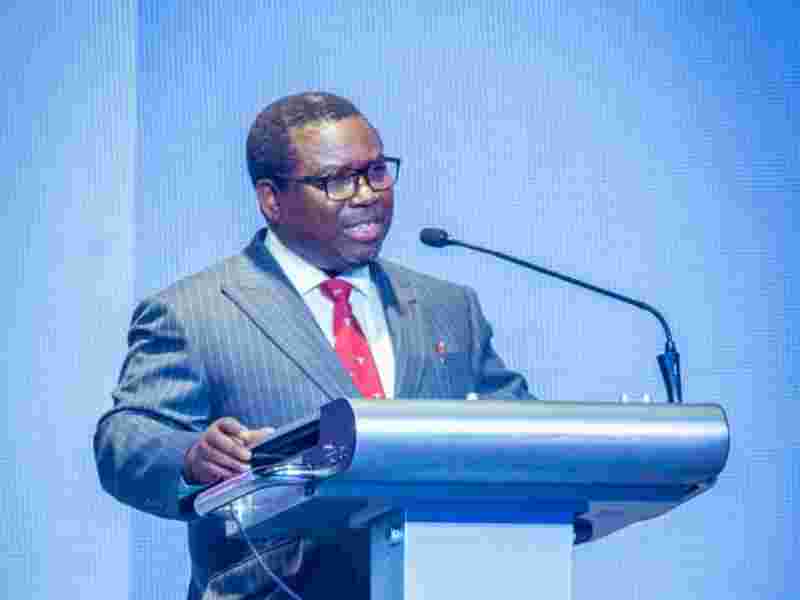
At the centre of this public anxiety, is Professor Joash Ojo Amupitan, an academic lawyer and Senior Advocate of Nigeria (SAN), whose appointment as INEC chairman has generated expectations, questions, controversies and competing assessments of his capacity to deliver elections that Nigerians can trust.
Can this professor of law, who spent decades in academia and university administration, rise above the political circumstances of his appointment to protect the sanctity of the ballot? Will he conduct an election in which President Bola Ahmed Tinubu's All Progressives Congress (APC) competes on equal terms with the opposition? And, most importantly, will he announce the presidential candidate who genuinely wins the votes of Nigerians, regardless of party affiliation?
These are not merely questions about one man's character, but about the survival of democratic accountability in Africa's most populous country.
Since assuming office on October 23, 2025, Professor Amupitan has inherited an electoral institution burdened by public distrust, disputes over electronic transmission of results, accusations of manipulation and the lingering controversies surrounding previous elections. His performance will therefore be measured against a demanding standard, not just what he says about credible elections, but what his commission does to guarantee them.
Not a few Nigerians and members of the global community are asking this consequential question: Can Professor Amupitan be trusted to put the people's mandate above the interests of the government that appointed him?
Perhaps, an examination of his background, circumstances of his appointment as the Commission's boss, his public statements and posturing, his controversies and INEC's preparations for 2027 polls, offers some important clues. It does not, however, provide a definitive answer to a question that only his conduct during the election can finally settle.
Professor Joash Ojo Amupitan hails from Ayetoro Gbede in Ijumu Local Government Area of Kogi State, in Nigeria's North-Central geopolitical zone. Born on April 25, 1967, he built his professional reputation principally through legal scholarship, university administration and legal practice.
According to the Presidency's account of his career, he attended Kwara State Polytechnic, Ilorin, between 1982 and 1984 before proceeding to the University of Jos, where he obtained his law degree in 1987, at an incredibly very young of 20. He was called to the Nigerian Bar in 1988 at 21 years. Amupitan subsequently obtained a Master of Laws degree in 1993 and earned a doctorate degree in 2007 at age 40.
His academic career actually began in 1989, according to his public record. Over the years, he occupied several important positions at the University of Jos, including Head of Public Law, Dean of the Faculty of Law and Chairman of the Committee of Deans and Directors in the University. At the time of his appointment to INEC, he was serving as Deputy Vice-Chancellor (Administration) of the University of Jos. He had also served as Pro-Chancellor and Chairman of the Governing Council of Joseph Ayo Babalola University in Osun State, South West, Nigeria.
Professor Amupitan became a Senior Advocate of Nigeria (SAN) in September 2014, a distinction awarded to experienced legal practitioners who meet demanding professional requirements. His published works include books on company law, documentary evidence, evidence law, corporate governance and the law of trusts. These subjects demonstrate considerable experience in legal analysis and institutional governance.
The official announcement of his appointment described him as an apolitical figure and emphasised his professional qualifications. His academic record is relevant to the assignment before him. As the high priest of a nation's electoral commission, the erudite professor is expected to interpret both elementary and intricate legislation, including administering complex regulations, manage disputes and ensure compliance with constitutional requirements. As a matter of fact, a chairman of a country's electoral body, with legal expertise for that matter, should be well positioned to understand these responsibilities.
However, being a professor of law and a Senior Advocate in law, it is not out of place that he exhibits competence in election management and political neutrality. It is therefore important that he translates his academic and administrative experience into impartial electoral leadership.
Amupitan's appointment followed the departure of Professor Mahmood Yakubu, who led INEC from 2015 until October 2025.
President Tinubu presented Amupitan's nomination to the National Council of State, which approved it on October 9, 2025. The President subsequently forwarded his name to the National Assembly for Senate consideration, and the Senate confirmed him on October 16, 2025. He was sworn in on October 23, 2025. His appointment process followed the constitutional framework for appointing the INEC chairman with it's political consequences.
Under Section 154 of the 1999 Constitution (as amended), the President of federation appoints the chairman and national commissioners of INEC, subject to confirmation by the Senate and following consultation with the Council of State.
Nevertheless, the constitutional process of such appointment raises a larger democratic question on how the public can be confident that an electoral umpire appointed through a process involving an incumbent president will remain independent when that president seeks re-election? This concern is not peculiar to Nigeria. Electoral commissions worldwide face the challenge of establishing independence from the governments under which they operate.
At the time of Amupitan's appointment as INEC head, a number of civil society organisations including the media, welcomed his nomination but called for a rigorous, transparent and inclusive screening process by the vetting lawmakers at the red chamber of the national parliament. They argued that the appointment of an electoral umpire should inspire confidence among citizens and political parties across the political divide. The concern at the time was that the Council of State's approval should not substitute for substantive scrutiny by the Senate.
The Senate subsequently confirmed Amupitan without dissent during the voice vote. While this completed the formal appointment process, it did not eliminate questions about the institutional safeguards necessary to protect his independence. It is expected that his independence be demonstrated through decisions that are fair, transparent and consistent with the law, particularly when those decisions are politically inconvenient to the President and the ruling party that made his appointment possible.
However, one of the most serious challenges to public confidence in Amupitan emerged in April 2026, when social media posts allegedly linking him to partisan comments in support of the APC and Tinubu during the 2023 elections circulated widely. The controversy centred on an X account previously using the handle @joashamupitan. Screenshots attributed to the account included a comment reading "victory is sure" in response to a post by an APC political figure. Critics argued that the allegations raised questions about whether the chairman could be trusted to preside impartially over an election in which Tinubu and the APC would seek another mandate.
Some opposition voices and civil society actors demanded investigations, while a coalition operating under the Movement for Credible Elections called for Amupitan to step aside over the alleged partisanship.
The Socio-Economic Rights and Accountability Project (SERAP) also called on the National Assembly to investigate the allegations against the INEC Chairman. These reactions demonstrated that the controversy had moved beyond ordinary social media arguments to become a question of institutional confidence.
But INEC, in a swift reaction, however, rejected the allegations against the Commission's new helmsman. In April 2026, the commission announced that a forensic investigation had concluded that the disputed account and the posts attributed to Amupitan were fake or forensically unverifiable. The commission said the findings indicated impersonation and a coordinated disinformation campaign. Not only that, it also announced plans to pursue the bush radios (rumour mongers) responsible. But the controversy did not end with the denial.
The International Centre for Investigative Reporting (ICIR) published a report examining digital footprints allegedly connecting the account to the INEC chairman. Other media organisations also questioned aspects of the commission's explanation, while fact-checking commentary highlighted disagreements about whether the available evidence reveals who controlled the account. The dispute subsequently generated further demands for disclosure.
The material publicly reported in this controversy has produced conflicting claims. Nevertheless, the controversy presents a serious communications and accountability challenge for INEC. An electoral commission's credibility depends not only on the personal integrity of its chairman but also on the public's ability to verify claims and obtain convincing explanations when doubts arise. If the commission's investigation clears its chairman, Nigerians should be able to examine the methodology and relevant findings, subject to legitimate privacy and security considerations. Where credible contrary evidence emerges, it should be examined impartially. The strongest defence of an electoral umpire is not an appeal for citizens to believe him. It is transparent evidence that enables them to make an informed judgment.
For Amupitan, the controversy reinforces the need to avoid even the appearance of partisan conduct and to demonstrate that his decisions are based on electoral law rather than political preference.
At his inauguration, Professor Amupitan declared that INEC's mandate was to deliver free, fair, credible, transparent and inclusive elections reflecting the will of the Nigerian people. He emphasised institutional independence, integrity, transparency and discipline. These are the correct priorities for an electoral commission whose authority ultimately depends on public confidence.
However, the 2027 elections will test whether these commitments translate into operational safeguards.
What the Nigerian electorates and the observing world community is expecting is a commission that will ensure that every eligible Nigerian can register and that the voters' register accurately reflects those entitled to vote. INEC, under Amupitan is also expected to establish transparent procedures for accreditation, voting, counting, collation and declaration of results.
Amupitan's electoral commission is equally expected to ensure that the poll technology strengthens the integrity of the process rather than creating additional opportunities for uncertainty.
Beyond demonstrating statutory impartiality, INEC under the academic lawyer is expected to be fair in its dealings with all registered political parties, including the ruling All Progressives Congress (APC) and opposition parties. Also, Amupitan's Commission is envisaged to communicate openly when technical failures, logistical difficulties or other problems threaten the electoral process.
The INEC chairman's promises of a credible elections process are quite encouraging, but promises, often, are not proof of performance. A credible election requires institutional arrangements that continue to function properly even when the chairman is absent or under political pressure, or is confronted with a decision that could affect the ruling party's electoral fortunes. What is being awaited is whether the commission would apply the same standards to the incumbent government and its opponents in 2027.
What will help acquite Amupitan before the Nigerian electorates, before the world and before history, is If, for instance, an APC candidate violates electoral regulations, will the Commission respond with the same firmness it would apply to a candidate from the opposition ADC, NDC or any other party outside the ruling political group? And if
an opposition candidate eventually wins the presidential poll, for instance, will the Commission under the watch of the law professor stand on his stem and declare that candidate the winner, provided the results have been lawfully established. These are the minimum conditions of democratic fairness that the Nigerian voters would not have to beg the INEC chairman to grant.
Even before Nigerians go polls, the initial trust Professor Amupitan will have to first earn from the electorates, the observers and other election stakeholders, is the accuracy of the voters' register , because it is very fundamental to the credibility of the 2027 election or any other for that matter. A voter's register containing duplicate entries, deceased persons, ineligible voters or other irregularities can promptly undermine public confidence in the entire electoral process. Equally, the wrongful exclusion of eligible voters can disenfranchise citizens before election day even begins.
Though, INEC has undertaken registration activities and other preparatory exercises ahead of the 2027 general elections. But the commission's handling of the preliminary voters register has, however, exposed an important weakness in its approach to public accessibility. According to INEC's statement of October 26, 2026, the commission conducted the physical display of the preliminary register at Registration Areas nationwide from October 9 to October 15.
The exercise was conducted under Section 19 of the Electoral Act 2026, allowing registered voters to inspect their particulars and submit claims and objections.
But concerns emerged over the accessibility of the register after the physical display period had ended. Citizens and other stakeholders questioned whether the exercise had provided sufficient opportunity for the public to scrutinise the list. Following these concerns, INEC announced that the preliminary register would also be available online through its official platform. The commission said the online publication was intended to complement the physical display and broaden public access. It also stated that claims and objections would continue to be processed before certification and publication of the final register, scheduled for December 15, 2026.
The physical display of voters list was a statutory exercise, and the commission said it had complied with the applicable law. The subsequent decision to provide online access is a welcome additional transparency measure. Nevertheless, the sequence raises legitimate questions about planning and public engagement. Why was online access not provided alongside the physical display from the outset? Could the commission have anticipated that Nigerians living outside their registration areas, people with disabilities and citizens facing mobility or logistical difficulties would need easier access to the register? And what practical arrangements will ensure that claims and objections can be considered fairly, despite the short period initially provided for physical inspection?
The answers are very germaine because voter registration is not merely an administrative exercise. It determines who can participate in choosing the country's next leaders. INEC need to also recognise that online publication, while useful, is not a complete alternative to accessible physical arrangements. Internet access remains uneven, and some voters will require assistance to inspect their particulars.
The commission should therefore provide clear procedures for reporting errors, resolving duplicate entries and correcting omissions, while protecting voters' personal information. The December 15 deadline for publication of the final register should be treated as a critical milestone. The Commission need to explain how claims and objections will be handled, and how corrections will be verified and what safeguards will prevent unlawful alterations.
The Commission should also publish sufficient information about the register's composition, registration totals and quality-control procedures to permit meaningful independent examination. The voters' register should be accurate enough to withstand public scrutiny and not merely complete enough to satisfy an administrative deadline. The decision to publish the preliminary list online is a positive response to public concerns. But its real value, of course, will depend on whether citizens can use the information to identify errors and obtain timely remedies.
Another challenge facing INEC and it's chairman, Professor Joash Amupitan, is the growing possibility that artificial intelligence will be used to manufacture or manipulate information about elections. The ability to generate realistic-looking documents, voters lists, photographs and screenshots has made it easier to circulate claims that the INEC boss might compromise the polls. Such trending information has already been clarified by INEC as publicly misleading. But in an already polarised political environment, such material can create suspicion before the facts are established. Beyond the clarification, INEC needs to carefully investigate the source of the claims already causing public concerns, that an allegedly AI-generated voters' list have been discovered in Edo State and some other locations.
Many election observers and indeed the electorates are already wondering whether Professor Amupitan will be markedly different from his immediate predecessor, Professor Mahmoud Yakubu. The former INEC chairman, Professor Yakubu, left office after a decade during which INEC supervised several major electoral exercises. His
tenure included the 2019 and the controversial 2023 general elections, alongside governorship elections, off-cycle polls and by-elections. Professor Yakubu's
administration oversaw the introduction and expansion of technological tools, including the Bimodal Voter Accreditation System (BVAS) and the INEC Result Viewing Portal, popularly known as IReV. These innovations were intended to strengthen voter accreditation, improve transparency and reduce opportunities for electoral manipulation.
However, the 2023 general elections also left substantial public dissatisfaction, particularly concerning the implementation of electronic transmission and viewing of results. Many Nigerians expected technology to deliver greater transparency and were disappointed by the gap between those expectations and the problems experienced during the election. The controversy over electronic transmission became part of the broader legal and political disputes surrounding the presidential election. The lesson here for Professor Amupitan is that technology cannot substitute for credible administration of the Commission functions.
A sophisticated accreditation system may help establish whether voters are eligible to vote, but cannot by itself guarantee that polling-unit results are accurately recorded, transmitted, collated and declared. Likewise, an online portal may provide visibility without necessarily resolving every dispute about the completeness or timing of uploaded results.
Amupitan, therefore, needs to learn from both the achievements and shortcomings of his predecessor, including retaining effective systems and improving those that failed to meet public expectations and explain clearly how technological processes will operate in 2027.
INEC need to comply the applicable law where electronic transmission is required and where the law provides procedures for dealing with technical failures. Those procedures require clarity, consistency and proper public understanding. INEC under Amupitan should ensure that there is no last minute uncertainty about what happens when a device fails or connectivity is interrupted, or electronically transmitted results differ from the results recorded and signed at polling units. The Commission should also publish operational guidelines, conduct credible public demonstrations and allow independent observers to examine the relevant systems.
However, whether Amupitan will repeat Yakubu's mistakes cannot yet be determined. He has not conducted a comparable general election as INEC chairman which makes it premature to judge his capacity solely on the basis of his predecessor's record. But will he confront the weaknesses revealed by previous elections rather than defend existing practices simply because they have become institutional habits.
The off-cycle governorship elections and legislative by-elections offer opportunities to examine the electoral Commission's preparedness for the election, it's impartiality and administrative discipline. They reveal how effectively INEC deploys personnel and materials and it manages voter accreditation, handles logistics and responds to complaints from political parties. A presidential election involves a much larger geographical area, more extensive logistical demands, intense political competition and greater pressure on election officials.
Amupitan's conduct in individual elections need to be assessed through documented observer reports, official results, verified incidents and any subsequent judicial findings. INEC also need to publish detailed post-election assessments identifying logistical shortcomings, accreditation problems, violence, delayed result uploads and complaints requiring investigation. There is equally need for the Commission to
explain which recommendations from election observers have been implemented.
The value of off-cycle elections is predicated on merely in announcing winners but in identifying problems before they become nationwide failures. If the Commission demonstrates openness to criticism and takes corrective action, that would strengthen confidence in its preparations for 2027 polls. However, repeated administrative failures, unexplained inconsistencies or selective enforcement of electoral rules would deepen existing doubts.
Already, public opinion about Amupitan is divided. His professional qualifications and assurances of electoral integrity have attracted positive reactions from some civil society organisations. In July 2026, the Foundation for Credible Elections and Good Governance Initiative commended his assurances that technological developments could make ballot-box snatching and result manipulation more difficult. The organisation also praised what it described as his commitment to fairness and institutional independence. Other civil society actors have expressed concern about his alleged neutrality, particularly following the controversy over the alleged partisan social media account.
SERAP called for a National Assembly investigation, while the Movement for Credible Elections demanded that he step aside over the allegations. The competing reactions demonstrate that Amupitan's credibility remains contested. But the proper response should not be to dismiss critics as enemies of INEC or to assume that allegations against the chairman must be true. The Commission should maintain regular engagement with political parties, accredited observers, civil society organisations and the media. Besides, it should publish clear explanations of major decisions, respond promptly to credible complaints and ensure that opposition parties have meaningful access to the information necessary to monitor elections.
The chairman also should be prepared to meet opposition leaders and address specific concerns without treating criticism as an attack on the institution. In a democracy, the opposition has a legitimate responsibility to verify and scrutinize the electoral umpire, just as the ruling party has a legitimate interest in participating in a fair election. Neither side has right or is permitted to dictate the commission's decisions.
It is already being argued by political observers and the voters alike whether Professor Amupitan can successfully resist pressures from the ruling party or from the opposition or from any powerful and influencial force when the push comes to shove. President Tinubu is both the political leader who nominated him and a potential candidate in the 2027 presidential election. He has the APC, the ruling party at the federal level, with access to the advantages of incumbency. These circumstances create a legitimate public interest in the independence of the electoral Commission. What should be of utmost public concern is
whether the electoral system contains sufficient safeguards to prevent political interference despite whoever occupies the chairmanship of INEC.
The Constitution establishes INEC as an independent electoral body, while the Electoral Act and other applicable laws prescribe the commission's responsibilities and procedures. The legal provisions alone cannot guarantee independence if officials of the Commission fail to enforce them. Professor Amupitan must therefore demonstrate that government officials, security agencies, party leaders and political appointees cannot improperly influence INEC's operational decisions. Being able to muster courage and resolve to resist interference in the choice of INEC declared winners is certainly not an act of political defiance but a fulfilment of Amupitan's constitutional responsibility. Therein lies the public trust that the chairman can deliver creditably on the 2027 polls.
For Amupitan to earn the confidence of Nigerians, INEC should move beyond general assurances and demonstrate evident progress in at least six areas, which includes
clean up the voters' register for identification and correction of errors, publication of reliable registration data and demonstration of how claims and objections are resolved.
Also, INEC should establish clarity on electronic results by communicating the legal and operational requirements for transmitting and viewing results, including the procedures for handling technical failures. It should strengthen polling-unit transparency. This means that results recorded at polling units should be properly documented, signed where required, made available for scrutiny and reconciled with subsequent collation. And the Commission should also be protected from political interference. This can be achieved through vigorous and dispassionate application of its rules consistently, explaining important decisions and ensuring that electoral officers understand their duty to remain impartial.
INEC need to improve security and logistics during the elections. Poll materials need to arrive on time, and officials should be adequately trained, and credible arrangements be made to protect voters, personnel and observers against violence and intimidation. This is coupled with the
engagement of independent observers and the media. Accredited observers should have meaningful access to the electoral process, while journalists should also receive timely information that enables them to report accurately. Procedure for investigating complaints about its officials and publishing of appropriate findings should be manifestly clear. These measures would provide stronger grounds for confidence than repeated statements that the election will be free and fair.
As expectations from the INEC grows higher as the poll dates draws nearer, Professor Amupitan still has the opportunity to surprise Nigerians and the world and distinguish himself as an electoral administrator. His legal qualifications, his academic experience and exposure to university administration provide a foundation on which he can build. Also, his avowed public commitments to electoral integrity also establish the standard against which his performance would be judged. The commission's decision to make the preliminary register available online is views as a constructive step, and this should be followed by greater transparency in the handling of claims and objections and in the preparation of the final register.
The same approach should guide INEC's preparations for electronic result management, voter accreditation, security, logistics and the resolution of electoral disputes. Professor Amupitan should recognize that his personal reputation and INEC's institutional credibility are related but distinct. Even a chairman with impeccable personal integrity cannot guarantee a credible election if electoral officials are poorly trained or technology fails without adequate contingency arrangements, or political interference goes unchecked.
Equally, a commission with sound procedures can still lose public confidence if its chairman communicates defensively, appears selective in his responses to political complaints or fails to explain controversial decisions. The strongest leadership will combine personal impartiality, professional competence, institutional discipline and public accountability. Amupitan should however recognize
that trust is not the absence of criticism but what grows when legitimate concerns are investigated, errors are corrected and decisions can withstand independent examination.
Professor Amupitan, therefore, needs to be given the opportunity to demonstrate his capacity, but not absolute blank cheque of public trust. It is incumbent on Nigerians to screen his decision, insist on transparency and judge him by evidence rather than praise, speculation or political propaganda. When
the presidential votes have been cast and counted and INEC declares as winner the person who truly won under the law, that will be the test of his integrity and that of INEC's independence. And that is the test by which history will judge Professor Joash Amupitan. NNL.