
By Celestine Okafor (Editor-in-chief)
In Friday's September 25th Day-2 of the on-going 22nd Edition of the All Nigerian Editors Conference (ANEC) 2026, there were multiple paper presentations at the annual conclave. But one troubling question at the gathering still remains: who really chooses Nigeria's leaders during general elections — the voter or the courtroom judge?
This nagging question occupied the minds of Friday's conference speakers and other resource persons at the Day-2 of ANEC meet in Enugu. Among the presentations that sought to address the above poser, are those from a constitutional scholar's case studies, a media professor's theory of power, a governor's poetic goodwill, a Guild President's warning, and a former Nigerian Bar leader's evisceration of electoral litigation. All these converged, like the media editors themselves, on a single, uncomfortable question.
This question should actually be asked again! Who actually chooses Nigeria's leaders? The answer, if the week's deliberations at the International Conference Centre, Enugu are anything to go by, is no longer the voter! The courts are simply the ones counting the votes nobody cast.
One of the resource presenters, an organic ivory tower intellectual and a constitutional scholar from the Bayero University, Kano, Professor Auwalu Yadudu, did not come to Enugu to measure apathy with regression tables, and he said so plainly: "Assessing what amounts to enthusiasm or apathy by the electorate is not within my realm of specialty. Social scientists measure impacts using quantitative tools. As a constitutional scholar and observer, I intend to appreciate perceptions generated by analyzing a few judicial cases."
What followed Yadudu's remark was a tour of Nigerian electoral jurisprudence that read less like a case law and more like cautionary tales. Delving into the landmark ruling on the contentious 2007 Rivers State Governorship Election by the nation's apex court, the Supreme Court of Nigeria, in Amechi v. Omehia, a man who never appeared on the ballot was declared winner. Peter Obi's running mate in the 2007 Anambra state governorship election had won the primary of the People's Democratic Party (PDP), only for his name to be substituted. When the courts intervened, Rotimi Chibuike Amechi who was excluded illegally, as found by the court, was declared governor, instead. Professor Yadudu noted that, "The court was concerned with who was a lawful candidate, votes cast for the party, not the name."
Also, in Uzodinma v. Ihedioha, in the 2019 governorship poll in Imo state, Hope Uzodinma, then a federal lawmaker representing Imo West in the red chamber of the National Assembly was placed fourth in the election result with 96,458 votes. His PDP challenger, Emeka Ihedioha, was declared winner with over 207,000 votes. Uzodinma alleged that votes from 488 polling units were excluded. The Supreme Court, in what Professor Yadudu called "a bizarre twist," awarded him (Hope Uzodinma) votes from 388 polling units, taking his tally to 309,753, and then went ahead to declare him winner. According to Yadudu, "No basis of computation. Votes scored by other parties ignored. Number of registered voters not considered."
Not done, yet. The Bayero University egghead took his audience to the recent case law in Oyetola v. Adeleke. He said the incumbent Osun State governor, Senator Ademola Adeleke, won the majority votes and met all legal requirements. The tribunal excluded some of Oyetola's votes, upheld Adeleke's election, and the Court of Appeal overturned it, determining that Oyetola's votes were improperly excluded, though the exclusion did not put him ahead. Then the Supreme Court rendered the entire tribunal proceedings a nullity on procedural grounds: the author of the verdict had not participated in proceedings on a particular date. "It mattered not that Adeleke had scored more votes and met other legal requirements. Procedural justice overtook everything".
And in Zamfara state, the All Progressives Congress, APC's 2019 primaries were stalemated. The Independent National Electoral Commission (INEC) deemed that the party had no valid candidates. A court however disagreed. The APC won the elections by popular votes. The Supreme Court then determined that APC had not validly fielded any candidates, and went ahead to award all seats to the PDP, the runners-up, "without determining votes obtained or if other legal requirements had been met."
Yadudu's questions hung in the air like a verdict waiting to be delivered: "Do these judicial outcomes amount to judicial nullification of the popular democratic will of the electorate? Should the judiciary be more deferent to popular will expressed in the ballot box? Could their actions dampen the enthusiasm of the electorate and further exacerbate voter apathy?"
The academic lawyer did not pretend to have metrics for the answer. But he offered a diagnosis: "The entire electoral landscape and architecture in Nigeria, and the unbridled and litigious attitude of politicians, has made judicial intervention in electoral matters more inevitable but very challenging." Yadudu's prescription was blunt enough: attitudinal change, constitutional and statutory reform, and a firm hand against what he called "rogue judicial meddling."
However, quoting legal luminary and rights activist, Professor Chidi Odinkalu's ceaseless warnings about "LIFUPRUDENCE", which is judges and their enablers, Yadudu warned that "a single seed of bean spoiling the dough, or one rotten apple wrecking the basket, will end up being the middle finger pointing at and the pervasive smear of impropriety may stick to them."
If Yadudu dissected the courts, Professor Chinyere Stella Okunna, Nigeria's first female Professor of Mass Communication and currently a Deputy Vice Chancellor at Paul University, Awka, Anambra state and a fellow of the Nigeria Guild of Editors (NGE), dissected the society's mirror that is the media. The erudite media scholar described the media as the oxygen of the nation's democracy, and advised them to remain as the constitutional watchdog of the society and not a lapdog.
Okunna, a former Commissioner for Information and State Orientation and later Women Affairs and Youth Commissioner in Anambra state during the Peter Obi administration, began her presentation at the confab from a specific media perspective as it concerns journalism thus: "The Press has been described as the oxygen of democracy" Considering what oxygen literally means to any living creature, this, in essence, means that without the Press, or if the Press fails to play its indispensable role in any democratic governance, democracy dies."
Okunna, with the confidence of a scholar who has spent decades studying media power, walked her audience through the architecture of that power: agenda-setting (telling people what to think about), framing (telling them how to think about it), status-conferral (conferring legitimacy by reporting), gatekeeping (controlling the flow of information), and watchdog journalism (holding power to account). Okunna, of course, has spent many years as a lecturer and Head of Department of Mass Communication at the Nnamdi Azikiwe University, Awka, imparting these essential basics to her undergraduate and post-graduate students on campus.
But it was her clarifications on neutrality that cut deepest. She said, "Neutrality is not silence. A newsroom that declines to report documented electoral malpractice, because reporting it might favour one side, has not been neutral, it has been complicit. It is not indifference. It is not false balance — presenting a verified fact and an unverified denial as equivalent claims does not produce fairness, it produces confusion."
The distinction, she argued, is the crux of the matter: "Editors should not be neutral between a free election and a rigged one. They should be neutral only between the legitimate contenders within a free election."
On election security, Professor Okunna adopted a deliberately broader definition beyond protection from violence to the "sanctity or credibility" of an election. Quoting the European Union Election Observation Mission, she noted that election security includes the physical safety of media practitioners covering the process. She thunders: "An election in which ballots are safe but reporters are not is not a secure election; it is a well-guarded opacity."
Then came the questions, framed by the Social Responsibility Theory of the Press — that press freedom carries a correlative obligation to serve the public interest: As Editors, what are you placing on your agenda? How are you framing candidates and issues? Whom are you conferring status upon? What are you opening your gates to — and closing them against?
And finally, the question that hung in the Enugu conference auditorium like a challenge: "Like a trustworthy watchdog faithfully watching over its owner's house, do you bark when democracy is threatened or in danger, or even bite when this danger increases? Or are you a lapdog comfortably sitting on the lap of erring government officials and aspiring officials, being fed juicy titbits by such persons?", Okunna queried.
While giving a goodwill message with an inside warning, Cross River State Governor,
Senator Bassey Edet Otu, who could not attend in person, delivered in prose that bordered on poetry, a message that carried its own weight. Otu said, "For us in Cross River State, this gathering is far more than a meeting of distinguished professionals. It is a grand convergence of consciences, ideas, experience, and patriotic commitment. It is a coming together of the custodians of public truth, the sentinels of accountability, and the skilled hands that refine the first draft of history into a credible record for generations yet unborn."
Otu praised Enugu state and it's government as a fitting host to the elite conference by men and women who shape the destiny of nations and set societal agenda through their professional craft. Enugu state, he reasoned, is "renowned for enterprise, learning, culture, resilience, and political history". He profoundly commended the state's hospitality. But beneath the courtesies, lay a pointed observation: "Across our nation, citizens seek reassurance, direction, and renewed confidence in the Nigerian promise. Technology has dramatically expanded access to information, yet it has also multiplied misinformation, sharpened division, and tested the ethical foundations of journalism."
In this climate, governor Otu said, "the editor remains an indispensable compass: calm amid turbulence, discerning amid confusion, and steadfast amid pressure." His hope for the conference is "an editorial community that remains fearless without becoming reckless, critical without becoming cynical, and influential without surrendering its independence."
The NGE's numero uno and the Editor of the Vanguard Newspaper, Mr Eze Anaba, in his persuasive and exhortative presentation, urged his colleague editors and media executives to dutifully protect the ballot or the courts will decide for the nation. Always amiable and self-effacing even behind the lectern during public engagement, Eze did not mince words, however: "The credibility of the ballot must be protected so that the courts do not have to replace the citizenry in determining who should represent the people".
Speaking against the backdrop of growing election petitions and judicial interventions in electoral outcomes, the Guild's President argued simply, that voters can only make informed choices when they have access to credible information and are protected from intimidation and undue influence. The media's responsibility, according to him, begins long before election day. Editors, he charged, must provide citizens with reliable information to assess candidates, policies, and government performance, and information free from manipulation by political propaganda or misinformation.
Eze Anaba's warning echoed Professor Yadudu's and Okunna's positions, that if the ballot cannot be trusted, the courts will be asked to do what voters should have done. And if the courts become the ultimate arbiters of representation, democracy itself is diminished.
If Mr Anaba, also a well-heeled judicial reporter and editor for many years on the beat of judicial desk in the newsroom, set the table, immediate-past President of the Nigerian Bar Association (NBA), Mazi Afam Osigwe seem deeply worried about the current trend of judicialisation of everything.
Osigwe brought the main course — a forensic dissection of what he called Nigeria's "judicialisation of the electoral process."
Speaking on "Election Petition in the Digital Age: Independence, Evidence, BVAS," Mazi Osigwe observed that Nigeria has become "one of the countries with the highest number of election petitions, and all because the courts are very frequently involved in determining either the outcome or who won."
He recalled that a judge had once described this phenomenon as the "judicialisation of the electoral process" — a situation where disputes that originate at polling units increasingly move into courtrooms, making judges key actors in determining the political fate of candidates. "All too often, the courts are merely called in to give direction on issues of procedure".
Osigwe identified a constellation of factors making election litigation increasingly complicated. Among them, are difficulties in proving alleged electoral violations, the manner in which elections are conducted, and the limited time available to petitioners to establish their cases. But he reserved his sharpest criticism for the evidential framework governing election petitions, particularly where technologies like BVAS and IReV are involved.
He quips: "Technology should make elections more transparent rather than make it harder for petitioners to prove what happened at polling units". On IReV, the former NBA argued that the platform should receive meaningful evidential recognition in election litigation, even if not treated as primary evidence of results. He also questioned the treatment of subpoenaed evidence — particularly documents petitioners may not have been able to obtain before filing their cases.
Then came a question that cut to the heart of electoral justice: a proposed legal provisions that could prevent non-compliance with INEC regulations and guidelines from constituting grounds for challenging an election. "Where the electoral commission is empowered to make regulations and guidelines, compliance with those rules should have consequences for the credibility of the electoral process," Osigwe argued that, "The central question is whether a person should be declared the winner of an election when there are unresolved questions about whether the process leading to that declaration complied with established rules."
He also questioned the familiar political expression, "Go to court," often directed at candidates who reject disputed outcomes. "The expression", he maintains, "raises questions about the level of confidence political actors have in the electoral justice system and the effectiveness of judicial redress."
And Osigwe addressed the elephant in the room, which is public perceptions of corruption within the judiciary. "The widespread perception that litigants might have to pay for favourable judicial outcomes is itself damaging to public confidence in the justice system." The ex-NBA boss was, however, careful to note that he was not personally endorsing allegations of bribery against judges, but warned that if citizens lose confidence in the judiciary, "the consequences could extend beyond individual election petitions to the legitimacy of the democratic process."
He also raised concerns about public confidence in the independence of the electoral commission, particularly the process through which its officials are appointed. "Where the electoral umpire is perceived as lacking independence, the credibility of election results can be affected even before disputes reach the courts." This, he said, could increase litigation and place additional pressure on the judiciary.
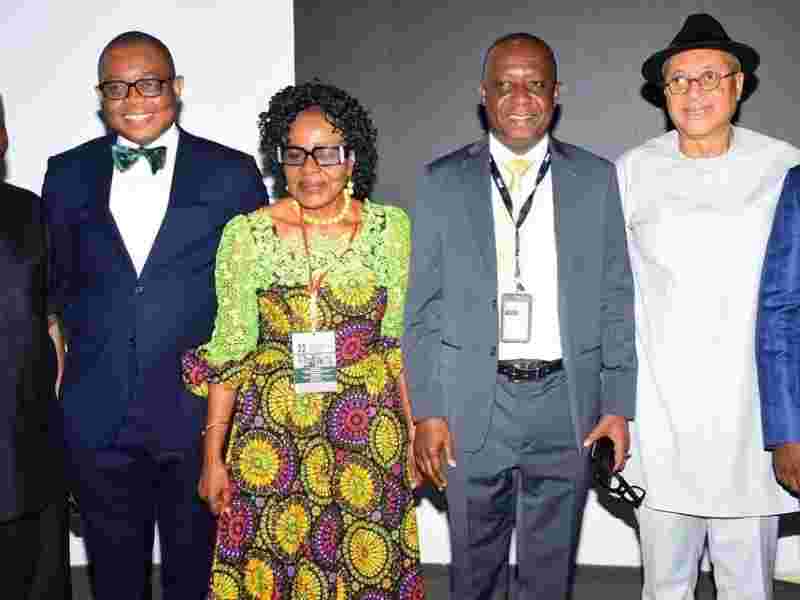
Political Economist and public intellectual, Professor Pat Okedinachi Utomi, offers that Nigeria has arrived at a nexus where the abnormal becomes normal. In his presentation, Professor Utomi dissected
the political economy of electoral failure and warned of existential consequences, just as Mazi Osigwe of the NBA had dissected the legal architecture of the subject matter. He said, "If the people are convinced that there is no point, what is an election?" Utomi asked with profound exasperation: "Imagine the amount of money we waste to have elections that are totally meaningless because they do not legitimize anybody."
Utomi argued that elections are essential to legitimising government and building strong institutions. Strong institutions, he admits, create predictable rules and reduce uncertainty. But the normalisation of abnormal practices increases the cost of doing business and weakens public confidence in legitimate avenues for resolving grievances. "What has happened to us, unfortunately, is because the abnormal has become so accepted that the transaction costs of engaging in Nigeria are such that we are only heading in one direction — ultimate collapse".
Utomi's submission here was a grim prognosis. But like the others, he placed responsibility squarely on the media: "The media has a critical responsibility to help prevent such institutional decay."
However, in all the Day-2 Conference presentations and perspectives, there's a clear convergence that produced a single message. A constitutional scholar, Professor Auwalu H. Yadudu showed how courts have repeatedly determined winners in ways that defy arithmetic and, sometimes, logic. Professor Chinyere Stella Okunna, another scholar of the media hue, showed how editors hold the power to shape what citizens think about and how they think about it, and even asked whether they are watchdogs or lapdogs. Then, there's a governor, Senator Bassey Otu, who dutifully reminded the editors that they are the compass in turbulent times. And also a Guild of Editor's President, Mr Eze Anaba who warned his colleagues that if the ballot is not protected, courts will replace citizens. In addition, a former bar leader, Mazi Afam Osigwe has detailed how the judicialisation of elections has made judges key actors in determining political fate. And a political economist, Professor Pat Utomi, who warned that the collapse of electoral legitimacy threatens the nation itself.
The central question, as Eze Anaba put it, is whether "the credibility of the ballot must be protected so that the courts do not have to replace the citizenry in determining who should represent the people", or as Yadudu asked: "Should the judiciary be more deferent to popular will expressed in the ballot box? Could their actions dampen the enthusiasm of the electorate and further exacerbate vote apathy?"
The answers, if they exist, lie not in Enugu's conference halls but in the polling units, the newsrooms, the courtrooms, and ultimately, in the choices Nigerians make about what kind of democracy they are willing to defend.
Professor Chinyere Stella Okunna has put it succinctly, and quoting the Social Responsibility Theory in Mass Communication studies, that press freedom carries a correlative obligation to serve the public interest. The same, it seems, might be said of every institution entrusted with the people's mandate. NNL.